

Ceramic Wedding Rings for Men: Pros, Cons and Who They’re Perfect For

TL;DR
Ceramic wedding rings suit blokes who want a lightweight, hard-wearing ring that stays looking sharp without much fuss. They’re a solid pick for everyday wear, but they’re not the best choice if you need resizing, take hard knocks at work, or want something easy to repair after damage.
In This Guide
If you’re searching for a ceramic wedding ring men australia option, the main thing to know is this: ceramic is a modern, polished material that looks clean, wears light, and shrugs off scratches better than most metals. It’s not pottery, it’s not fragile crockery, and it’s not a budget knock-off if you buy the good stuff.
What Ceramic Actually Is
Ceramic rings are usually made from high-performance zirconia ceramic, not kitchen-style ceramic. The powder is pressed and sintered at very high heat until it becomes dense and tough, which is why it can be finished to a crisp black or white sheen. In practical terms, that means a ring that feels smooth, looks sharp, and doesn’t rely on polish to hide wear. Technical ceramic makers like CeramTec describe high-performance ceramics as durable, robust materials built for precision use, not decorative fragile ware. CeramTec
That matters because ceramic is a high-performance zirconia material, not kitchen-style ceramic. If you want to compare options, start with our ceramic rings range and then look at titanium rings and tungsten rings.
For men shopping in Australia, the appeal is simple: ceramic gives you a clean look without the weight of traditional precious metals. It also opens up colour options beyond silver and gold. Black ceramic is especially popular because it pairs well with workwear, a suit, or a casual kit without looking flashy.
The Real Pros of Ceramic Rings
Ceramic rings win on everyday wear. They’re hard, smooth, light on the finger, and naturally resistant to scratching, which makes them good for blokes who hate the look of a ring getting flogged up after a few weeks. They’re also a strong option if you want a dark ring that stays dark instead of fading into a scuffed mess. ACCC Product Safety
Scratch resistance is the big selling point. Ceramic sits near the top end of ring materials for surface hardness, so it handles keys, desk edges, and general daily contact better than softer metals. That doesn’t make it indestructible, but it does mean the ring keeps its neat finish for longer. If you like the look of black accessories, ceramic also pairs nicely with black rings and even mixed-material styles like carbon fibre rings.
Another plus is comfort. Ceramic is lightweight, so some men barely notice it after the first day. That’s handy if you work at a keyboard, drive all day, or simply don’t like a heavy ring pulling at your hand. It’s also a sensible option for anyone who wants a ring that looks tailored without feeling chunky.
Hypoallergenic performance is another reason ceramic gets picked. Because it doesn’t rely on nickel-heavy alloys, it’s a good direction for blokes who get skin irritation from some metals. The NHS notes contact dermatitis can be triggered by irritants or allergens, including some metals such as nickel, and it often affects the hands. If a ring has ever left your finger itchy, red, or cracked, ceramic is worth considering. NHS contact dermatitis guidance
Finally, ceramic gives you a neat finish without much maintenance. The colour is built into the material, so it stays tidy with very little fuss.
The Honest Cons
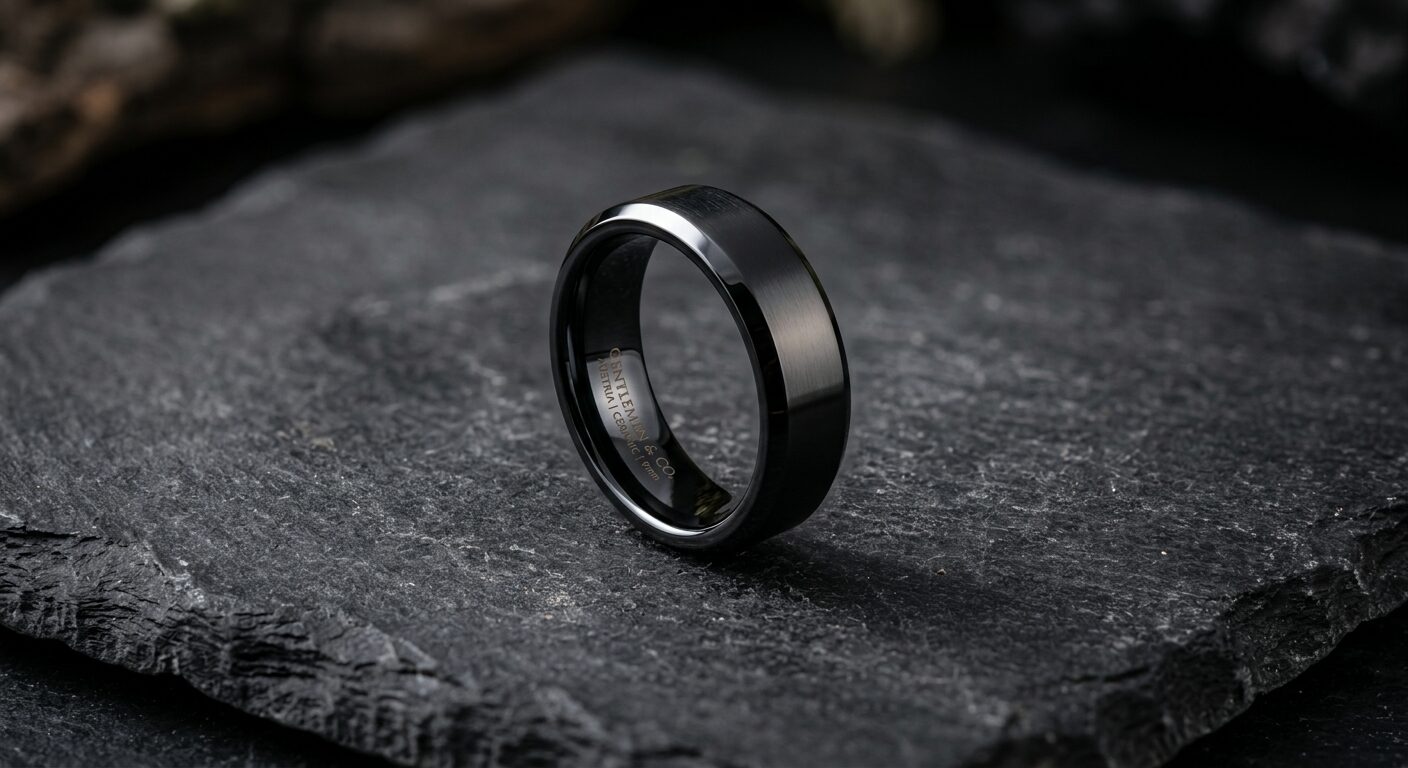
Ceramic is strong against scratching, but it’s not forgiving under hard impact. If you whack it against a solid edge or drop it the wrong way, it can chip or crack rather than bend. That’s the trade-off: you get a pristine look, but you lose the flex that metals like titanium can offer. Titanium is usually the safer call for rougher use.
The biggest practical downside is resizing. Ceramic rings generally can’t be resized the way gold or some steel bands can. If your finger size changes over time, you may need a replacement rather than a simple adjustment. That’s why getting the fit right matters more with ceramic than with many other ring types.
Repair options are also limited. A scratched metal ring can sometimes be polished, and a bent band can sometimes be reshaped. Ceramic doesn’t work that way. Once it’s damaged, the fix is usually replacement. So if you’re hard on your hands, work with tools, or put your ring through a lot of impact, ceramic might feel a bit unforgiving. For a more forgiving look and feel, some blokes compare it against wood inlay rings or lighter mixed-material styles.
It can also read more formal than rugged. If you want a tougher, industrial feel, tungsten or titanium may suit you better.
From a consumer point of view, the ACCC reminds buyers that products should be safe and of acceptable quality. With rings, that means you shouldn’t treat “hard” as a blanket claim of durability. Ask what kind of ceramic it is, how the ring is finished, and what the retailer supports if it arrives damaged or later chips. ACCC Product Safety
Who Ceramic Suits Best
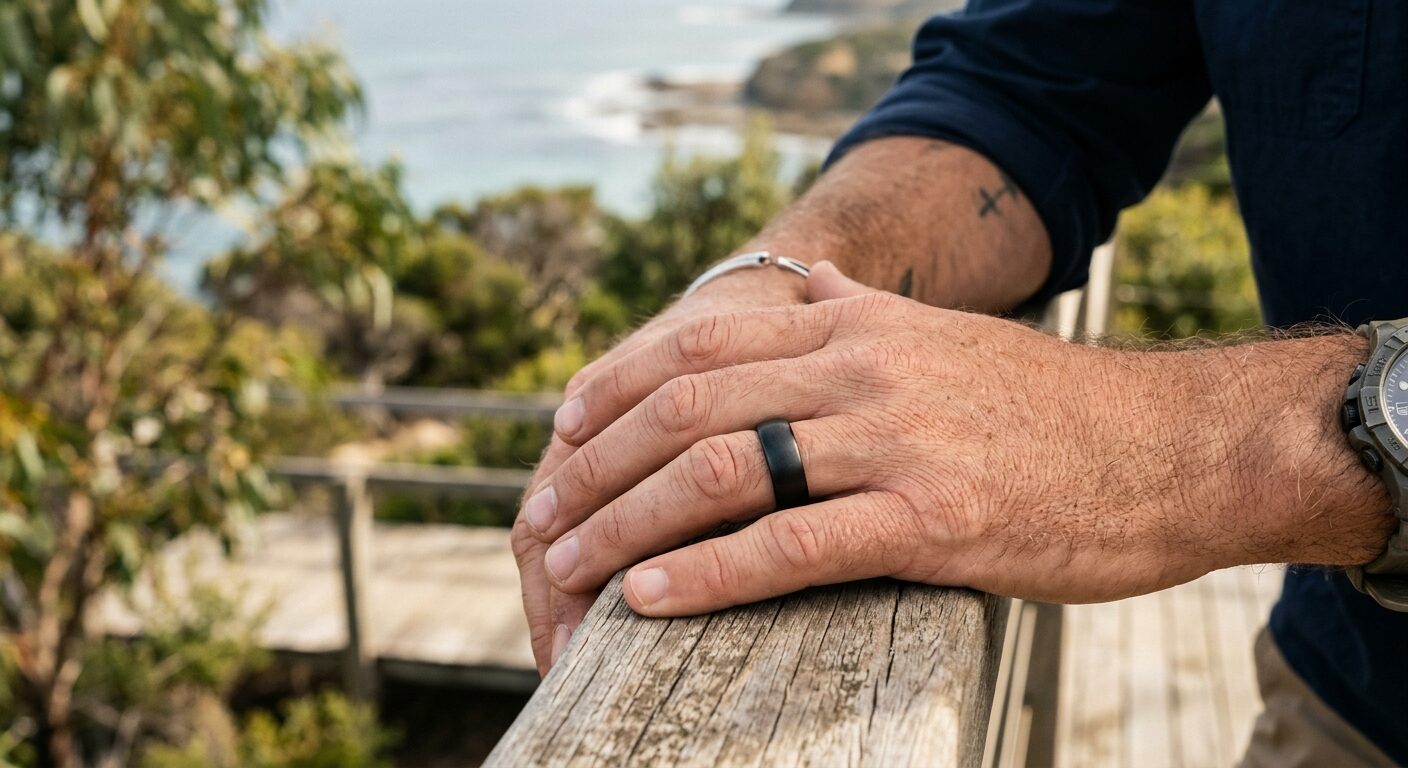
Ceramic suits blokes who want a clean-looking ring for everyday wear and don’t want to baby it. It’s a good fit for office workers, commuters, and anyone who likes a low-profile ring that stays tidy. It’s also handy for men whose skin reacts to nickel or other common jewellery metals. In short, it’s a strong match for style-first wearers with normal day-to-day use.
If you spend most of the day at a desk, in meetings, or moving between home and work, ceramic makes sense. It’s light, neat, and doesn’t draw attention. If your ring is mostly a symbol rather than a tool, ceramic does that job well. If you also like darker finishes, compare it with black rings.
Gym-goers can also like ceramic, but with one caveat: it depends on the sort of training you do. If you lift, run, cycle, and live a fairly normal active life, ceramic can be fine. If you’re heavy into contact work, climbing, or high-impact manual labour, the lack of flex becomes more of an issue. For those guys, titanium often makes more sense because it can take more abuse before it gives up.
Who should think twice? Tradesmen who work around hard edges, blokes who change size a lot due to temperature or weight shifts, and anyone who wants a ring that can be resized later. If that’s you, ceramic may look good but feel a bit too delicate in practice. You’re better off choosing a material that gives you more margin for error.
Ceramic vs Other Materials
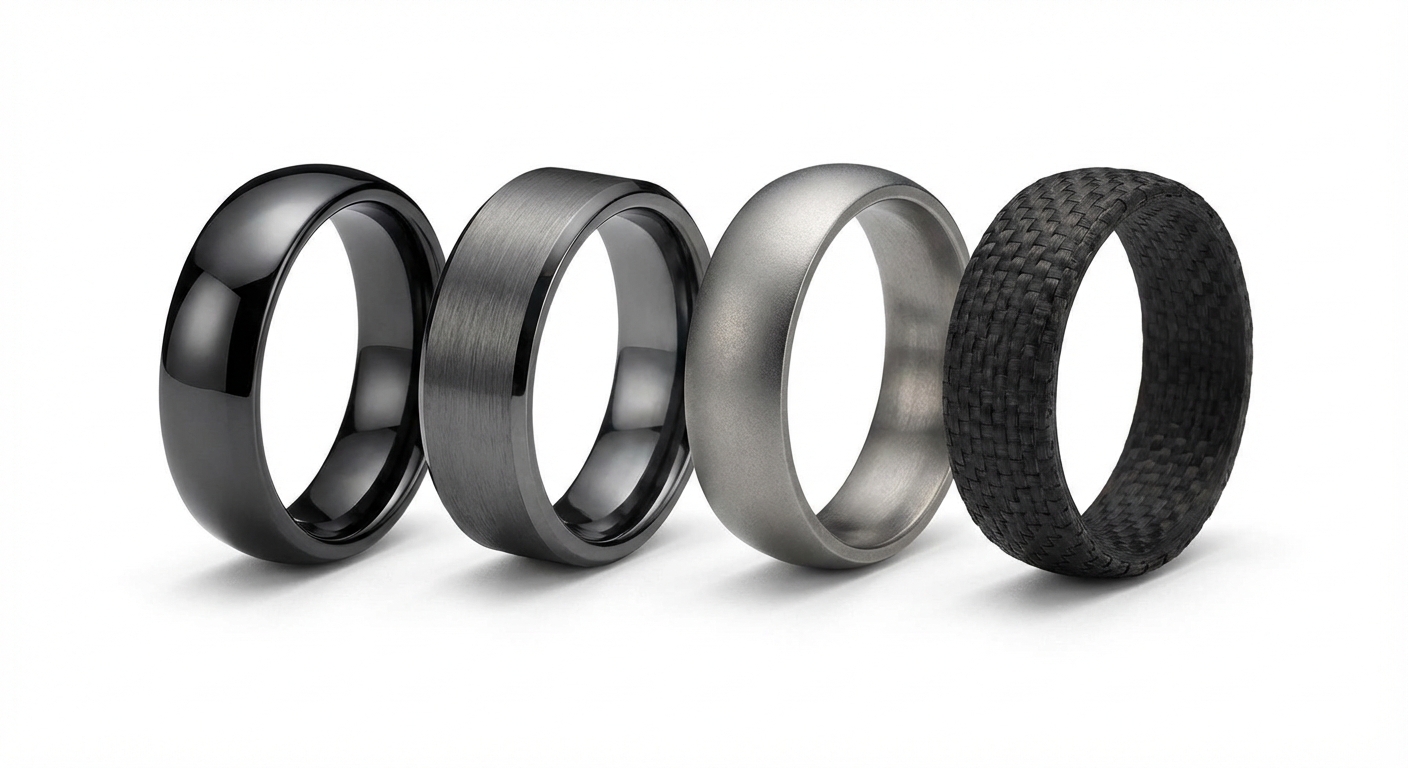
Compared with tungsten, ceramic is lighter and usually feels more modern, but tungsten can be very tough and has a heavy, solid feel. Compared with titanium, ceramic usually has the edge for scratch resistance, while titanium usually has the edge for resilience and everyday toughness. Compared with carbon fibre, ceramic looks more polished and formal, while carbon fibre feels sportier and more technical.
If you want a practical way to think about it, ceramic is the “clean finish” choice, tungsten is the “solid block” choice, titanium is the “wear it anywhere” choice, and carbon fibre is the “light, modern, technical” choice. None of them is universally best. The right pick depends on how you work, how hard you are on your hands, and whether you care more about finish or forgiveness.
For men who like a ring that stays sharp-looking, ceramic is right up there. For men who work with tools or regularly bash their hands about, titanium is often safer. If you want a darker aesthetic with more mass, tungsten can be a better fit. If you like a sportier or layered look, carbon fibre may be the one that feels most you.
That’s why it helps to browse them in one place. Start with ceramic rings, then compare with tungsten rings, titanium rings, and carbon fibre rings. That gives you a fair read on weight, finish, and how each material suits real life.
What to Look For When Buying in Australia
When you’re buying a ceramic wedding ring men australia shoppers should look at more than just the colour. Ask whether it’s zirconia ceramic, how it’s finished, and whether the retailer gives proper size guidance and after-sales support. The ring might look simple, but the buying decision shouldn’t be. Good details now save headaches later.
First, make sure you’re buying proper high-performance ceramic, not a vague “ceramic style” listing. Check the comfort fit and choose the finish that suits your style.
Second, think about support. Since ceramic usually can’t be resized, solid sizing advice matters. If you’re unsure, compare it against wood inlay rings or the wider shop range.
Finally, be realistic about your day-to-day. If it’s going to cop constant impacts, titanium or tungsten may suit you better.
FAQ
Are ceramic wedding rings good for everyday wear?
Yes, if your day is mostly normal wear rather than heavy impact. Ceramic is comfortable, light, and good at resisting scratches, so it suits men who want a ring that keeps its finish with minimal maintenance.
Can a ceramic wedding ring be resized?
Usually no. Ceramic rings are typically made in a fixed size, so if your finger size changes, you’ll likely need a replacement rather than a resizing job.
Do ceramic rings break easily?
They don’t scratch easily, but they can chip or crack if hit hard enough. Think of ceramic as hard-wearing on the surface but less forgiving under impact than titanium.
Is ceramic better than tungsten for men’s rings?
It depends on what you want. Ceramic is lighter and usually more scratch-resistant, while tungsten feels heavier and more solid. If you want low weight and a clean look, ceramic is the better fit; if you want mass and a chunkier feel, tungsten often wins.
Whatever material you choose, the key is matching the ring to your actual lifestyle rather than the look in the product photo. A ceramic ring that suits a graphic designer may be the wrong call for a concreter. Think about your hands, your work, and your long-term expectations before you buy. The full Mens Rings Online collection covers every material category so you can compare side by side before committing.
References
- CeramTec, high-performance ceramic materials and their durability/industrial use: https://www.ceramtec-group.com/en/
- ACCC Product Safety, consumer guarantees and safety expectations for products sold in Australia: https://www.productsafety.gov.au/
- NHS, contact dermatitis overview and causes including irritants and some metals: https://www.nhs.uk/conditions/contact-dermatitis/