

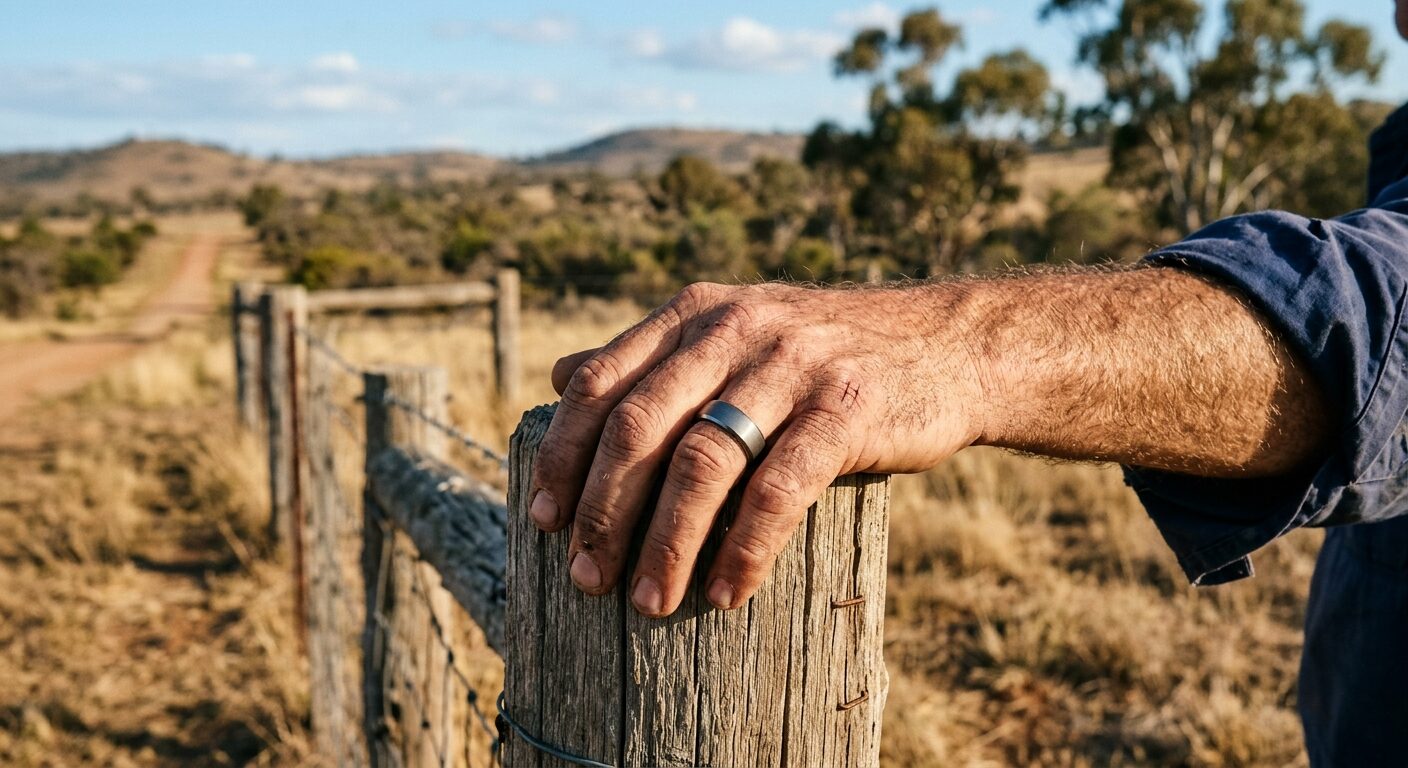
The Best Men’s Wedding Rings for Farmers and Rural Workers in Australia

TL;DR
The best wedding ring for farmers in Australia is one that stays comfortable through long days, handles knocks, and doesn’t become a safety hazard around machinery. Focus on practical details first — material strength, low-profile shape, fit, and whether you can clean it fast after dust, diesel, and paddock work.
In This Guide
If you’re searching for a wedding ring for farmers australia, you already know this isn’t a showroom-only decision. A ring on the land has to cope with fences, feed bags, troughs, gates, tractors, and long hours in heat, cold, dust, and rain. If it’s annoying, it won’t stay on your hand.
That’s why practical blokes usually do better with strong materials and simple shapes. A ring that looks good in photos but catches on gloves or pinches during heavy work gets parked in a drawer. A ring that feels right through real work becomes part of your everyday kit, same as a reliable watch or boots.
What farm work demands from a ring
Farm work is hard on hands and gear, so a wedding ring has to be durable, comfortable, and low-fuss from day one. You need something that handles impact, dirt, and constant movement without becoming distracting. The best ring is the one you can wear all week without noticing it or worrying about damaging it.
On a property, daily jobs are varied and physical. One minute you’re loading feed, next you’re fixing a gate hinge, then driving machinery or shifting stock. Your ring gets exposed to friction, moisture, grime, and temperature changes. That’s a very different environment from occasional wear at dinners or events.
Because of that, your buying order should be practical first, looks second. Start with material and comfort fit. Then choose the width and finish that won’t hold scratches like a neon sign. If style is the first filter, you often end up replacing the ring later when real-life wear catches up.
A useful benchmark is this: can you wear it through normal chores, wash your hands, glove up, and keep moving without adjusting it every hour? If yes, you’re on track. If not, it’s the wrong profile or size no matter how good it looks under jewellery lighting.
Best materials for rural life
For a wedding ring for farmers in Australia, tough metals and engineered materials generally outperform soft, high-polish options in day-to-day use. Tungsten is known for hardness and scratch resistance, titanium is lighter for all-day comfort, and ceramic or carbon fibre can work if you want modern style with practical wear characteristics.
Tungsten rings are popular with rural workers because they keep their finish well under ordinary abrasion. They feel substantial, which many blokes like, and they usually look tidy even after months of regular use. If you want a ring that shrugs off most everyday scuffs, tungsten is often a strong starting point.
Titanium rings are worth a hard look if you’re constantly moving and don’t want extra weight on your hand. They’re strong, corrosion resistant, and comfortable in hot weather when your hands swell a little. For many farmers, titanium hits the best balance between durability and low-key comfort.
Black rings can be great if you like understated style, but you still need to check the base material and finish details. Carbon fibre rings offer a technical look and lighter feel. Ceramic rings can look sharp and clean for years if you avoid heavy impacts on hard edges.
If you want texture and character, Damascus steel rings are an option, and wood inlay rings can add warmth. Just be honest about your workload. The rougher your average day, the more you benefit from straightforward, low-maintenance materials over decorative details.
Width, profile, and comfort fit matter
The way a ring sits on your hand matters as much as the material itself. A practical farm ring usually has a comfort-fit interior, rounded edges, and a width that feels secure without rubbing during repetitive work. If the profile is wrong, even a premium ring becomes irritating after a long day.
Wider rings can look bold, but they’re not always ideal when you’re gripping tools or wearing gloves for long periods. Many rural buyers settle into a moderate width because it gives enough presence without creating pressure points. Comfort over the knuckle is the key test, not how wide the band looks in a product photo.
Ring sizing is also more dynamic in farm life because hands change with heat, hydration, and workload. What feels fine in an air-conditioned room can feel tight by midday in summer. Measure when your hands are at a normal working temperature, and avoid buying at extreme cold or heat moments.
If you’re between sizes, consider how often you’ll wear gloves and how much manual handling you do. A ring that’s slightly loose can spin and catch; too tight can become a problem during long shifts. Good sizing decisions save money, because returns, resizing, and replacements all add up over time.
Safety around machinery and tools
Ring safety on farms is not theory — snag and crush risks are real around moving machinery, rotating tools, chains, and tight spaces. The practical rule is simple: if a task has entanglement risk, remove the ring first. A wedding band should mark commitment, not create avoidable injury risk during work.
Australian workplace safety guidance consistently emphasises eliminating hazards where possible. For hands-on jobs, jewellery can become a risk factor in specific tasks, especially near moving components. That’s why plenty of rural blokes wear their ring during normal life but remove it before high-risk jobs start.
If you want a daily system that works, make it automatic. Keep a secure, repeatable place for the ring during dangerous tasks — a tray in the ute, a dedicated pocket, or a lockable drawer in the shed office. Relying on memory usually leads to either unsafe wear or lost rings.
Consumer safety guidance also matters when buying online: verify seller details, materials, and warranty terms. A cheap ring with unclear specs can cost more if it fails early and needs replacing. Quality plus safe habits gives you the best long-term outcome.
Choosing style without sacrificing function
You don’t need to choose between rugged practicality and a ring that feels like you. The trick is to start with function and then style it. Matte surfaces, brushed finishes, darker tones, and clean edges can look sharp while still being farm-friendly and easy to maintain over years of real wear.
If your workdays are rough, avoid overcomplicated textures that hold grime or demand careful polishing. A simple black or grey finish usually pairs well with everyday workwear and still looks good when you clean up for town, weddings, or family events. Understated almost always ages better than flashy.
For variety, you can compare collections across the full shop and shortlist three practical candidates rather than scrolling endlessly. Pick one heavier option, one lighter option, and one style-led option. That gives you clear comparison without decision fatigue.
The right ring should feel like it belongs to your life now, not to some version of you who never touches fencing wire or tools. If it works Monday to Friday and still looks good on Sunday lunch, you’ve nailed it.
Care, cleaning, and long-term value
A practical care routine keeps a farm ring looking good without turning maintenance into another chore. Rinse off dust and sweat, wipe it dry, and avoid long contact with harsh chemicals. Most men only need a quick regular clean and occasional deeper wash to keep the finish presentable for years.
After heavy days, wash the ring in mild soapy water, rinse well, and dry with a soft cloth. That removes grit that can dull some finishes over time. Avoid abrasive cleaners or rough pads unless the manufacturer says they’re safe for that exact material and coating.
Store the ring separately when it’s off your hand, especially away from loose metal items in drawers or cup holders. Repeated contact with keys and hardware can mark certain finishes quickly. A tiny ring pouch in your gear bag is cheap insurance against accidental wear and loss.
Value is not about the fanciest look on day one. It’s about buying once, wearing comfortably, and keeping the ring in good nick for years. When you choose material, fit, and safety habits properly, your ring becomes one less thing to worry about in a busy rural week.
FAQ
What is the most durable wedding ring material for farmers?
For many farmers, tungsten and titanium are the strongest everyday options because they handle hard use well and need minimal fuss. Tungsten is usually better for scratch resistance, while titanium is better if you prefer a lighter ring through long workdays.
Should farmers wear a wedding ring while using machinery?
For any task with entanglement or crush risk, it’s safer to remove the ring first. Many rural workers wear their ring normally but follow a strict remove-before-machinery habit to reduce avoidable injury risk.
Are black men’s rings practical for rural work?
Yes, as long as the underlying material and finish are suited to heavy wear. A black ring on a durable base can be a practical and low-key option, but care routines and impact exposure still matter for long-term appearance.
How do I pick the right ring size if my hands swell in summer?
Measure when your hands are at a normal working temperature and test comfort over the knuckle, not just at the base. If you sit between sizes, choose based on your typical work conditions and glove use, not one short fitting moment.
References
Australian Competition & Consumer Commission — Product Safety Australia