

Worksite Ring Safety: Prevent Ring Injuries on the Job

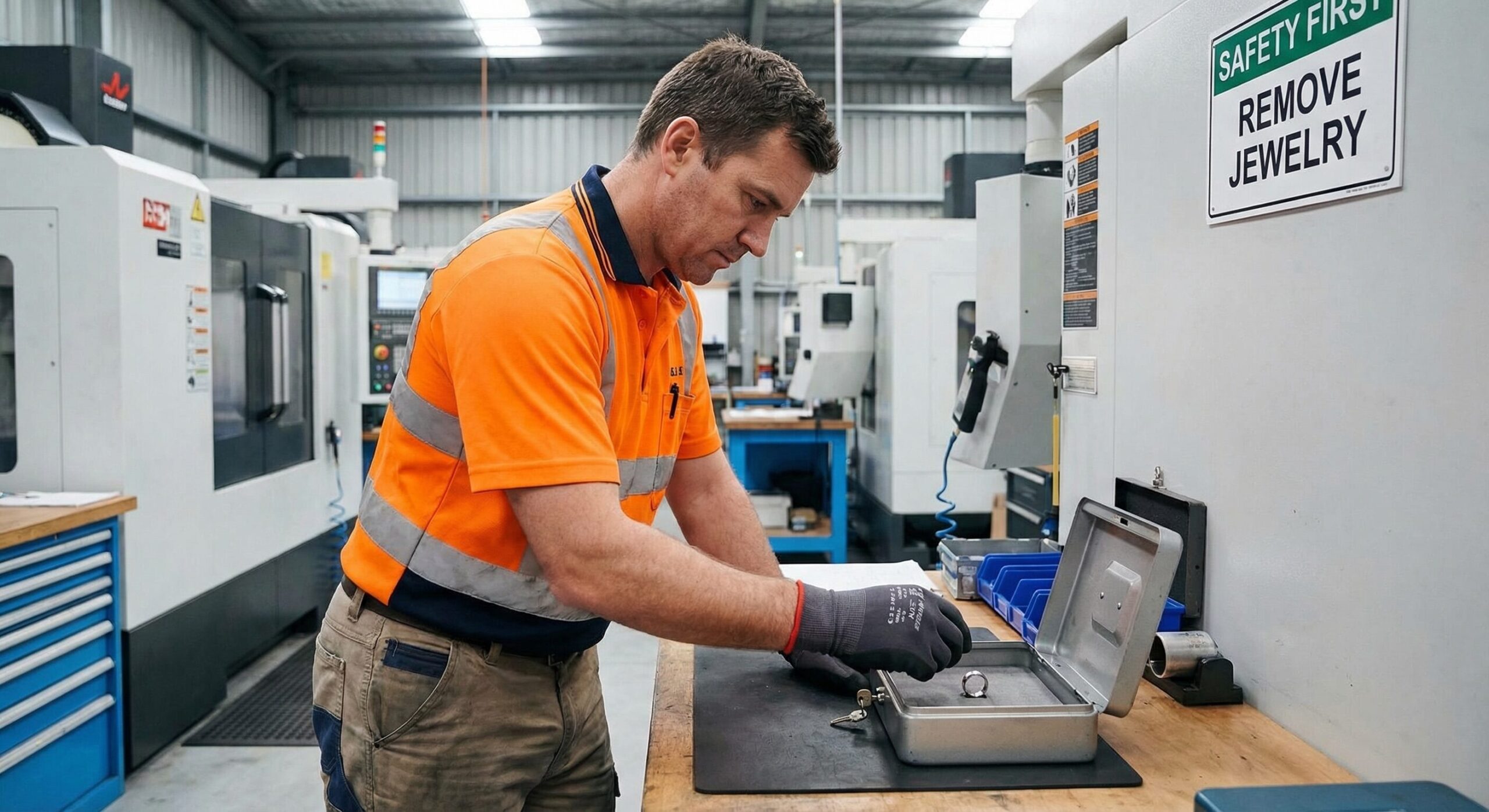
Serious ring-related hand injuries are uncommon, but when they happen, they can be life-changing.
A recent WorkSafe New Zealand incident update described a contractor suffering a severe ring degloving injury after a wedding ring was caught during work activity. For anyone working around machinery, ladders, hooks, wire or moving equipment, it’s a sharp reminder: a small snag can become a major injury in seconds.
This guide is practical and straightforward: how to keep wearing a ring you value while reducing avoidable workplace risk.
What is a ring avulsion/degloving injury?
A ring avulsion injury happens when a ring catches on an object and forcefully pulls soft tissue from the finger.
Depending on force and angle, injuries can involve:
- skin and soft tissue
- nerves and blood vessels
- tendons
- bone
The main takeaway: risk is mostly about task exposure, not daily ring wear in low-risk settings.
High-risk tasks where rings should come off
If a task has snag, crush or rotational risk, remove your ring first.
- Rotating equipment or tools
- Conveyors, belts, chains or moving mechanical parts
- Climbing ladders or scaffold where protrusions exist
- Rigging, wire handling, cable work, hooks and edge-heavy environments
- Tight spaces where your hand can catch unexpectedly
If the task can suddenly jerk your hand, treat ring removal as mandatory.
A simple routine that works for tradies
- Wear your ring for normal low-risk periods.
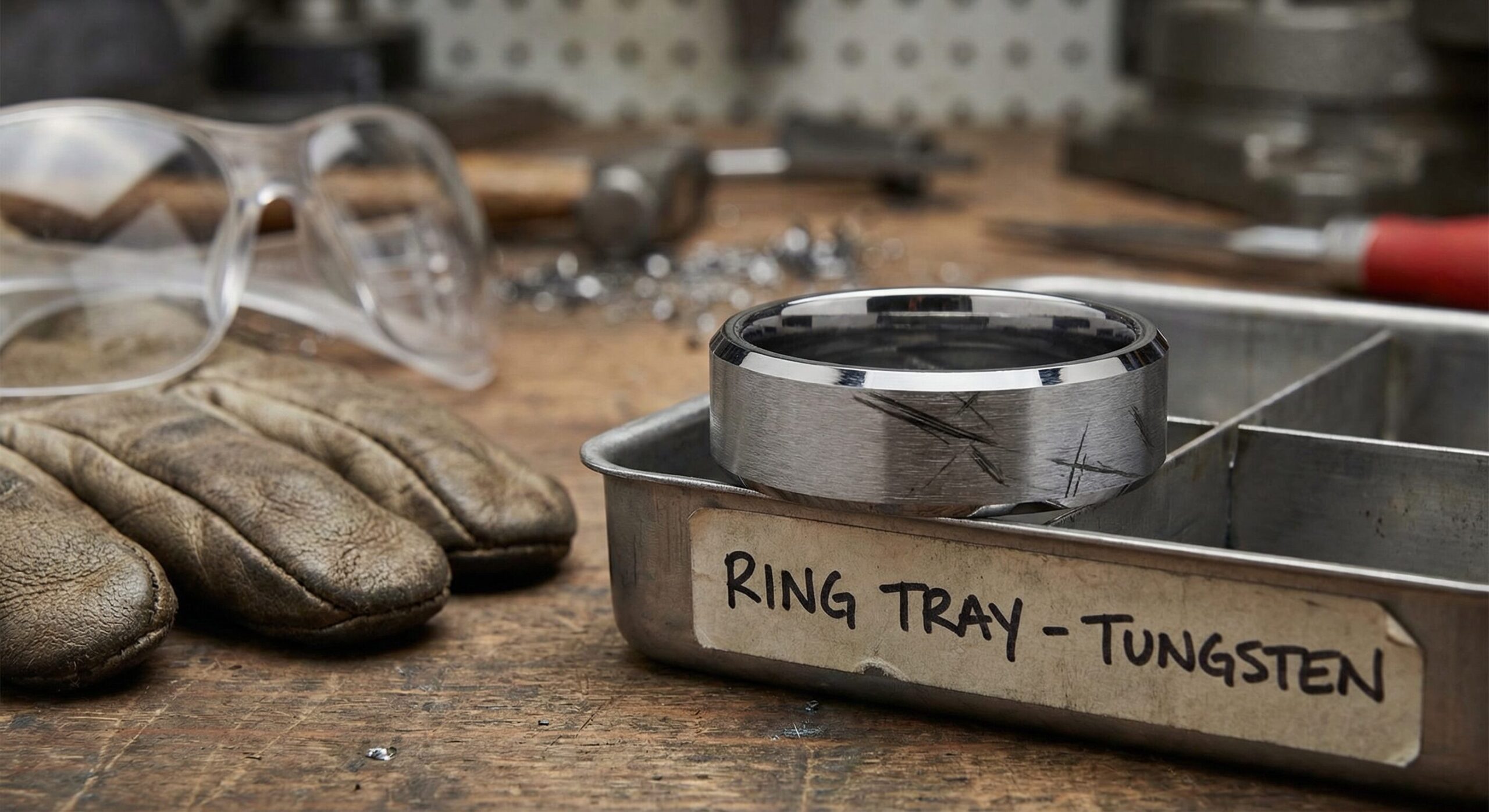
- Remove it before high-risk work blocks.
- Store it in one fixed safe location every time.
- Refit it only once you’re clear of the hazard zone.
Consistency is the real control.
Choosing a practical ring for active work/life
No ring is injury-proof during a snag event. Material can help with comfort, convenience and swap habits, but it does not remove the need for task-based ring removal.
- Silicone rings are a practical swap option because they are flexible and designed to break away under enough force.
- Titanium rings suit low-risk daily wear when you want something lightweight and durable.
- Tungsten rings suit men who want weight and strong scratch resistance in normal wear.
- Black rings add modern style, but black finish longevity depends on the base material and construction.
Browse durable options:
Employer and team safety policy tip

If you run a site or workshop, make ring safety explicit in your process:
- Define tasks where rings must be removed
- Define secure storage method
- Reinforce it in pre-start or toolbox talks
- Keep the policy simple enough to follow under pressure
Quick FAQs
Is it safe to wear a ring at work?
It depends on the task. For low-risk work, often yes. For snag, crush or rotational risk tasks, remove it.
Are silicone rings completely safe?
No. They are a safer swap option in some situations because they flex and can break away, but they do not make hazardous tasks risk-free.
Are some metal ring materials safer than others in hazardous tasks?
Material affects comfort and durability, but does not remove snag risk. Task-based removal remains the key control.
Can gloves replace ring removal?
No. Gloves are not a substitute for removing rings where snag risk exists.
I’m only doing a quick job — do I still need to remove it?
Yes, if snag risk exists. Many incidents happen during routine, short tasks.
Final word
Ring safety isn’t about fear or never wearing a ring. It’s about context. If your work includes snag or machinery risk, remove your ring before those tasks and put it back on afterward. That single habit can prevent a life-changing injury.