


Men’s Ring Care Guide Australia — How to Clean and Maintain Your Ring by Material

TL;DR
Different ring materials require different care routines. Tungsten and titanium are the most low-maintenance, needing only warm water and a soft cloth. Wood inlay rings need conditioning oil and must be kept away from prolonged water exposure. Ceramic and black-finish rings should be cleaned gently to avoid scratching the surface coating. This guide covers exactly how to clean and maintain every ring material sold in Australia.
In This Guide
- Why Ring Care Matters for Australian Men
- How to Clean and Maintain Tungsten Rings
- How to Clean and Maintain Titanium Rings
- Caring for Black Rings — Coated and Solid Finishes
- How to Clean and Maintain Ceramic Rings
- Wood Inlay Ring Care — the Most Important Section
- Damascus Steel, Carbon Fibre, Gold and Silver Ring Care
- General Ring Maintenance Tips for Australian Men
- Frequently Asked Questions
- References and Sources
Why Ring Care Matters for Australian Men
This complete men’s ring care guide Australia covers every material from tungsten to wood inlay, so you can keep your ring looking exactly as it did on day one. Whether you work outdoors, hit the gym regularly, or live an active lifestyle, understanding your ring’s material is the single most important factor in caring for it correctly.
Australian conditions add an extra dimension to ring maintenance. Our climate includes high UV exposure, salt air in coastal cities, chlorinated pools, and the physical demands of trade and outdoor work. According to the Jewellers Association of Australia, improper cleaning is one of the most common causes of preventable ring damage — and most stems from using the wrong product for the wrong material. If you’re still deciding on a material, our tungsten vs titanium vs silicone ring material guide covers the tradeoffs in depth.
How to Clean and Maintain Tungsten Rings
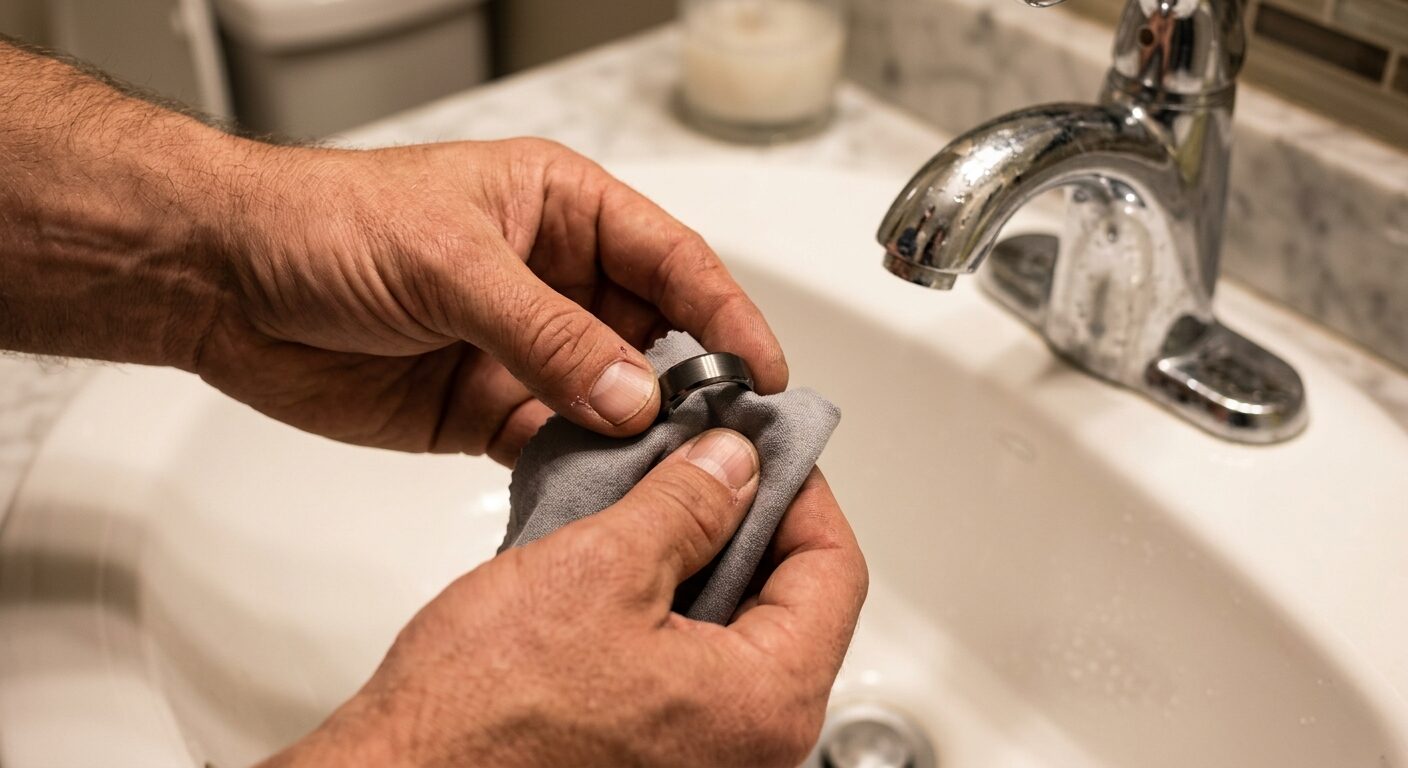
Tungsten carbide rings are the most scratch-resistant rings available, rating 9 on the Mohs hardness scale. They’re extremely low-maintenance: a warm soapy water rinse and a microfibre cloth is all you need for weekly cleaning. Tungsten does not tarnish, corrode, or fade under normal conditions.
Tungsten ring cleaning routine
- Weekly: Rinse under warm water and wipe with a soft lint-free cloth or microfibre.
- Monthly: Soak for 5 minutes in warm water with a drop of mild dish soap. Gently scrub with a soft-bristle toothbrush around any grooves or inlays. Rinse thoroughly and dry completely.
- Avoid: Abrasive cleaners, ultrasonic cleaners (which can fracture the bond in composite tungsten rings), bleach, and harsh chemicals.
Tungsten maintenance notes for Australians
Tungsten carbide is highly resistant to salt water and chlorine, making it ideal for Australian coastal and pool environments. However, tungsten is brittle under impact — it will crack rather than bend if struck hard. For tradies in high-impact environments, refer to our complete ring safety guide for Australian tradies for additional advice. Browse our full range of tungsten rings for men — available in polished, brushed, and black IP finishes.
How to Clean and Maintain Titanium Rings
Titanium rings are lightweight, hypoallergenic, and highly resistant to corrosion. They’re rated approximately 6 on the Mohs scale — harder than gold or silver, though softer than tungsten. Titanium can develop a light surface patina over years of wear, which most wearers find adds character. Deep scratches on polished titanium can be professionally re-polished.
Titanium ring cleaning routine
- Weekly: Wipe with a damp microfibre cloth to remove oils and grime.
- Monthly: Warm water with mild soap, gentle scrub with a soft toothbrush, rinse and dry.
- Polished titanium: Wipe in one direction to maintain polish and avoid circular scratch marks.
- Anodised titanium (coloured finishes): Soft damp cloth only — the anodised oxide layer that creates colour can be worn away by abrasive scrubbing.
- Avoid: Acetone, bleach, and acidic cleaners.
Our titanium rings collection includes flat, comfort-fit, and brushed styles suited to everyday Australian wear.
Caring for Black Rings — Coated and Solid Finishes
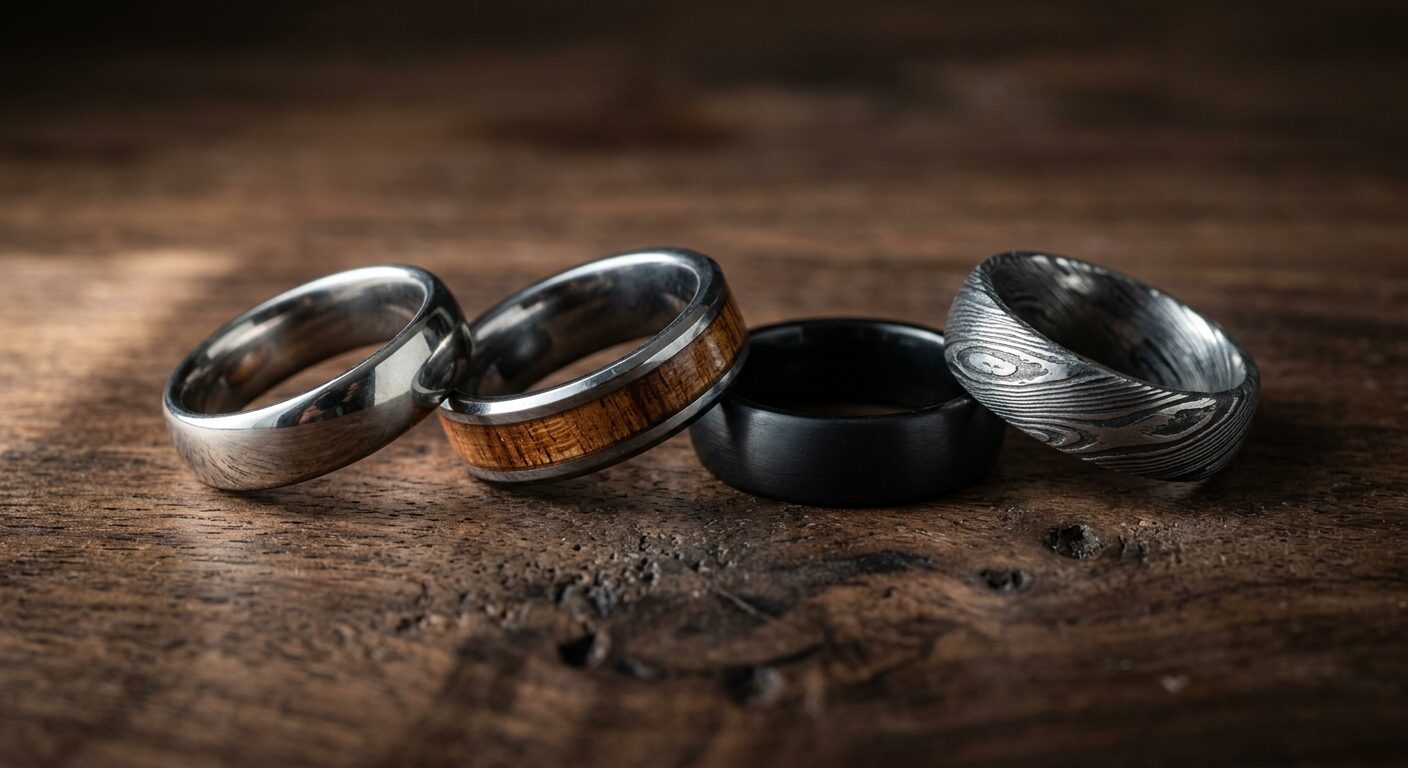
Black rings come in several types, and each requires slightly different care. The key distinction is whether the black finish is a surface coating (like black IP/PVD plating on tungsten or titanium) or a solid-through material (like black ceramic or black zirconium). Surface-coated rings are more vulnerable to wear through aggressive cleaning.
Black-plated rings — IP and PVD coated finishes
- Use only a soft damp cloth — no brushes, abrasives, or chemical cleaners.
- Avoid contact with harsh chemicals: pool chlorine, cleaning products, hand sanitiser over time.
- The black plating will gradually wear at contact points with use — this is normal for coated finishes.
- Do not use ultrasonic or steam cleaners on plated rings.
Solid black ceramic rings
Solid black ceramic is more durable than plated finishes — the colour goes all the way through the material. Clean with warm soapy water and a soft cloth. Avoid hard impacts, as ceramic is brittle and can chip or crack. See the ceramic section below for full details.
View our complete range of black rings for men, including solid ceramic, black tungsten, and black titanium options.
How to Clean and Maintain Ceramic Rings
Ceramic rings (made from titanium carbide, not traditional ceramic) are extremely hard — approximately 8–9 on the Mohs scale. They’re scratch-resistant, hypoallergenic, and won’t corrode or tarnish. Ceramic holds its polished finish better than most metals, making it one of the easiest ring materials to maintain.
Ceramic ring cleaning routine
- Weekly: Warm water and a soft cloth is sufficient for routine upkeep.
- Monthly: Soak briefly in warm soapy water, then wipe gently. Rinse and dry completely.
- Avoid: Hard impacts — like tungsten, ceramic is brittle. It will chip or crack if struck against a hard surface. Do not use abrasive scrubbers.
- Safe for: Chlorinated water, salt water, most household chemicals in short exposure. Always rinse after contact with chemicals.
Browse our ceramic rings collection — available in white, black, and two-tone styles.
Wood Inlay Ring Care — The Most Important Section
Wood inlay rings require the most active maintenance of any ring material. The inlay — typically stabilised wood set into a tungsten or titanium band — is organic and responds to moisture, heat, and dryness. Without periodic conditioning, it can dry out, crack, or loosen from the band.
Wood inlay cleaning routine
- Daily: Wipe with a dry cloth after wearing. Remove before showering, swimming, or washing dishes.
- Weekly: Damp cloth wipe only — do not soak the ring in water. Dry immediately and completely.
- Monthly conditioning: Apply a small amount of natural wood oil (tung oil, linseed oil, or a commercial wood conditioner) to the inlay with a cotton bud. Wipe off any excess. This prevents the wood from drying and cracking.
What to avoid with wood inlay rings
- Prolonged water exposure: Soaking, swimming, or long showers will cause the wood to swell and loosen from the setting.
- Ultrasonic cleaners, chemicals, and sunscreen: All will damage or discolour stabilised wood.
- Direct heat: Avoid hot surfaces or extended direct sunlight — this dries and cracks the wood.
Australian summer heat and UV exposure make wood conditioning especially important. A well-maintained inlay ring will last a lifetime; a neglected one may crack within a year. View our wood inlay rings for men — featuring koa, rosewood, and Australian native timber inlays.
Damascus Steel, Carbon Fibre, Gold and Silver Ring Care
Damascus steel rings
Damascus steel rings feature a distinctive layered pattern and require moderate care. Unlike stainless steel, Damascus can develop surface rust if left wet or exposed to acidic sweat. Wipe dry after wearing and apply a light coat of mineral oil every few months to protect the surface and maintain the pattern’s contrast.
Carbon fibre rings
Carbon fibre rings are lightweight and virtually scratch-proof. A damp cloth wipe is all that’s needed. Carbon fibre is chemically inert, so standard cleaning products won’t damage it. Avoid hard impacts, as carbon fibre can crack under direct force.
Gold rings
Gold rings (9ct and 18ct) are softer and more prone to scratching. Clean with warm soapy water and a soft toothbrush, then dry with a polishing cloth. Avoid chlorine — it degrades gold alloys and can cause cracking over time, according to the Gemological Institute of America. Have gold rings professionally polished every 1–2 years.
Silver rings
Silver tarnishes when exposed to air and sulphur compounds. Use a silver polishing cloth for routine upkeep, or a silver cleaning solution for heavier tarnish. Avoid chlorine, bleach, and acidic cleaners. Store silver rings in an anti-tarnish pouch when not wearing them.
General Ring Maintenance Tips for Australian Men
Regardless of material, these habits will significantly extend your ring’s lifespan and appearance:
- Remove before high-risk activities: Weight lifting, gardening, working with chemicals, and impact sports.
- Store properly: A ring dish or soft-lined jewellery box prevents contact scratches from other jewellery.
- Remove before applying products: Hand cream, sunscreen, and hairspray create a film that dulls ring finishes. Put your ring on after, not before.
- Annual professional inspection: For rings with inlays or complex settings, an annual jeweller check confirms the inlay is secure.
- Know your workplace requirements: Our ring safety guide for Australian tradies covers workplace ring compliance in full.
Quick-Reference: Men’s Ring Cleaning Summary by Material
- Tungsten: Warm soapy water + soft brush + microfibre cloth. Monthly.
- Titanium: Warm soapy water + soft cloth. Avoid acetone on anodised finishes.
- Black (coated): Damp soft cloth only. No abrasives or chemicals.
- Ceramic: Warm soapy water + soft cloth. Avoid impacts.
- Wood Inlay: Damp wipe only + monthly wood oil conditioning. No soaking.
- Damascus Steel: Dry after wear + occasional mineral oil. Warm soapy water for cleaning.
- Carbon Fibre: Damp cloth wipe. Minimal maintenance needed.
- Gold: Warm soapy water + soft toothbrush. Avoid chlorine.
- Silver: Silver polishing cloth + anti-tarnish storage.
Frequently Asked Questions
How often should I clean my men’s ring?
For most ring materials — tungsten, titanium, ceramic — a quick wipe with a damp cloth every few days and a full clean with warm soapy water once a month is sufficient. Wood inlay rings need more frequent attention: dry-wipe after every wear and condition the wood monthly. The more active your lifestyle, the more frequently you should clean your ring.
Can I wear my tungsten ring in the shower or pool?
Tungsten carbide itself is highly water-resistant and won’t corrode from shower or pool water. However, soap residue can build up under the ring and irritate skin, and prolonged chlorine exposure can affect some tungsten alloys over time. It’s good practice to rinse your ring after pool swimming and dry it thoroughly. If your tungsten ring has a wood inlay, remove it before any water exposure.
How do I restore the shine to a scratched titanium or tungsten ring?
Tungsten is so hard that surface scratches are very rare. Minor marks can often be buffed with a jewellery polishing cloth. Titanium polished finishes can be professionally re-polished by a jeweller. Brushed finishes require professional re-finishing to restore — they can’t be polished back at home.
What household products should I avoid using on my ring?
Avoid bleach, acetone, ammonia-based cleaners (some window sprays), toothpaste (abrasive), and baking soda paste on any metal ring. For wood inlay rings, also avoid alcohol-based hand sanitiser and sunscreen. Chlorine pool water is damaging to gold, silver, and plated black finishes. Stick to mild dish soap and warm water — it works for nearly every material.
Do Australian conditions affect how I should care for my ring?
Yes. Coastal salt air can accelerate tarnishing on silver (tungsten, titanium, and ceramic are unaffected). High UV and summer heat speeds up wood drying in inlay rings, requiring more frequent conditioning. For men working outdoors, tungsten or titanium is the most practical long-term choice.
Can I use an ultrasonic cleaner on my ring?
Ultrasonic cleaners are safe for solid gold, silver, and some titanium rings. Avoid them for tungsten carbide composite rings, wood inlay rings, black IP/PVD-plated rings, and ceramic rings. When in doubt, warm soapy water and a soft brush is the safer choice for most materials.
References and Sources
- Gemological Institute of America (GIA). How to Care for Your Jewellery. Available at: gia.edu
- Jewellers Association of Australia (JAA). Jewellery Care and Maintenance Guidelines. Available at: jaa.com.au
- Safe Work Australia. Rings and Jewellery in the Workplace — Hazard Management. Available at: safeworkaustralia.gov.au
- Australian Competition and Consumer Commission (ACCC). Product Safety — Jewellery Standards. Available at: productsafety.gov.au
Last updated: March 2026. Written by the team at Mens Rings Online — Australia’s specialists in men’s tungsten, titanium, and alternative metal wedding bands.