

Best Wedding Bands for Left-Handed Men: Comfort, Wear and Practical Choices

Why Hand Choice Matters
There is no special ring design reserved for left-handed men, but there is a very practical reason to think about which hand carries the band. Your dominant hand does the heavy lifting: opening doors, using tools, gripping a steering wheel, chopping vegetables, moving gym equipment, typing, and catching the edge of a desk more often than anyone would like to admit. Put a ring on that hand and it is simply more exposed to knocks, pressure and grime.
In Australia, many couples follow the convention of wearing a wedding ring on the right hand, while other families follow the left-hand custom. Neither choice is more correct. For a left-handed groom, the right hand often makes life easier because it keeps the band off the hand doing the most repetitive work. That is the sensible starting point, not a rule carved into stone.
A band on the non-dominant hand may feel less noticeable during the first few weeks. It is less likely to press into a pen grip, rub against a mouse, or catch your attention while you work. If you have always worn rings on your left hand and prefer the tradition, that is fine too. The useful question is not “what are left-handed men supposed to do?” It is “which hand lets me wear this every day without resenting it?”
The same principle applies whether you prefer a traditional metallic finish, a darker contemporary look, or something with a small accent stone. Browse the broader men’s rings range with wear in mind, rather than treating the band as something that only needs to look good in wedding photos.
Choosing the Right Band
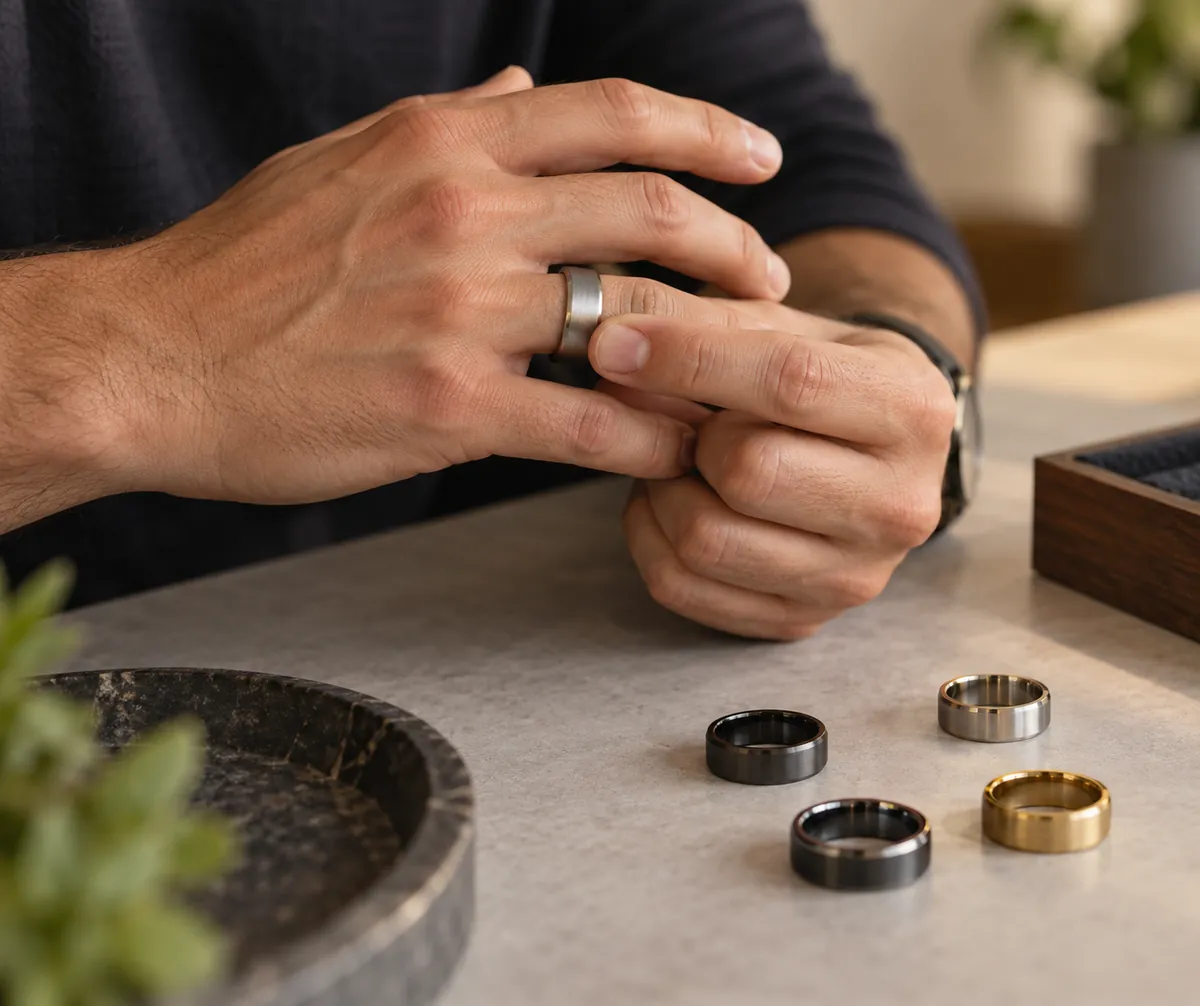
Start with the hand you will actually use. Try a plain ring or inexpensive sizing band on both hands for several days. Wear it while driving, making dinner, at the computer and during the kind of work you do most. A five-minute try-on tells you whether a size goes over the knuckle. A normal Tuesday tells you whether the band gets in the way.
Comfort-fit interiors are usually the best pick for daily wear. The inside edge is gently rounded instead of sharply flat, so the ring slides over the knuckle more smoothly and has fewer pressure points. This matters if your fingers swell in warm weather, after exercise, or during a long day using your hands. It also matters for left-handed men who choose to wear the ring on their dominant hand despite the added activity.
Width deserves more attention than it gets. A 4 mm to 6 mm band is a comfortable middle ground for many men. It is substantial enough to look intentional but slim enough to avoid the “ring is driving me mad” feeling during the adjustment period. Wider 7 mm to 8 mm bands can look excellent on larger hands, but they cover more skin and can feel tighter as fingers warm up. If you are unsure, go a little narrower. You can always choose a stronger visual detail through texture or colour.
Fit should be checked later in the day, when fingers are usually closer to their largest normal size. Cold hands can make a ring feel deceptively loose. A band should move over the knuckle with modest resistance, settle securely at the base of the finger, and come off without a wrestling match. The wedding jewellery guidance from Brides is useful for the wider tradition, but daily comfort should carry more weight than a convention you do not personally enjoy.
Material is the next decision. Titanium is very light, which is a genuine advantage for someone who dislikes the sensation of jewellery. Tungsten has a weightier feel and strong resistance to everyday scratching, though it is not a metal that can be resized in the usual way. Gold has an established wedding-band history and can suit men who want warmth and familiar polish. A carefully chosen gold ring for men is especially good if you want a band that feels classic without looking old-fashioned.
Styles That Wear Well
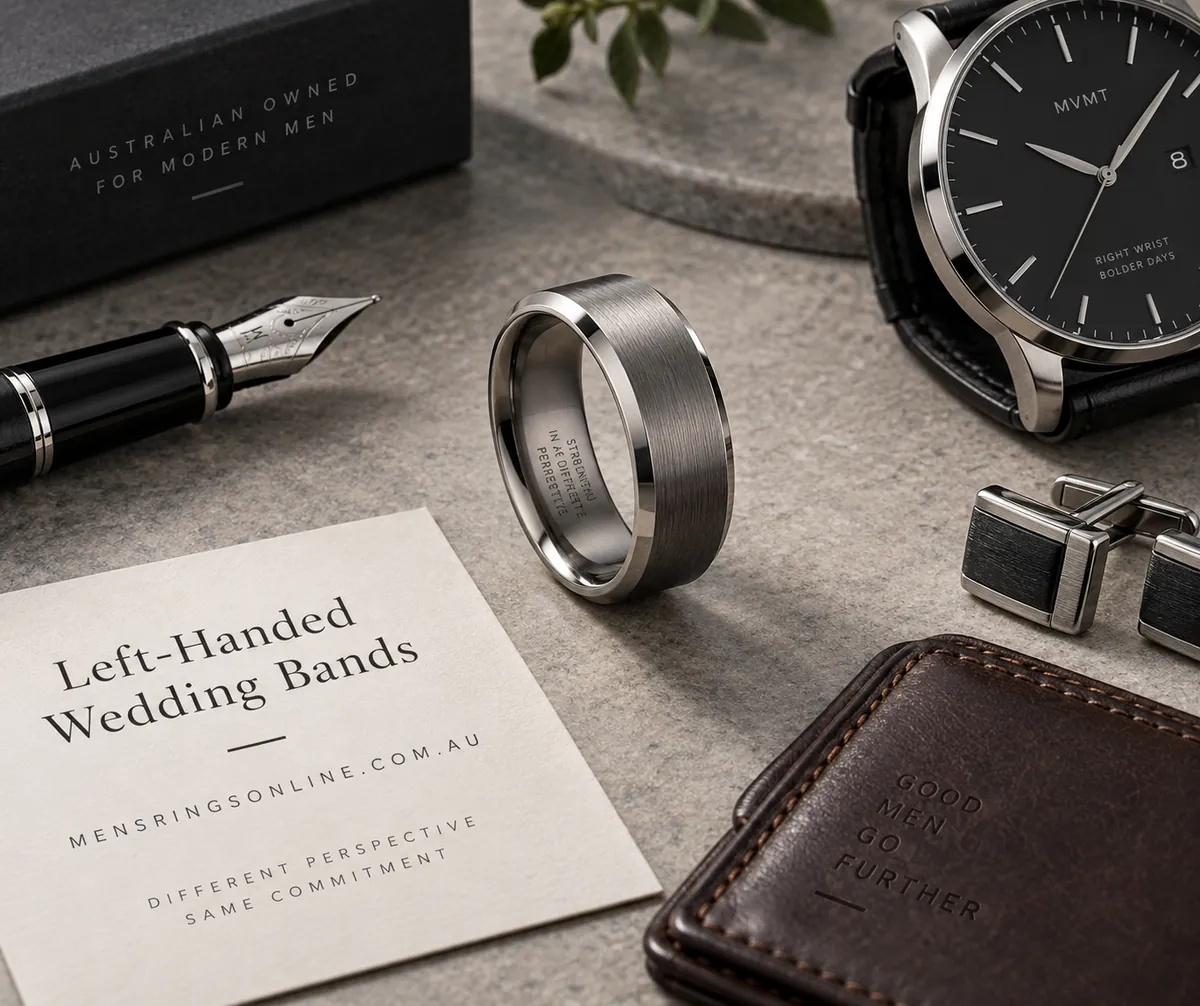
The best styles for left-handed men are usually the ones with a low profile. Look for a gently rounded dome, bevelled edges that do not protrude, or a flat band with softened corners. High-set stones, sharp ridges and deep external grooves can catch on gloves, fabric or equipment. They may be striking, but they are not the clever choice for a hand that spends the day in motion.
A brushed or matte finish is one of the most forgiving options. It handles tiny surface marks better than a mirror polish, particularly if the ring is on your dominant hand. A polished edge paired with a brushed centre gives a little contrast without creating an overly dressy band. Men who work in an office may be happy with a full polish; men who work outdoors, in workshops or with tools often appreciate a finish that does not advertise every fine scratch.
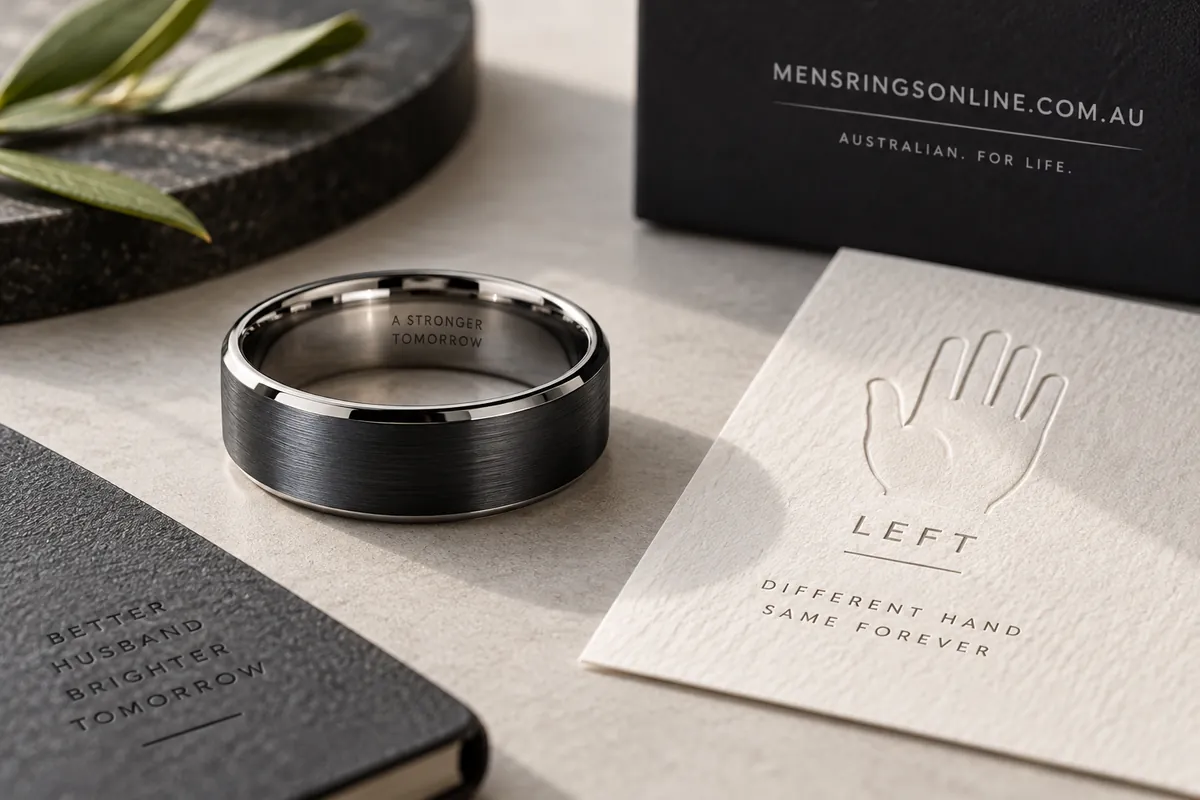
Black bands have become a solid choice for men who want a more modern look. The key is restraint: a clean black band with a comfort-fit interior wears better over time than a ring piled with grooves, bright inlays and several competing finishes. The black rings collection is worth considering if your usual wardrobe is simple, dark or casual.
For a more personal option, custom titanium can be particularly appealing. Titanium keeps the weight low, and a custom detail can make the ring feel like yours without turning it into a novelty. Consider a meaningful interior engraving, a modest contrasting edge, or a finish that matches how you dress. Explore custom titanium rings if you have a clear idea of the balance you want.
Diamond details can work for left-handed men too, provided the setting is flush or low-set. One small, securely set diamond is easier to live with than a raised row that constantly brushes against objects. A band from the men’s diamond rings range can add a little light without sacrificing the straightforward feel many men want from a wedding ring.
If you are hard on your hands, skip the urge to buy the most decorative band in the display. The best wedding band is the one still on your finger in five years, not the one that looked most dramatic under shop lighting.
Before You Buy
Think honestly about your job and hobbies. A mechanic, electrician, carpenter, nurse, chef, climber or regular gym-goer needs to consider ring safety as much as ring style. Rings can catch on machinery or equipment, so many hands-on workplaces require them to be removed. Never wear any ring where your employer’s safety policy says not to, and do not try to solve that problem by choosing a thinner band.
If your work makes you remove a ring often, choose a design that is easy to put on and take off and keep a secure place for it. A ring dish at home and a small protective case in a work bag are mundane solutions, but they prevent a surprising number of losses. It is also worth having a clear routine before the wedding, not after an expensive band disappears in a change-room locker.
Budget does not have to dictate whether the ring feels meaningful. A simpler titanium, tungsten or stainless steel design can be durable, comfortable and well finished. See the in-stock men’s rings if you need a straightforward option without building your decision around an elaborate custom process. The price should leave room for the fit, finish and material you genuinely need.
Think about maintenance too. A polished gold band may need occasional professional attention if you want it restored to a near-new shine. Brushed surfaces are easier to live with visually. Tungsten resists scratches well, but can fracture under a sharp impact rather than bend. Titanium is light and tough but is generally difficult to resize. These are not reasons to avoid any material; they are reasons to buy with your eyes open.
The The Knot’s wedding ring guide offers helpful background on wedding-band traditions and choices. For material facts, it is also sensible to consult technical information from an independent authority such as the Gemological Institute of America’s gem reference, especially if a ring includes diamonds or other stones.
Expert Tips
First, choose the wearing hand before ordering the final size. Your left and right ring fingers are often not identical. One may be slightly wider from years of dominant-hand use, old injuries or plain genetics. Measure the exact finger that will wear the band. It sounds obvious, yet it is one of the easiest mistakes to make when a couple assumes both hands will fit the same.
Second, do not judge comfort while standing still. Make a fist, hold a phone, use a keyboard, grip a cup and put a jacket on. A band can feel fine with your hand flat on a counter, then reveal an annoying edge every time you close your fingers. Be fussy here. This is the one piece of jewellery you are likely to wear more days than not.
Third, buy for your real style. If you live in neutral shirts, boots and denim, a plain brushed titanium or matte black band will probably feel natural. If you already wear a chain, dress watch or warm-toned accessories, gold may fit your wardrobe better. The best-selling men’s rings can be a useful reality check on popular designs, but your own routine should decide the final choice.
Finally, accept that the ring may take a few weeks to feel completely normal. Most men notice it at first, especially if they have never worn jewellery. That is different from constant rubbing, numbness, pain or a band that traps moisture against the skin. A good fit fades into the background. A bad fit becomes the first thing you notice every morning.
FAQ
What is the best wedding band for left-handed men?
The best option is usually a low-profile comfort-fit band worn on the right hand, because it keeps the ring away from the dominant hand’s busiest tasks. A 4 mm to 6 mm titanium, tungsten or gold band is a practical starting point, with the final choice based on your work and preferred feel.
How do I know which wedding band is right for me?
Measure the exact finger and hand where you plan to wear it, preferably later in the day. Then compare widths and profiles while making a fist and doing ordinary tasks; the right band should feel secure without creating pressure or distraction.
What should I look for when buying a wedding band?
Prioritise a comfortable interior, an appropriate width, a low-catching profile and a material suited to your lifestyle. If you work around machinery or have a job requiring ring removal, factor that routine into the purchase before choosing decorative details.
Are there budget-friendly wedding band options?
Yes. Simple titanium and tungsten bands can offer excellent everyday wear without the cost of a detailed precious-metal design. Focus on correct sizing and a comfortable profile first, because those details make a modestly priced ring much more satisfying to wear.