

Men’s Pinky Rings in Australia: Style Guide, Materials and What They Actually Mean

TL;DR
Men’s pinky rings are having a genuine moment in Australia — worn by everyone from tradies to executives, they signal confidence and personal style without requiring any explanation. This men’s pinky ring style guide australia covers what they mean, how to wear them well, which materials work best, and how to choose the right style for your personality.
In This Guide

What Is a Men’s Pinky Ring?
A men’s pinky ring is a ring worn on the little (fifth) finger of either hand. It is distinct from a wedding band or engagement ring by placement and intent — the pinky ring is primarily a style accessory rather than a relationship symbol, though it has carried various cultural meanings throughout history. The men’s pinky ring style guide australia trend reflects a broader shift in Australian men’s attitude toward personal accessories: rings, bracelets, and chains are increasingly accepted as normal elements of masculine style, not as departures from it.
According to a 2025 GQ Australia survey, rings worn on fingers other than the ring finger have increased by over 35% in purchase volume in the Australian men’s jewellery market over the past three years. Pinky rings specifically represent the second most popular ring placement after the traditional ring finger, driven by visibility in Australian sport, entertainment, and business culture.
History and Meaning of Pinky Rings
The pinky ring has a rich and layered history across multiple cultures:
Signet Rings and Family Crests
In European aristocratic tradition, the pinky ring was typically a signet ring — engraved with a family crest or personal seal. These rings served a practical function: pressed into wax to authenticate documents. The tradition of wearing the signet ring on the left pinky remains strong in British and European upper-class circles, though in Australia it has shed the class associations and become simply a sophisticated style choice.
Professional Associations
In some professions, the pinky ring carries specific meaning. Engineers in Canada and the United States wear iron or steel rings on the pinky to symbolise their professional obligation and the responsibility of engineering practice. While this tradition is not as formal in Australia, it reflects the pinky ring’s history as a marker of professional identity.
Criminal and Subculture Associations
In the 20th century, pinky rings became associated with organised crime in American and European contexts — largely through popular culture. In contemporary Australia, this association has largely faded. Modern Australians wearing pinky rings are far more likely to be making a fashion statement than a criminal declaration. The association with “dodgy blokes” that existed in Australian culture 30 years ago has largely dissolved in the face of normalised men’s jewellery.
Fashion and Self-Expression
The contemporary pinky ring in Australia is primarily a fashion statement — a signal of personal style, confidence, and an ease with personal ornamentation that is increasingly mainstream. Australian men in their 20s and 30s are among the most open to jewellery as personal expression of any cohort in Australian history.
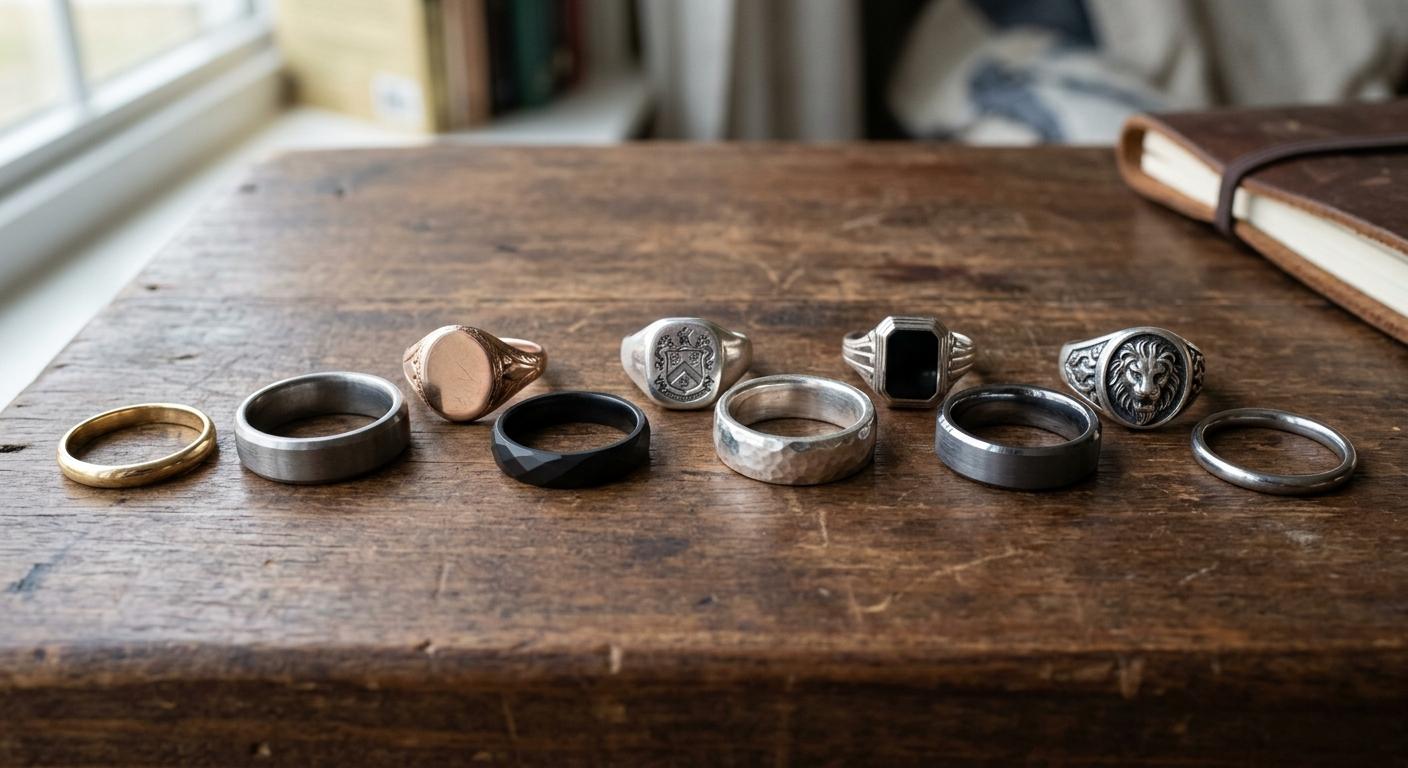
Style Guide: How to Wear a Pinky Ring Well
Wearing a pinky ring well is about proportion and context rather than strict rules. Here are the principles that work:
Proportion
The pinky finger is the smallest on the hand. Proportional rings — typically 4–6mm width — work best. Very wide bands (8mm+) can look disproportionate on a slender little finger. Signet-style rings with a flat top are a classic option that adds visual presence without bulk.
Keeping It Clean
One ring at a time communicates deliberate style. Two or three rings on multiple fingers starts to look cluttered unless you genuinely know what you are doing with ring stacking. Start with a single pinky ring as your statement piece and build from there only if you are committed to the aesthetic.
Matching Metals
If you wear a watch or other jewellery, match the metal tone — silver watches with silver-toned rings, gold watches with gold-toned rings. This rule is not absolute, but it is a good starting point for men who are new to jewellery.
Context
Pinky rings work in most Australian social contexts today. At a formal event, a classic signet or understated band is appropriate. In casual settings, a bolder design has more room. In professional environments, a slim, polished ring in a neutral metal is the safe choice. Very few contexts in modern Australia still carry a bias against rings beyond the wedding finger.
Best Materials for Men’s Pinky Rings
The material you choose for a pinky ring determines its durability, appearance, and maintenance requirements:
Tungsten
Tungsten rings are the most durable option for a pinky ring that will be worn daily. Virtually scratch-proof with a high polish that lasts for years. Available in black, silver, and brushed grey. The main limitation is that they cannot be resized, so sizing accuracy matters.
Titanium
Titanium rings are lightweight, hypoallergenic, and available in a wider range of finishes and colours than tungsten. An excellent choice for a pinky ring worn by someone who finds heavier metals uncomfortable. Titanium in matte grey or black anodised is particularly popular.
Gold
For a classic signet ring or a traditional-looking pinky band, yellow or rose gold is the most historically resonant choice. Gold rings carry the greatest prestige for a signet-style pinky ring and are the obvious choice for family crest or initial-engraved designs. Rose gold in particular has become popular as a pinky ring material for men who want something warm and contemporary.
Damascus Steel
For a genuinely distinctive pinky ring, Damascus steel rings offer a unique wavy, patterned appearance that no other material replicates. Each Damascus steel ring has its own individual pattern — making it a strong choice for men who want something truly one-of-a-kind on their little finger.
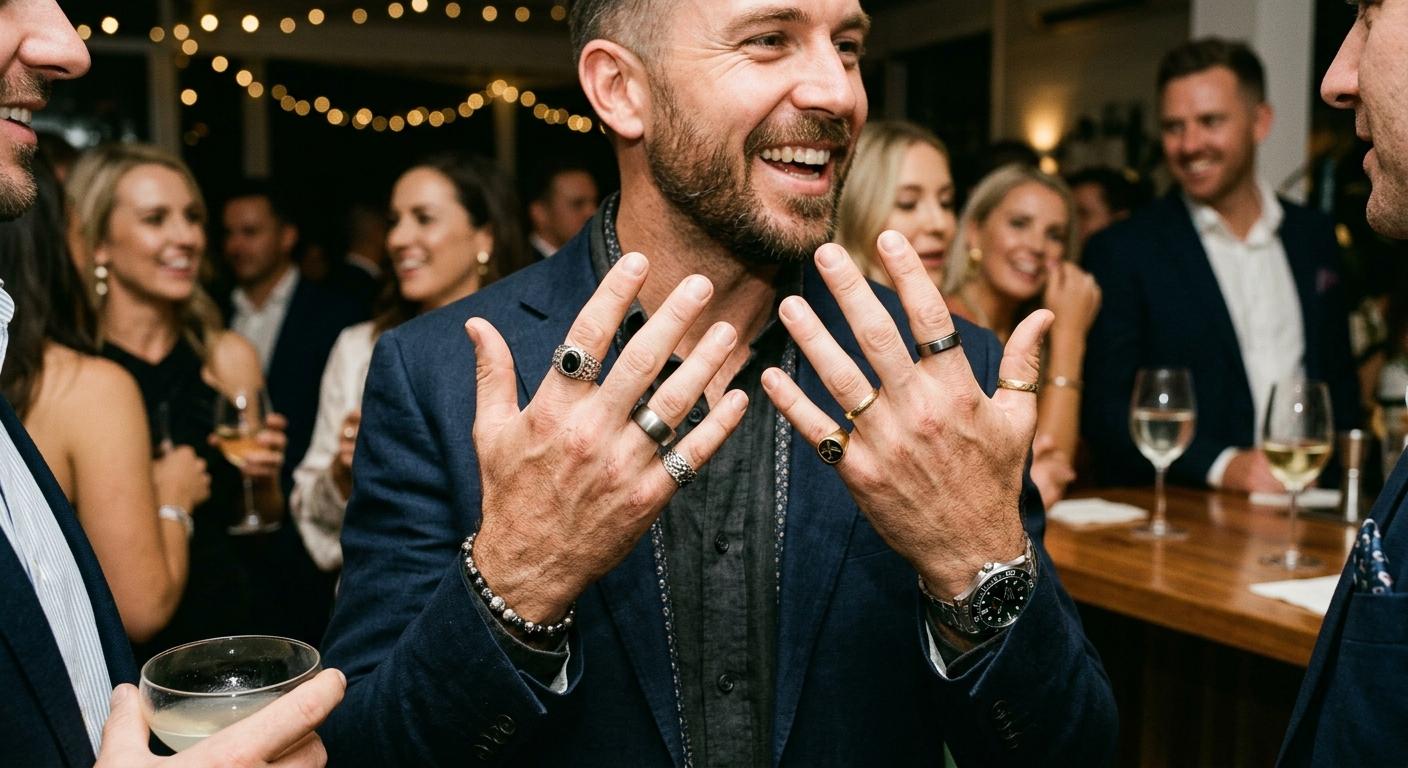
Sizing Your Pinky Ring Correctly
Pinky ring sizing uses the same sizing system as all rings, but the pinky finger tends to be 2–4 sizes smaller than the ring finger for most men. Common pinky ring sizes for Australian men range from size F to size L (UK/AU), or approximately US sizes 3–6.
Key sizing tips for pinky rings:
- Measure your pinky at the end of the day when fingers are slightly larger
- The ring should slide over the knuckle with slight resistance and not fall off the base of the finger — a snugger fit works well for pinky rings as they can slide on an active little finger
- Consider comfort fit (rounded inner surface) for small-size rings — the comfort difference is noticeable on smaller fingers
- If ordering online without measuring, check the retailer’s size guide for specific millimetre measurements
Browse the full range at the Men’s Rings Online shop and check the men’s ring collection for styles that work beautifully as pinky rings — many standard ring widths are available in sizes suitable for the little finger.
Why the Pinky? Ring Finger Placement Explained
Different fingers carry different cultural associations for rings in Australian and Western tradition:
- Ring finger (left hand): Wedding and engagement rings
- Ring finger (right hand): Fashion rings, purity rings, some cultural wedding traditions
- Index finger: Authority rings in some traditions; increasingly used for bold fashion rings
- Middle finger: Fashion rings; no strong cultural association in contemporary Australia
- Pinky (little finger): Signet rings, style rings, professional association rings; the “optional” ring finger with the most stylistic freedom
- Thumb: Less common in Australia; associated with independence and assertiveness in some ring traditions
The pinky finger works well for a second ring because it does not compete with a wedding band on the ring finger and does not sit where a professional/class/status ring would traditionally go (the index or middle finger). It is the finger with the most pure style freedom.
Who Wears Pinky Rings in Australia?
In contemporary Australia, pinky rings are worn across a surprisingly wide demographic:
- Young professionals in creative industries, finance, and tech — using rings as part of a deliberate personal style
- Tradies and blue-collar workers — often wearing a second ring as self-expression outside of work contexts
- Older men with a family signet tradition — wearing inherited or commissioned rings with initials or crests
- Athletes — particularly those from NRL and AFL backgrounds where personal accessories are a recognised part of player culture
- Business owners and executives — often choosing signet-style rings as a confidence signal
The common thread is confidence — a pinky ring is a deliberate choice, and that intentionality is itself part of what makes it work stylistically.
Frequently Asked Questions
What does a men’s pinky ring mean in Australia?
In contemporary Australia, a men’s pinky ring primarily signals personal style and confidence. Historical associations with criminal organisations or class status have largely faded. Modern Australian men wear pinky rings as a fashion statement, as a signet ring, or as a professional association ring.
Which finger should a man wear a pinky ring on?
A pinky ring is worn on the little (fifth) finger of either hand. Either hand is acceptable in contemporary Australia — choose based on comfort and which hand you prefer to showcase.
What is the best material for a men’s pinky ring?
Tungsten and titanium offer the best durability for daily wear. Gold is ideal for classic signet designs. Damascus steel provides a uniquely individual appearance. Choose based on your lifestyle and aesthetic preference.
How should a pinky ring fit?
A pinky ring should slide over the knuckle with slight resistance and sit comfortably at the base of the finger. A slightly snugger fit is preferred for the pinky to prevent spinning and sliding during active hand use.
Is it appropriate for Australian men to wear pinky rings?
Absolutely. Men’s pinky rings are widely accepted across professional, social, and casual settings in contemporary Australia. The perceived stigma has significantly declined in the past decade.
How wide should a men’s pinky ring be?
For most men, 4–6mm width is most proportional on the little finger. Wider bands can look disproportionate unless the man has larger hands or specifically wants a bold statement look.
References
- GQ Australia — Men’s Jewellery Trends in Australia 2025
- Jewellers Association of Australia — JAA Men’s Jewellery Consumer Guide
- Australian Men’s Style Guide — Men’s Fashion and Accessories in Australia