

Men’s Rings for Fishing and the Outdoors: What Won’t Rust, Snag or Cost You a Finger

TL;DR
If you want an outdoor fishing wedding ring in Australia, keep it simple: go for a ring that’s tough, low-profile, and comfortable when your hands are wet, cold, or covered in sunscreen. Titanium, tungsten, black ceramic, and some carbon fibre designs are the usual winners, while bulky high-polish bands and anything with sharp edges are a pain on the water and around gear.
In This Guide
- Best ring materials for fishing and the outdoors
- Why snag safety matters more than looks
- What works when the weather turns wet and cold
- Fit, width and comfort for tradies, fishos and campers
- What to avoid if you’re on boats, rods or tools
- Best MRO ring styles for outdoor use
- Care tips that keep an outdoor ring looking sharp
If you’re shopping for an outdoor fishing wedding ring australia style, the job is simple: pick a ring that won’t rust, won’t catch on line or gear, and won’t become a liability when you’re working with cold hands or moving machinery. The best rings for blokes who fish, camp, 4WD, or knock around outdoors are usually titanium, tungsten, black ceramic, or carbon fibre designs with smooth edges and a sensible fit.
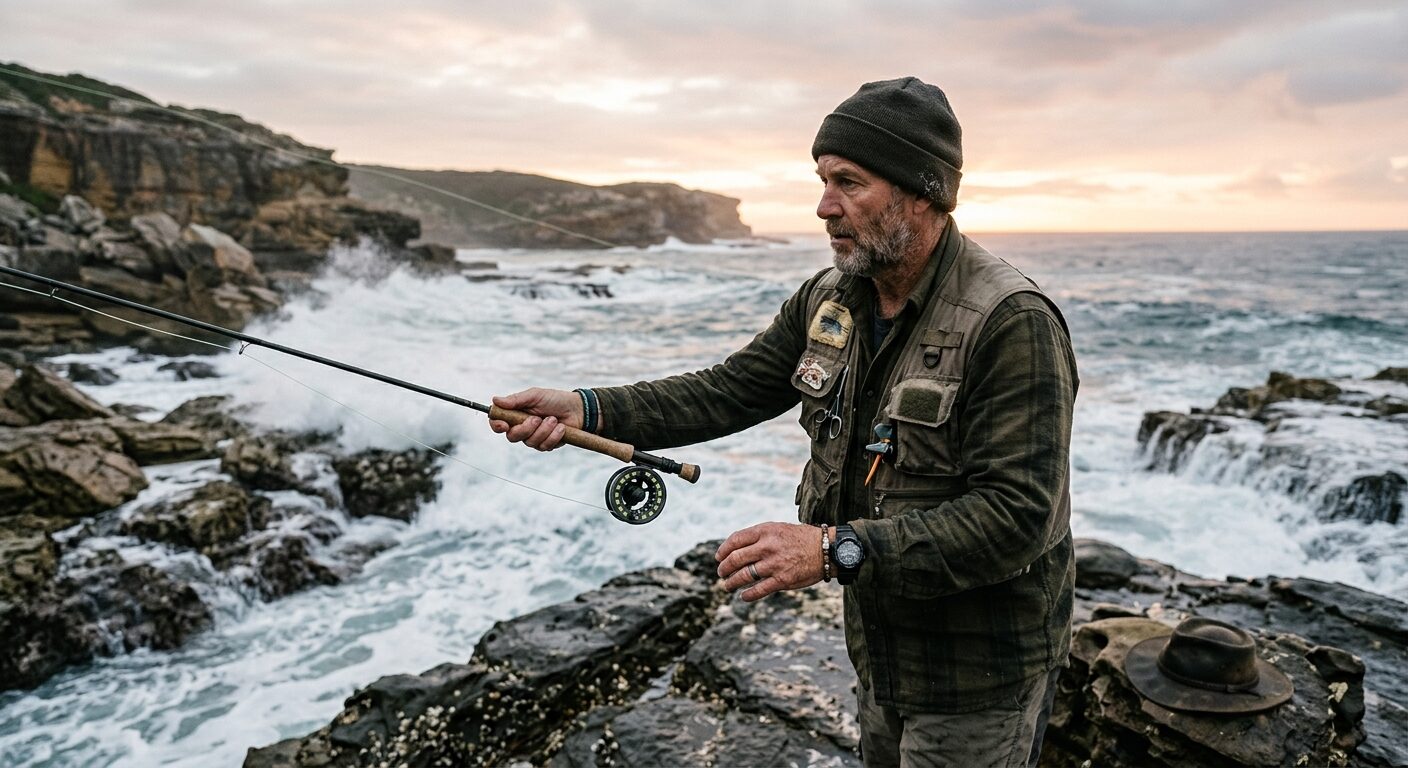
Best ring materials for fishing and the outdoors
Direct answer: The safest outdoor ring is usually a lightweight, hard-wearing material with a smooth profile and no rust risk. Titanium and ceramic are excellent for comfort and corrosion resistance, tungsten is brilliant for scratch resistance, and carbon fibre can be a good lightweight option if you want something modern and low-fuss.
For fishing and general outdoor wear, you’re trying to solve three problems at once: corrosion, snagging, and comfort. Saltwater, sweat, sunscreen, bait slime, and mud all punish cheap metals. That’s why a ring made for hard use beats a flashy one every time. If you want a strong, everyday band, start with titanium rings, tungsten rings, or ceramic rings.
Titanium is the easy-going option. It’s light, corrosion-resistant, and doesn’t feel like a lump of steel on your finger when you’re casting, reefing a rope, or digging a fire pit. Tungsten is heavier and tougher-looking, with a solid feel that plenty of men like because it feels “proper” on the hand. Ceramic is a sleeper pick: it’s scratch resistant, naturally rust-free, and often finished in a clean matte or black look that suits outdoor gear.
Carbon fibre deserves a mention too. It’s light, modern, and can suit men who want something different without going full shiny dress ring. A good carbon fibre ring can handle daily wear well, especially if it’s paired with a stable core and a rounded comfort fit. If you want a darker, understated look, black rings also make sense because they hide scuffs better than polished silver-tone bands.
Why snag safety matters more than looks
Direct answer: On boats, around fishing gear, and near tools, the biggest risk is a ring catching on something and putting force through your finger. A ring that’s smooth, rounded, and not overly chunky is far better than a decorative ring with raised edges or sharp corners.
Fishing line, hooks, nets, bait buckets, tool handles, winch straps, and boat fittings all create snag points. A ring doesn’t need to be sharp to be a problem; it just needs to catch. That’s why a low-profile ring is usually the better choice for men who spend time outdoors. This is one of those cases where practical beats pretty every time.
The serious risk here is not fashion. It’s hand injury. WorkSafe guidance on hand safety and entanglement hazards is a good reminder that anything worn on the hand can become part of the hazard if it gets caught. In plain English: if the ring can snag, the ring can become the problem. For everyday outdoor wear, keep the profile smooth and the width sensible, and avoid ornate grooves or aggressive bevels.
If you’re looking at styles, a simple Damascus steel ring can look awesome, but for fishing it’s worth checking how much texture and pattern sits on the outer surface. More grip can be good on the finger, but it can also create little edges that catch on gloves, line, or clothing. Outdoor rings should feel like workwear, not jewellery trying too hard.
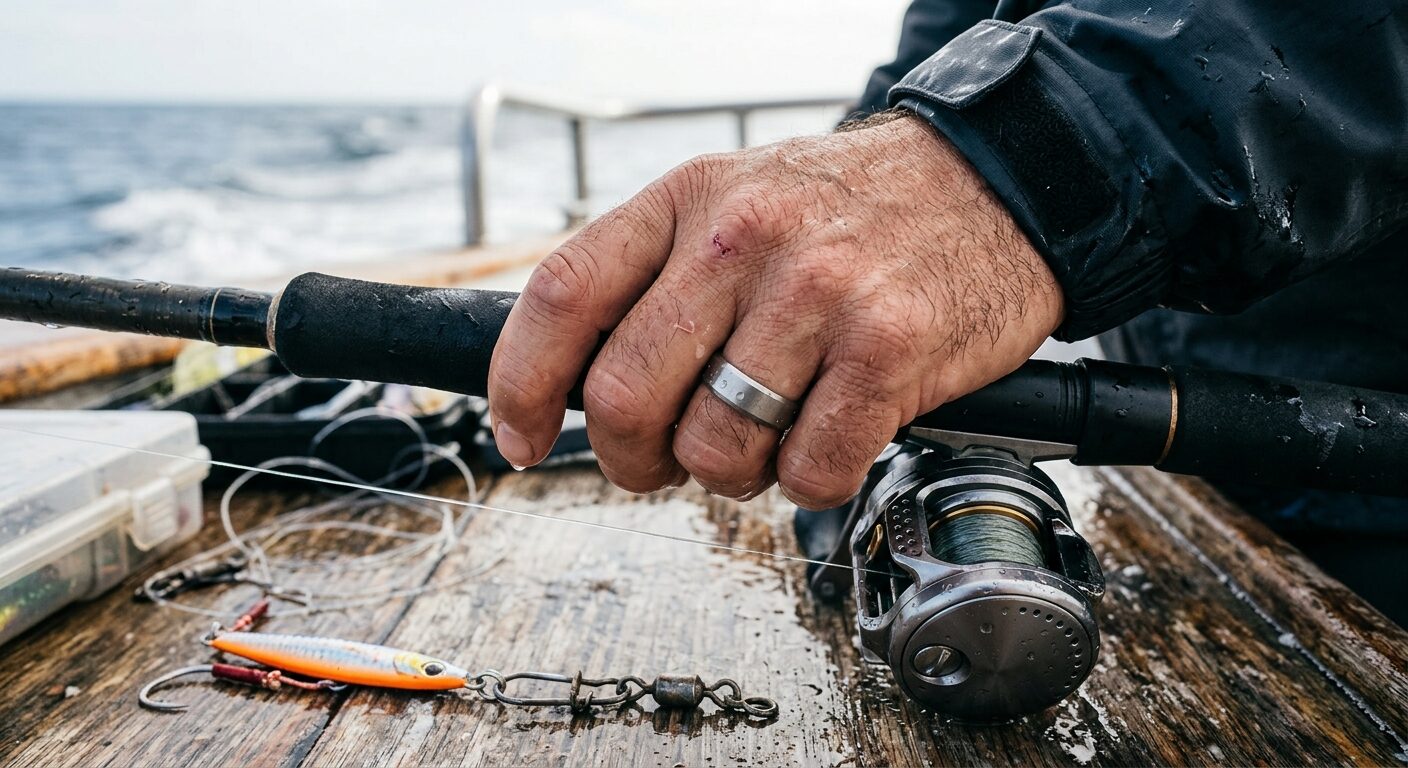
What works when the weather turns wet and cold
Direct answer: Wet hands, cold weather, and salt exposure favour light, corrosion-resistant rings with a comfortable fit. Titanium and ceramic are usually the safest all-rounders, while tungsten gives you durability if you don’t mind the extra weight and slightly firmer feel.
Anyone who fishes early knows the routine: cold morning, wet deck, cramped fingers, and a bit of rushing around. In those conditions, a ring that twists around, pinches, or feels sticky becomes annoying fast. A good outdoor wedding band should disappear into the background. You want to forget it’s there until someone notices it. That’s the sweet spot.
Saltwater is the real test. Some metals hold up fine, others gradually pick up surface wear, staining, or roughness. The best choice is one that doesn’t rely on constant polish to stay presentable. That’s why titanium and ceramic are such strong picks for blokes who actually use their hands. If you’re after something that stays dark and tidy, a black finish can be a good move because it hides the knocks.
There’s also the matter of comfort when fingers change size through the day. Heat, cold, fluid retention, and physical work can all change how a ring feels. A comfort-fit interior helps, because it spreads pressure more evenly across the finger. If your work or weekend routine includes long hours outdoors, that’s worth more than most people realise.
Fit, width and comfort for tradies, fishos and campers
Direct answer: For outdoor use, the best ring is usually medium width, comfort-fit, and not overly thick. Most men do better with a band that feels secure but not bulky, especially if they’re working with rods, bait, tools, or camping kit.
Width matters more than a lot of buyers think. A wide ring can look rugged, but it can also feel clumsy when you’re handling fine gear, tying knots, or reaching into tackle bags. On the flip side, a ring that’s too narrow can feel dainty and less balanced on the hand. For most outdoor blokes, middle-of-the-road is the right call.
Comfort-fit profiles are popular for a reason. The inner curve lets the ring sit nicely without leaving a hard edge digging into the skin. That matters when your hands swell after a long day, or when you’re wearing gloves and taking them on and off. If your ring is going to live on your finger through workdays, weekends and pub lunches, it has to be easy to wear without thinking.
Style-wise, understated usually wins. Matte surfaces, brushed finishes, and darker tones suit the outdoors better than mirror-polish shine. If you want something that looks more like gear than jewellery, shop the full range and look for rings that read as tough, not flashy. For a lot of men, that’s the difference between wearing the ring daily and leaving it in the drawer.
What to avoid if you’re on boats, rods or tools
Direct answer: Avoid rings with sharp decorative edges, large protruding details, very high polish, or anything that feels bulky on the hand. If you spend time fishing or working outdoors, the ring should be simple, smooth, and low-risk before it should be stylish.
Some rings are made to be noticed. That’s fine at dinner, not ideal when you’re rigging gear. High-domed shapes, aggressive faceting, and textured edges can all make a ring easier to catch on clothing, rope, or a moving tool. If you’re outdoors enough to care about safety, those details are a hard no.
It’s also worth avoiding materials or finishes that need babying. A ring that scratches too easily or marks up instantly starts to feel annoying. The best outdoor wedding ring is one that accepts a hard life and still looks decent after a few knocks. That’s where materials like tungsten, titanium, ceramic, and some carbon fibre styles get their reputation.
One more thing: if you’re dealing with machinery, winches, or high-tension gear, the safest habit is to remove the ring when the job calls for it. The ring is only one part of the risk. The bigger issue is whether your finger could get trapped or crushed if something catches. No wedding ring is worth a busted hand.
Best MRO ring styles for outdoor use
Direct answer: The best MRO styles for outdoor use are usually titanium, tungsten, ceramic, black rings, and some carbon fibre designs with a smooth finish. Pick the one that matches how hard you actually wear things, not just how they look in the product photo.
If you’re buying from Mens Rings Online, the categories worth starting with are the practical ones. Titanium is the comfort-first option. Tungsten is the tough, weighty option. Ceramic is the clean, scratch-resistant option. Black rings suit blokes who want a low-key look. And carbon fibre rings are for men who want something modern and light.
If you like texture and a more handcrafted look, a wood inlay ring can be a nice style statement, but outdoors it needs a bit more care than plain metal or ceramic. That doesn’t make it a bad choice. It just means you should choose it with your eyes open. For hardcore fishing and rough work, simpler is usually smarter.
The best approach is to match the ring to the way you live. If you’re on the water every weekend, stay with the easiest materials to maintain. If you want a wedding ring that can handle office, pub, and casual bush use without fuss, there’s a sweet spot in the durable, darker finishes. That’s the lane most Aussie blokes end up in.
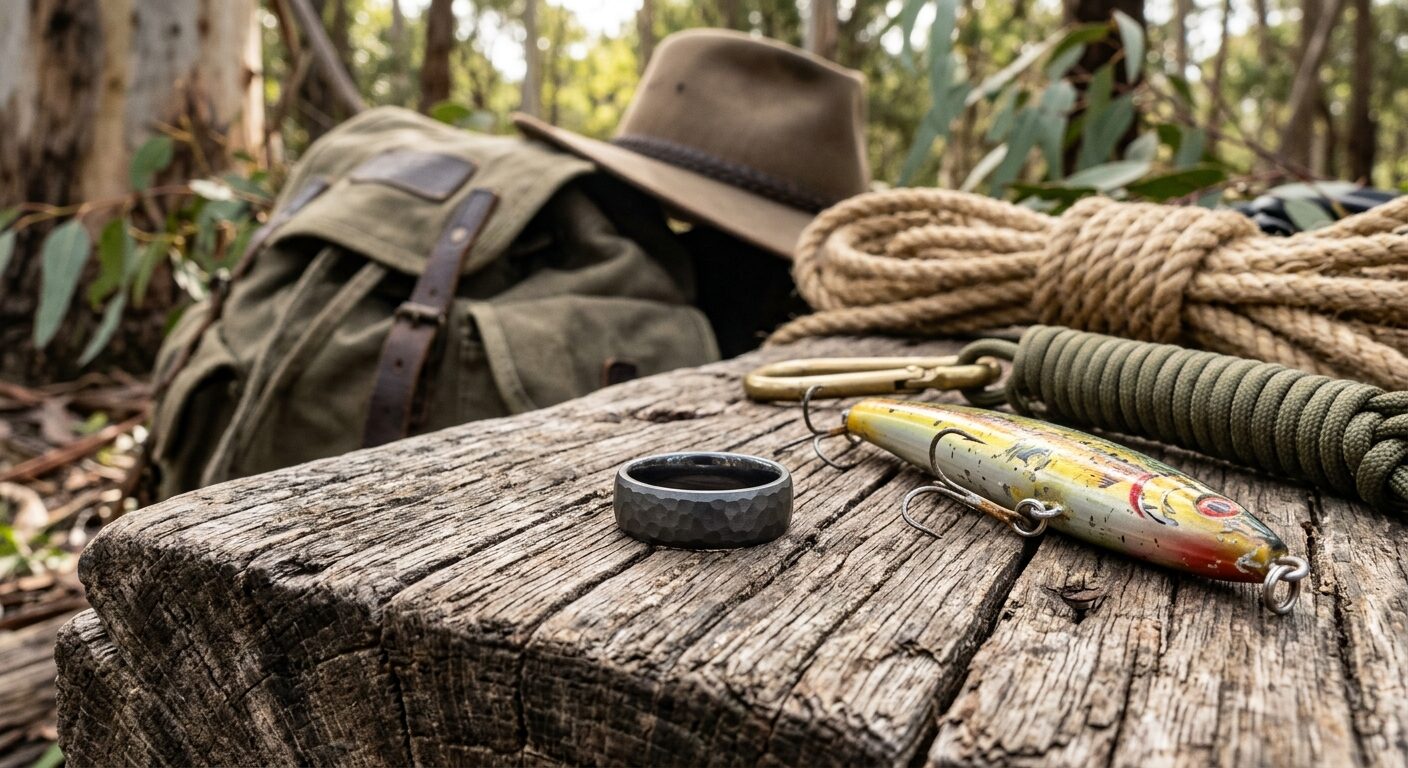
Care tips that keep an outdoor ring looking sharp
Direct answer: Rinse the ring after saltwater exposure, dry it properly, and give it a quick clean with mild soap now and then. Simple maintenance keeps outdoor rings looking good and stops grit, salt, and sunscreen from building up in the finish.
You don’t need a jeweller’s kit to look after a ring that’s worn outdoors. Most of the time, warm water, a soft cloth, and a tiny bit of mild soap do the job. Salt and grime are the enemies, not normal wear. If you’re coming off the boat or out of the bush, a quick rinse is the cheapest maintenance you’ll ever do.
For darker or matte finishes, avoid harsh abrasives. They can strip the look you actually liked in the first place. For rings with inlays or mixed materials, be a bit more careful around joints and edges. The point is to preserve the ring’s appearance without turning maintenance into a chore. If it becomes a chore, you’ll stop doing it.
If the ring gets gritty, scratched, or coated in sunscreen, clean it sooner rather than later. Fine grit can act like sandpaper when you keep wearing it. A simple clean keeps the ring comfortable and helps the finish last longer. That’s especially true for blokes who wear the same ring fishing, working, and going out for a beer afterward.
FAQ
What’s the best metal for a fishing wedding ring?
Titanium is usually the best all-round pick because it’s light, corrosion-resistant, and comfortable for long wear. Tungsten is also excellent if you want a heavier, tougher feel.
Will a tungsten ring rust in saltwater?
Tungsten itself is highly resistant to corrosion, but the overall ring depends on the full design and finish. For fishing use, a smooth, well-made ring with a stable finish is the smart choice.
Are black rings good for outdoor work?
Yes, if you want a low-key look that hides scuffs better than polished silver-tone bands. Just choose a design with a smooth profile so it doesn’t snag on line, gloves, or tools.
Should I take my ring off when fishing or using machinery?
If there’s any chance of snagging, crushing, or entanglement, yes. A wedding ring is great for everyday wear, but it should come off when the job creates a real hand-safety risk.
References
- Safe Work Australia — guidance on managing workplace hand and entanglement risks.
- WorkSafe Queensland — practical advice on hand safety and avoiding entanglement hazards.
- Healthdirect Australia — Australian health information for hand injuries and when to seek care.