

Men’s Rings for Mining Workers: What’s Safe, What Lasts and What’s Compliant

TL;DR
Australian mining workers face genuine ring safety challenges on site — from ring avulsion risk to strict WHS jewellery policies. The mining worker wedding ring australia guide covers which materials are safe, what the rules are, how to handle the on-site/off-site split, and how to choose a ring that lasts in the toughest environments on earth.
In This Guide
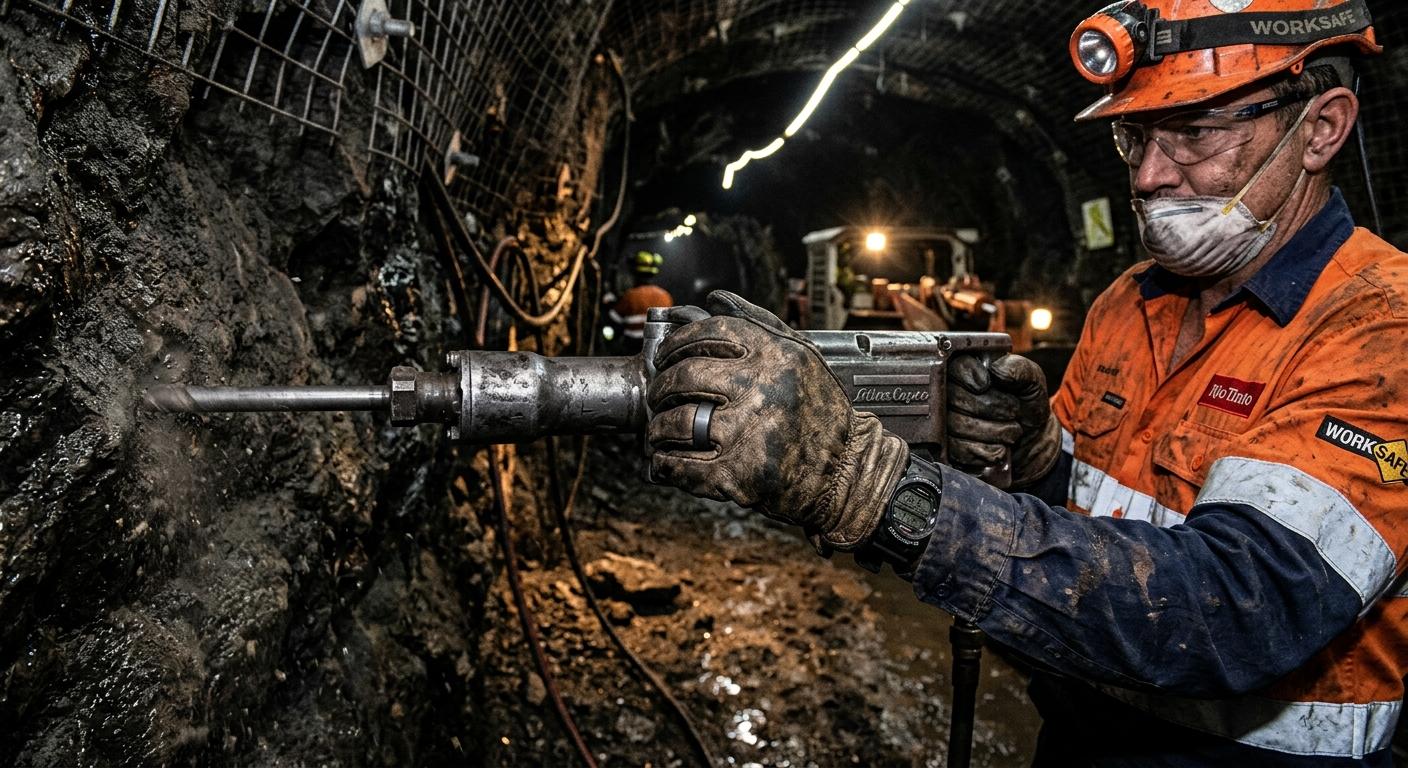
The Mining Ring Challenge
Australian mining workers operate in some of the most physically demanding and safety-regulated environments in the country. The mining worker wedding ring australia question is fundamentally a safety one before it is a style one: which ring is safe to wear on site, which is best for off-site life, and how do you manage the gap between the two?
The Australian mining sector employs over 280,000 people directly, according to the Minerals Council of Australia, with many more in associated industries. These workers face strict safety requirements — including detailed jewellery policies — that most office workers never encounter. The consequences of getting ring choices wrong in a mining environment are not minor. Ring avulsion, chemical exposure, electrical hazards, and crush injuries from heavy equipment are genuine risks that the right ring choice can significantly reduce.
The good news is that the Australian ring market now offers materials specifically suited to industrial environments — materials that provide protection when worn on site and beauty when worn at home.
WHS Rules and Mining Site Jewellery Policies
Australian workplace health and safety legislation (Work Health and Safety Act 2011) places a legal obligation on mining operators to identify and control jewellery hazards. Safe Work Australia’s guidance on mechanical hazards and PPE specifically addresses rings, bracelets, and chains in environments involving rotating machinery, electrical equipment, and entanglement risks.
In practice, most Australian mining sites include a detailed jewellery policy in their site safety induction. Common requirements include:
- Complete removal of all rings when operating or working near rotating machinery, conveyor systems, and drill equipment
- No metal jewellery when working on or near electrical systems — tungsten and gold conduct electricity; this is a genuine electrocution risk
- Silicone rings may be permitted on some sites at the safety officer’s discretion
- All jewellery must be declared at induction, and some sites require workers to sign a jewellery policy acknowledgment
- High-dust environments may require ring removal to prevent abrasive wear injury
If you are starting a new mining role, request the site’s specific jewellery policy before your induction. Requirements vary by site, operation type, and employer — do not assume any rule applies universally. When in doubt, no ring on site is always the safest choice.
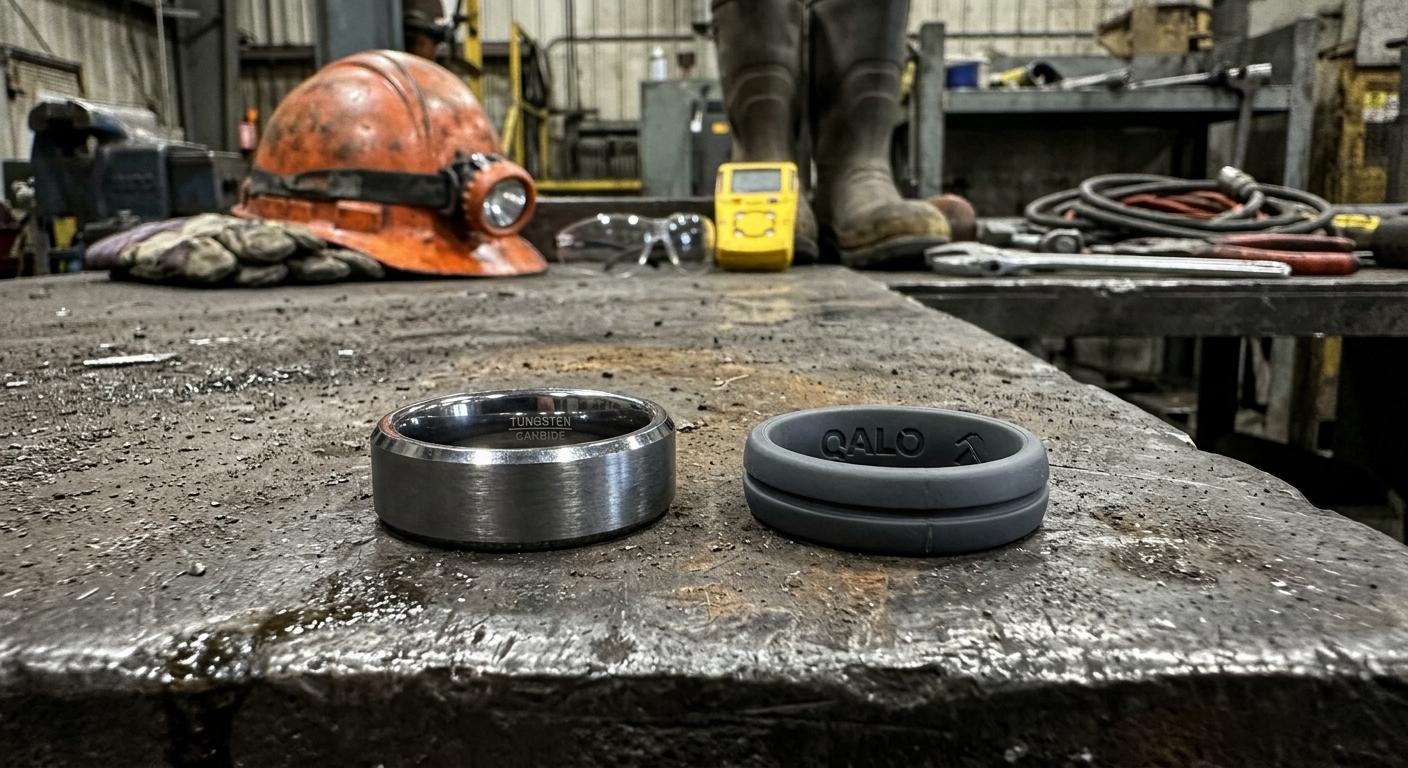
Ring Avulsion Risk in Mining
Ring avulsion is the medical term for an injury where a ring is caught on equipment or machinery and the resulting force injures or degloving the finger. Safe Work Australia records ring-related injuries as a recurring category in its annual workplace injury statistics, with mining and construction being the highest-risk industries.
The mechanics are specific to mining environments: conveyor belts, drill rigs, loading equipment, ladders, scaffolding, and mobile machinery all present entanglement risks. A ring that catches on any fixed point while the hand is in motion can cause anything from a painful friction burn to partial or full finger degloving.
Material matters significantly in avulsion risk:
- Gold and soft metal rings: Highest risk — they deform rather than break, maximising the crushing force on the finger
- Titanium rings: Can be cut from the finger with standard ring cutters, reducing emergency medical complexity
- Tungsten rings: Cannot be deformed but will shatter under sideways force — shattering is preferable to deforming in avulsion scenarios
- Silicone rings: Lowest risk — designed to tear safely under load before any significant force reaches the finger
Best Ring Materials for Mining Workers
For mining workers, material choice is guided by three factors: on-site safety profile, durability for a physical lifestyle, and aesthetics for the time away from work.
Tungsten: The Off-Site Champion
For the time away from the mine — weekends at home, family events, social occasions — tungsten rings are the most practical choice for mining workers. Virtually scratch-proof, tungsten handles the incidental bumps and knocks of a physical lifestyle without losing its finish. The black or brushed-grey aesthetic is popular with the mining demographic. The caveat: tungsten cannot be removed from a finger with standard cutters — it must be cracked by a jeweller or first responder. This is acceptable off-site but creates complexity in medical emergencies on-site. Remove tungsten before going underground or into high-risk areas.
Titanium: The Most Site-Friendly Metal
Titanium rings are preferred by many site safety officers over tungsten because they can be cut from the finger using standard ring cutters. This makes emergency medical procedures simpler. Titanium is also lighter than tungsten, reducing discomfort during extended wear under gloves. The trade-off is slightly less scratch resistance than tungsten — titanium will show surface marks from abrasive environments over time.
Silicone: The On-Site Solution
For any period on-site, a silicone ring is the only responsible choice. Silicone tears under load, preventing avulsion injury. It does not conduct electricity. It fits comfortably under gloves. It is chemical-resistant and waterproof. A quality silicone ring costs under $50 — a negligible price for a genuine safety benefit. Many mining workers keep a silicone ring in their PPE kit as a matter of course.
Silicone Rings for Mining Workers
Silicone rings have become standard kit for thousands of Australian mining workers, for good reason. Here is why they work specifically in mining environments:
- Break-safe design: The ring tears before it injures — the defining safety advantage
- Non-conductive: Safe around electrical systems where metal rings are prohibited
- Chemical resistant: Handles exposure to diesel, oils, lubricants, and most mining chemicals without degrading
- Glove-compatible: The soft, flexible material sits comfortably under work gloves without creating pressure points
- Dust and grit resistant: Does not trap abrasive particles against the skin the way a rigid metal ring can in dusty environments
- Inexpensive: If damaged, lost, or worn out on-site, the replacement cost is minimal
Many mining workers cycle through silicone rings regularly — replacing them when they show wear rather than treating them as a permanent purchase. This is the right approach for a ring that is working as a safety device in a demanding environment.

Choosing Your Off-Site Wedding Band
For the time away from the mine — the weeks at home, the weekends with family, the special occasions — your wedding band should be something you love wearing and that lasts. For mining workers, this means:
- Durability: Your ring may survive considerable incidental rough handling on leave days. Tungsten’s scratch resistance is ideal.
- Low maintenance: You do not want to be polishing a gold ring every week. Tungsten and titanium are maintenance-free.
- Meaningful design: After weeks away from home, the ring you put on when you walk through the door should feel significant. Consider an engraving, a meaningful material choice, or a unique design that marks what the ring represents.
Explore the full range at the Men’s Rings Online shop for options suited to mining workers’ lifestyles. The complete men’s ring collection includes durable options across every price point.
Buying Guide and Recommendations
For mining workers buying a ring system, the practical recommendation is a two-piece approach:
- A silicone ring for on-site wear or as a safety backup during any physical activity. Choose a style in black, dark grey, or your preferred colour. Spend under $50.
- A tungsten or titanium wedding band for off-site life. Choose a design that reflects your personality — matte black, brushed silver, Damascus steel inlay, or wood inlay are all popular with the mining demographic. Budget $200–$500 for a quality ring that will last decades.
Also consider a Damascus steel ring for your formal band if you want something with exceptional character — the unique pattern of Damascus steel is genuinely individual and holds up well in active lifestyles. Browse gold ring options for traditional choices if you prefer precious metals for your off-site band.
Frequently Asked Questions
Can mining workers wear wedding rings on site in Australia?
Most Australian mining sites require removal of metal rings in areas with rotating machinery, electrical equipment, or entanglement risks under WHS legislation. Silicone rings are sometimes permitted at the safety officer’s discretion. Check your site’s induction policy for the specific jewellery rules that apply to your role.
What is the safest ring for a mining worker to wear on site?
Silicone rings are the safest option for on-site wear. They tear under load rather than deforming (preventing ring avulsion), are non-conductive, chemical-resistant, and comfortable under work gloves. All metal rings should generally be removed before entering high-risk areas.
What ring material is best for mining workers’ off-site wear?
Tungsten is the top recommendation for off-site wear — virtually scratch-proof and maintenance-free. Titanium is preferred by those who want a lighter option or a material that standard emergency cutters can remove.
Do Australian WHS laws require mining workers to remove rings?
WHS Act 2011 and Safe Work Australia guidelines require operators to control jewellery hazards. This typically translates into site-specific policies requiring ring removal in high-risk areas. Always check your specific site induction for the applicable policy.
What is ring avulsion and why does it matter for mining workers?
Ring avulsion occurs when a ring catches on equipment and the resulting force injures the finger. Metal rings that deform create the greatest risk. Silicone rings tear safely before this force reaches the finger — the key safety advantage for mining environments.
Is the two-ring strategy practical for mining workers?
Yes. A silicone ring for on-site use and a quality tungsten or titanium band for off-site life is the most practical solution. Many Australian mining workers already follow this approach as standard practice.
References
- Safe Work Australia — Mechanical Hazards and Jewellery Safety in Australian Workplaces
- Minerals Council of Australia — Mining Safety Performance in Australia
- Australian Government — Work Health and Safety Act 2011 — WHS Act 2011 Full Text