

Men’s Wedding Bands in 2026: The ‘Materials With a Past’ Trend Hitting Australian Grooms

Men’s wedding bands in 2026 Australia are telling a different story. The standout trend this year isn’t about shine or size — it’s about substance. Australian grooms are choosing rings made from materials with real history: Damascus steel forged from centuries-old craft, wood inlay drawn from living trees, and carbon fibre engineered for performance. If you want a ring that means something, this is the trend worth knowing.
The Materials With a Past Trend in 2026
Every few years, the men’s jewellery market pivots. Early-2000s grooms wanted traditional gold. The 2010s brought a wave of minimalist titanium and black tungsten. Now, as we move through the mid-2020s, a new preference is emerging among Australian grooms: materials that carry a backstory.
The ‘Materials With a Past’ trend is exactly what it sounds like. Instead of choosing a band purely for its look or price, grooms are asking: What is this ring made of? Where does that material come from? What does it say about me?
This isn’t a niche preference. It reflects a broader cultural shift toward authenticity, craft, and intentional buying that’s showing up across fashion, furniture, and now, fine jewellery. For men who’ve resisted the idea of wearing a ring at all, a band with a real story gives the piece genuine meaning — and that changes the conversation entirely.
In Australia specifically, this trend aligns with a growing appreciation for materials that hold up to active lifestyles while still carrying aesthetic weight. Tradies, outdoors types, and professionals alike are finding common ground in rings built from materials that feel earned rather than merely decorative.
Damascus Steel Wedding Bands — Ancient Craft, Modern Symbol
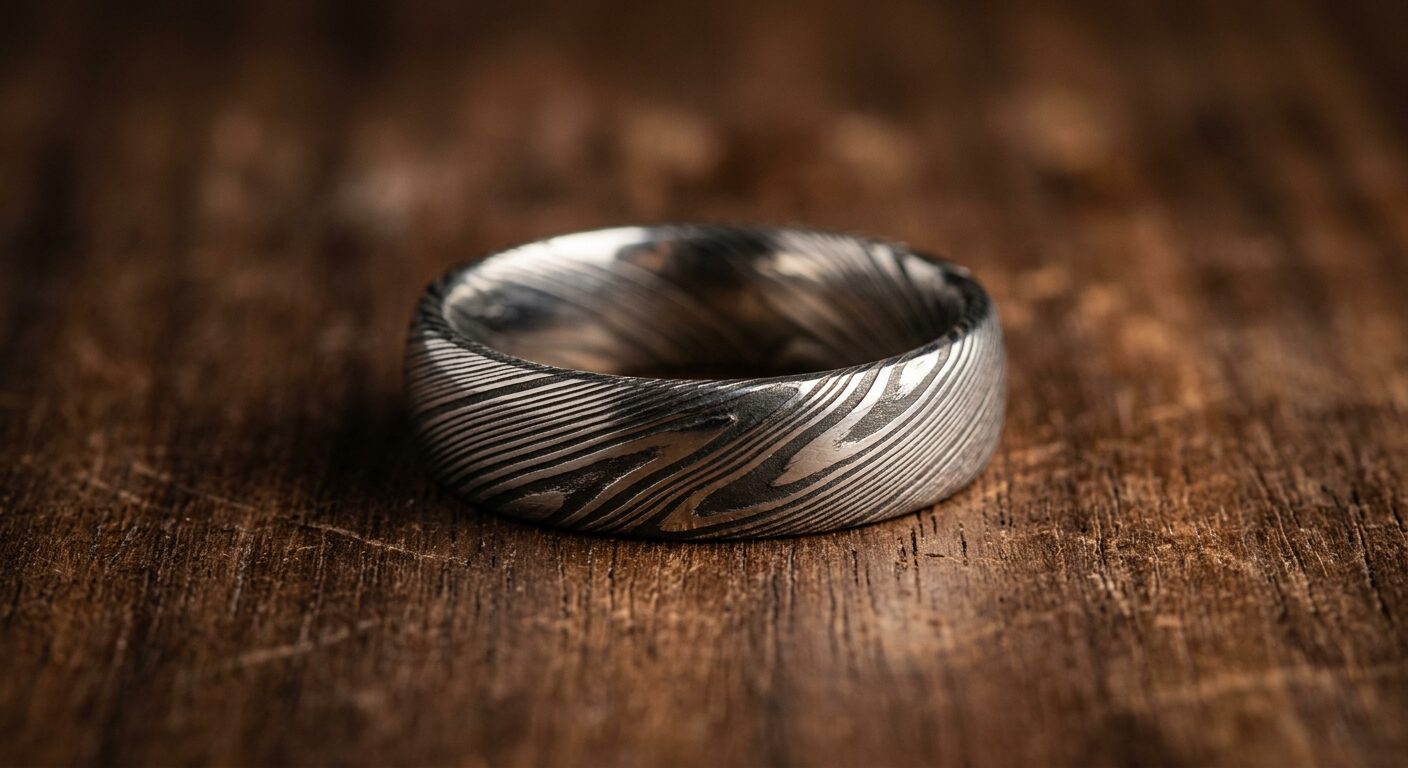
Of all the materials trending in men’s wedding bands 2026 Australia, Damascus steel is perhaps the most storied. The technique dates back to the medieval period, when blades forged in the Syrian city of Damascus were prized across the known world for their strength and their distinctive rippling patterns. No two pieces of Damascus steel ever look the same.
Modern Damascus steel rings are made by folding and welding multiple layers of steel together — sometimes hundreds of layers — before etching the surface to reveal the flowing, organic patterns beneath. The result is a ring that looks almost geological: swirling lines of light and dark that shift as the ring catches light.
For grooms who want something that stands apart from the standard tungsten or titanium options, Damascus steel wedding bands offer genuine uniqueness. Because each ring is handcrafted through the folding process, your band will have a pattern that exists nowhere else in the world. That’s a hard thing to put a price on.
Practically speaking, Damascus steel is durable enough for everyday wear, though it requires a little more care than harder metals — it can develop surface oxidation if left wet, so a light oiling or occasional polish keeps it looking sharp. Many grooms accept this trade-off readily: the slight maintenance overhead is part of what makes it feel like a proper heirloom material.
Wood Inlay Rings — Nature’s Fingerprint
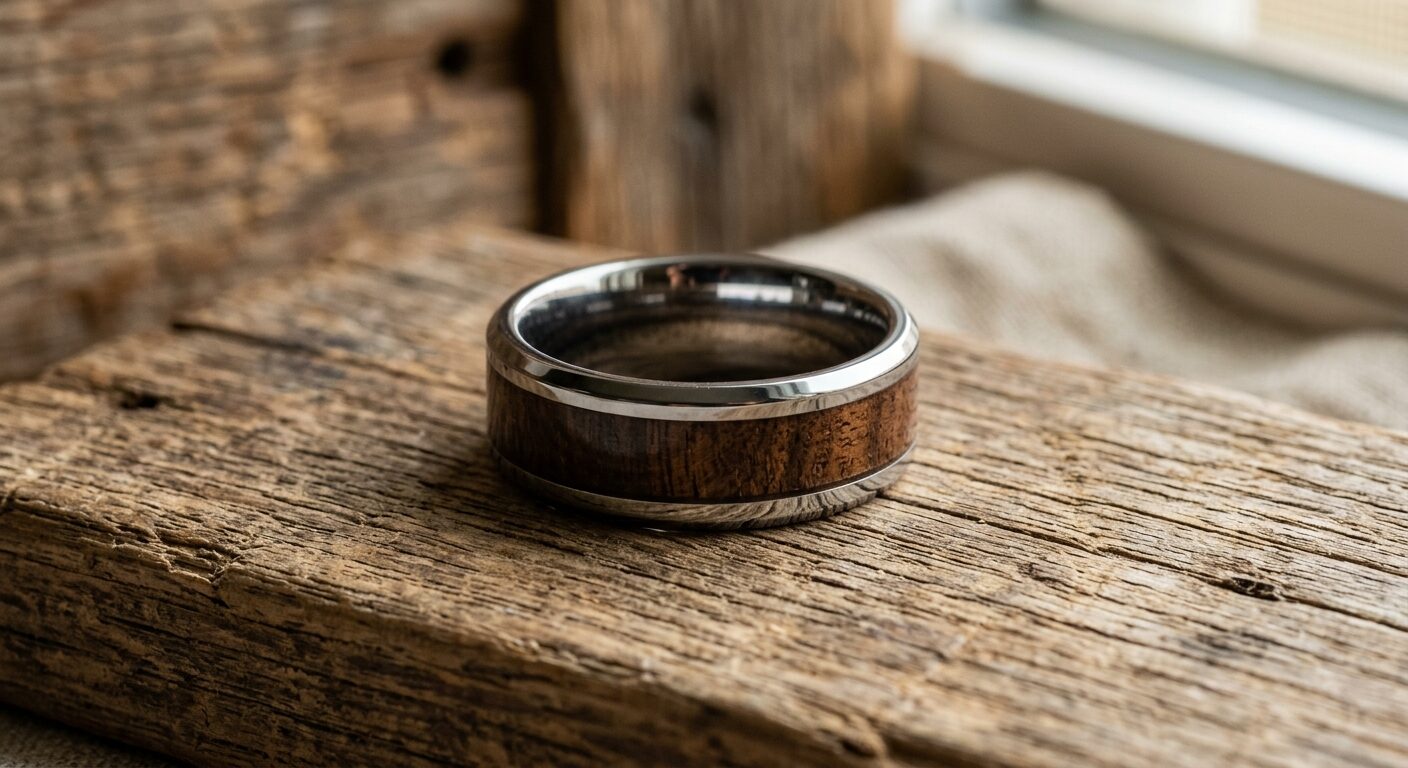
If Damascus steel appeals to the history buff, wood inlay rings speak to the groom who wants a connection to the natural world. These bands typically feature a structural outer shell — tungsten, titanium, or carbon fibre — with a carefully fitted strip of real timber running around the circumference.
The variety of timber used in modern wood inlay rings spans everything from Australian native species to exotic hardwoods. Jarrah, blackwood, and spotted gum carry particular resonance for Australian grooms — materials sourced from the same landscape they grew up in. Other popular options include whisky barrel oak (carrying its own story of bourbon and smoke), Hawaiian koa, and ebony.
What makes wood inlay rings genuinely compelling in the ‘Materials With a Past’ trend is that the wood itself carries history. A ring with reclaimed oak from a 19th-century building isn’t just jewellery — it’s a fragment of something that stood for a century before becoming part of your story. That layered meaning is exactly what 2026 grooms are looking for.
Explore the full range of wood inlay rings available at Mens Rings Online to see how different timber species change the character of each band. Lighter woods like maple or birch give a clean, modern look. Darker timbers like ebony or walnut lean into richness and contrast.
Durability is a fair question with wood inlay rings, and the honest answer is: yes, wood is a natural material and will eventually show wear — but that’s part of the appeal. The patina that develops over years of marriage isn’t damage. It’s evidence of a life lived.
Carbon Fibre Rings — Engineered Excellence With a Racing Pedigree
Carbon fibre might seem like the odd one out in a trend defined by ‘materials with a past.’ After all, it’s a thoroughly modern material — barely a few decades old in widespread use. But carbon fibre’s backstory is as compelling as any ancient steel: it was born in aerospace, refined in motorsport, and adopted by engineers and athletes for its near-miraculous strength-to-weight ratio.
A carbon fibre wedding band carries that legacy. It’s the same material used in Formula One chassis, commercial aircraft fuselages, and high-performance bicycle frames. For grooms who work in engineering, construction, aviation, or who simply appreciate precision manufacturing, a carbon fibre ring isn’t just stylish — it’s a statement about what they value.
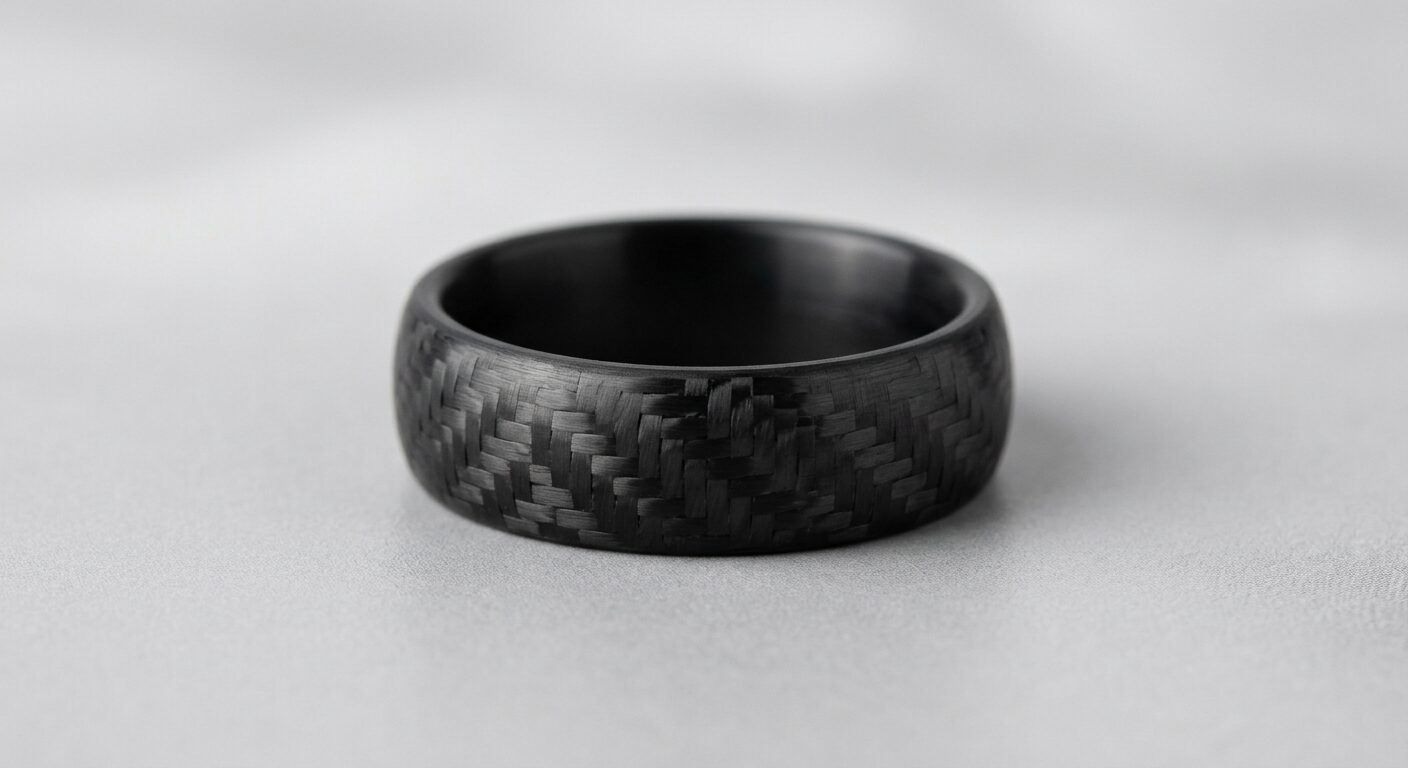
The visual appeal of carbon fibre is distinctive: the woven diagonal pattern of the fibres creates a textured, matte-dark surface that looks unlike any other ring material. It’s unmistakably modern and unmistakably purposeful. Carbon fibre rings at Mens Rings Online are available in pure carbon as well as combinations with metals and wood, allowing for custom hybrid looks that bridge the gap between the trend’s natural and engineered extremes.
Practically, carbon fibre rings are extremely lightweight and non-conductive — making them a popular choice for tradespeople and anyone working around electrical equipment. They’re also hypoallergenic, which matters for grooms who’ve struggled with metal sensitivities in the past.
Why Australian Grooms Are Choosing These Materials in 2026
The ‘Materials With a Past’ trend isn’t happening in isolation. It’s a response to several converging forces in how Australian men approach buying decisions in the mid-2020s.
The Authenticity Premium
Research from the Australian retail sector consistently shows that consumers — especially those in the 30–45 age bracket — are willing to pay more for products with provenance. The same impulse that drives the craft beer market, the premium coffee scene, and the resurgence of analogue photography is now reaching men’s jewellery. A ring made from genuine Damascus steel or real Australian timber isn’t just a ring — it’s a purchase that aligns with a broader set of values around craft, sustainability, and meaning.
The ‘This Isn’t Just a Ring’ Conversation
Men who were reluctant ring-wearers often find that materials with a story change their relationship with the piece. When your band is forged from steel that traces its lineage to medieval bladesmithing, or inlaid with timber from a tree that stood for a hundred years, it becomes easier to feel connected to it. The material provides a narrative anchor — something to explain and discuss — that a plain gold band simply doesn’t offer.
Active Australian Lifestyles
Australian grooms tend to be outdoors-oriented and hands-on. The materials dominating this trend — steel, wood, carbon fibre — are all well-suited to active wear. They’re built to handle the workshop, the surf, the gym, and the garden without looking like they’ve been through a war by the end of the week. For comparison, browse the tungsten ring collection and the titanium ring range to see how these classic durable materials compare to the newer story-driven options.
How to Choose the Right ‘Story Material’ for Your Wedding Band
With so many compelling options available, the key question becomes: which material is right for you? Here’s a practical framework for making the decision.
Think About Your Daily Environment
If you work with your hands — trades, construction, outdoor work — prioritise durability and safety. Carbon fibre is non-conductive and extremely tough. Tungsten-based wood inlay rings offer the best of both worlds: natural timber beauty with industrial-strength outer construction. Damascus steel is beautiful but requires a little more care in wet or dirty environments.
Consider What the Material Says
Your wedding band is going to be on your hand for the next several decades. It will be noticed, asked about, and commented on by friends, family, and strangers alike. What story do you want it to tell? Damascus steel says craft and history. Wood inlay says nature and groundedness. Carbon fibre says precision and performance. None of these is the wrong answer — but knowing which resonates makes the choice clearer.
Match the Aesthetic to Your Style
Damascus steel pairs well with a classic or rugged aesthetic — it’s at home with leather boots and flannel as much as with a sharp suit. Wood inlay works across casual and smart-casual looks, with the timber species doing a lot of the aesthetic work. Carbon fibre reads as contemporary and technical — ideal for the groom with a modern minimalist wardrobe. For those who prefer a sleek, dark aesthetic, the black rings collection offers additional options that complement the carbon fibre aesthetic.
Set a Realistic Budget
These specialty materials typically sit in the mid-range: more than a basic stainless steel band, considerably less than a precious metal ring. Damascus steel and carbon fibre rings generally range from $80 to $300 AUD at Mens Rings Online, with wood inlay variations in a similar bracket. For the durability, uniqueness, and storytelling value on offer, that’s a genuinely compelling value proposition.
Caring for Your Story-Material Wedding Band
Damascus steel should be kept dry where possible and treated occasionally with a light mineral oil or ring care product to prevent surface oxidation. If rust spots appear, a gentle polish with a soft cloth will usually address them. Avoid prolonged exposure to saltwater or harsh chemicals.
Wood inlay rings benefit from occasional application of a natural wood conditioner — many manufacturers include a small vial with purchase. Avoid soaking the ring in water for extended periods, and keep it away from strong chemicals, solvents, and cleaning products. The outer metal shell provides strong structural protection; it’s primarily the timber inlay that needs attention.
Carbon fibre is the most low-maintenance of the three. It’s resistant to corrosion, chemicals, and most physical abuse. Rinse with warm water and dry after heavy use. Avoid abrasive cleaning pads that could scratch the surface finish.
Frequently Asked Questions
Are Damascus steel wedding bands safe for everyday wear?
Yes, Damascus steel rings are safe and durable for daily wear. They are made from folded high-carbon steel and are strong enough for most everyday activities. The main care consideration is moisture — Damascus steel can develop surface oxidation if left wet for extended periods. A light oil treatment every few months and prompt drying after water exposure keeps the ring in excellent condition. For those in very wet working environments, carbon fibre or titanium may be a more practical choice.
How durable are wood inlay wedding rings?
Wood inlay rings are more durable than they look. The structural integrity of the ring comes from the outer metal shell — typically tungsten, titanium, or carbon fibre — which is extremely hard and resistant to damage. The timber inlay itself is the element that requires care, as it can dry out or show wear over time. With occasional conditioning and sensible care (avoiding prolonged soaking, harsh chemicals, and extreme impacts on the inlay itself), a quality wood inlay ring will last for many years of daily wear.
Can carbon fibre rings be resized?
No, carbon fibre rings cannot be resized — and neither can Damascus steel or tungsten-based wood inlay rings. This is a common limitation of alternative-material wedding bands. Because of the composite construction and the way these materials behave under cutting and shaping tools, traditional resizing isn’t possible. It’s essential to get your ring size accurately measured before ordering. Most ring retailers can advise on sizing; if you’re between sizes, sizing up is generally recommended for comfort.
What is the most popular men’s wedding band material trend for 2026 in Australia?
The dominant trend in men’s wedding bands in 2026 Australia is what industry observers are calling ‘Materials With a Past’ — a preference for bands made from materials that carry authentic stories and provenance. Damascus steel, wood inlay, and carbon fibre are the three standout materials in this trend. Each offers a combination of genuine uniqueness (no two Damascus steel patterns are identical), natural beauty (wood inlay), or engineered performance (carbon fibre) that resonates with Australian grooms looking for a ring that means something beyond its appearance.
How much do Damascus steel wedding bands cost in Australia?
Damascus steel wedding bands in Australia typically range from around $80 to $350 AUD depending on the craftsmanship, design complexity, and width of the band. This places them in the mid-range of the men’s wedding band market — significantly less expensive than precious metal rings while offering a level of uniqueness and craftsmanship that mass-produced bands don’t match. At Mens Rings Online, Damascus steel bands are available at competitive Australian prices with no international shipping delays.
The Bigger Picture: What Your Ring Reflects
A wedding ring is one of the few objects most men will wear every day for the rest of their lives. The shift toward materials with history isn’t just a trend — it’s a reflection of how the relationship between men and meaningful objects is evolving. When you choose a band forged from folded steel or inlaid with real timber or woven from aerospace-grade carbon fibre, you’re choosing something that participates in its own story rather than just occupying a slot on your finger.
That’s a significant shift from the “pick something inoffensive and move on” approach that characterised men’s ring buying for most of the 20th century. In 2026, Australian grooms are treating their wedding band as the considered purchase it deserves to be — and the materials available to them have never been more interesting.
Browse the full range of men’s wedding bands at Mens Rings Online to explore these materials in detail, compare styles, and find the band that tells your story.
References and Sources
- Sherby, O.D. & Wadsworth, J. (2001). Damascus steels. Scientific American. Historical overview of Damascus steel metallurgy and manufacturing techniques. scientificamerican.com
- Jewellers Association of Australia (2024). Consumer Trends in Australian Jewellery. Industry research on purchasing patterns and material preferences in the Australian men’s jewellery market. jaa.com.au
- Safe Work Australia (2023). Guidance on jewellery and ring safety in the workplace. Government guidance on appropriate ring materials for workers in hazardous environments, including information on non-conductive and break-away ring options. safeworkaustralia.gov.au
- Materials Today (2022). The carbon fibre revolution: From aerospace to everyday objects. Overview of carbon fibre manufacturing history, applications, and consumer product development. materialstoday.com