

Tungsten vs Titanium vs Silicone — The Complete Ring Material Guide for Australian Men

TL;DR
Tungsten is the heaviest and most scratch-resistant — ideal for blokes who want a ring that looks sharp for years. Titanium is lighter, hypoallergenic, and can be resized. Silicone is the go-to for tradies and active men who need a safe, flexible backup ring. The right choice depends entirely on your lifestyle, not the price tag.
In This Guide
- Ring Materials at a Glance — The Quick Comparison
- Tungsten Rings — The Durability Champion
- Titanium Rings — Lightweight and Versatile
- Silicone Rings — The Safe Choice for Active Blokes
- Other Materials Worth Knowing — Ceramic, Zirconium, Wood Inlay, Damascus Steel
- Full Material Comparison Table
- How to Choose the Right Material for Your Life
- FAQ — Your Questions Answered
- References
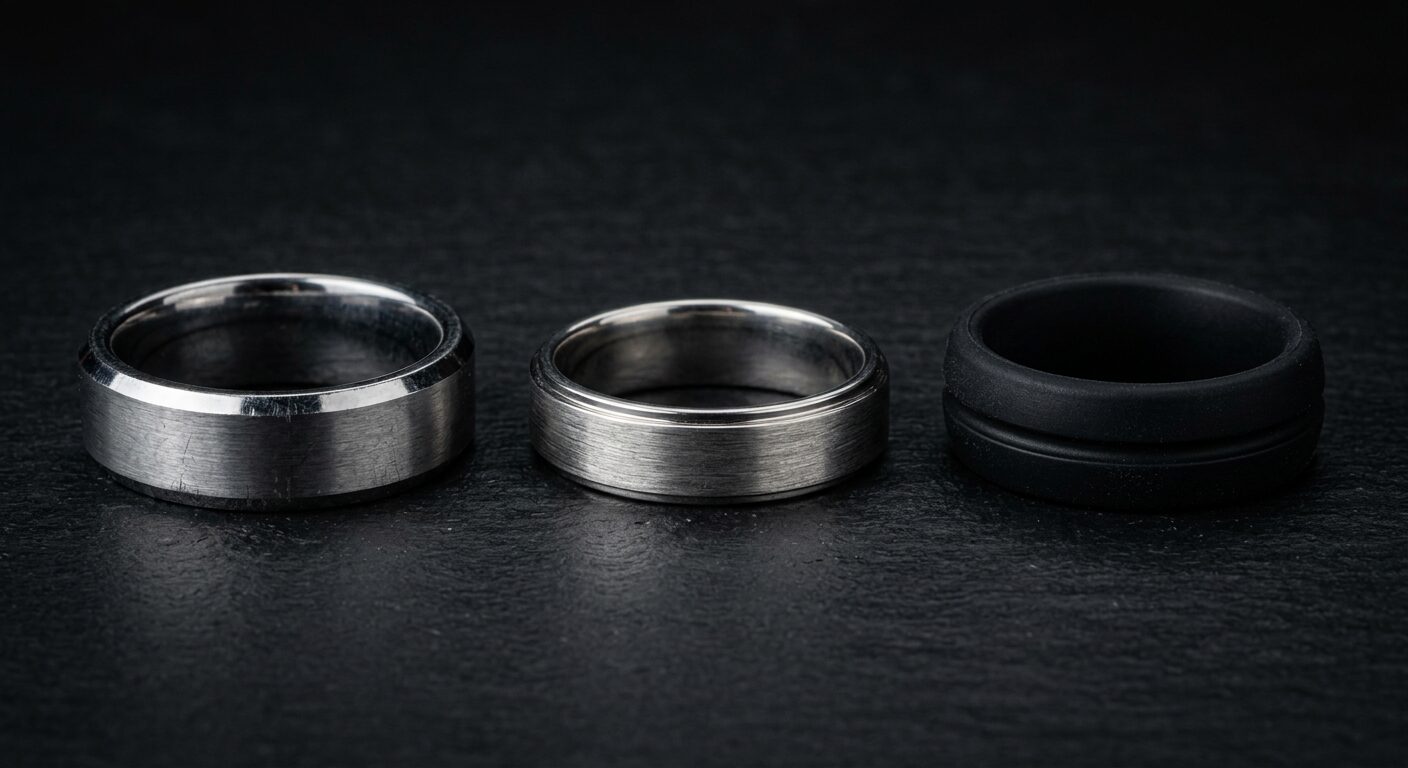
Ring Materials at a Glance — The Quick Comparison
When it comes to men’s wedding rings in Australia, the three most popular materials are tungsten carbide, titanium, and silicone — and each one serves a different purpose. Tungsten wins on looks and durability. Titanium wins on comfort and flexibility. Silicone wins on safety for hands-on work. Understanding these trade-offs is the first step to picking the right ring.
The Australian men’s ring market has shifted significantly in the past decade. According to the Jewellers Association of Australia, alternative metal rings now account for the majority of men’s wedding band sales — a significant shift away from traditional gold and silver. The primary drivers are durability, affordability, and the growing needs of Australia’s large tradie and outdoor workforce.
Before we go deep on each material, it helps to understand what you’re comparing:
- Tungsten carbide — Dense, heavy, virtually unscratchable. A ring that looks brand new after 10 years of daily wear.
- Titanium — Aerospace-grade metal that’s feather-light, hypoallergenic, and tough enough for daily life.
- Silicone — Flexible, stretchy, and designed to break away safely in a ring avulsion situation — the go-to choice for people working with machinery or heavy equipment.
Tungsten Rings — The Durability Champion
Tungsten carbide is the hardest commercially used ring material available. It rates 9 on the Mohs hardness scale — just below diamond — which means it won’t scratch from everyday wear, metal tools, or most surfaces. A tungsten ring bought today will look identical in 15 years. It’s the most popular men’s ring material in Australia for good reason: it’s bulletproof, low maintenance, and looks sharp.
Key facts about tungsten rings:
- Weight: Noticeably heavy — roughly 2–3x heavier than titanium. Most men either love this or find it takes getting used to.
- Hardness: 9 on Mohs scale — virtually scratch-proof. The trade-off is brittleness: tungsten can crack or shatter under extreme lateral force (like being caught under a heavy object).
- Resizability: Cannot be resized. Tungsten is too hard to cut and reshape. Always buy the correct size — and size up slightly if your fingers swell in heat.
- Hypoallergenic: Tungsten carbide rings bonded with nickel binder can cause reactions in sensitive skin. Look for rings specifically marketed as cobalt-free or nickel-free if you have metal sensitivities.
- Price: Typically AU$80–$250 for quality tungsten rings. Exceptional value for a ring that doesn’t scratch.
- Finishes available: Polished (mirror), brushed (matte), black PVD-coated, hammered, and combination finishes.
Best for: Men who want a sharp-looking ring that survives daily wear without maintenance. Office workers, professionals, and anyone who values aesthetics over flexibility.
Browse our range of tungsten rings — from classic polished bands to brushed and black finishes. If you want a ring that looks good without any effort, this is the category to start with.
Titanium Rings — Lightweight and Versatile
Titanium is the ring material that surprises most men when they first try it on: it’s almost eerily light, yet genuinely tough. Grade 23 titanium (Ti-6Al-4V ELI) — the aerospace standard — is stronger than steel at a fraction of the weight. It’s the best all-round choice for men who want a practical, comfortable ring that can also be adjusted if their finger size changes over time.
Key facts about titanium rings:
- Weight: Very light — roughly 45% the weight of steel. Some men find this takes adjustment after wearing a heavier ring.
- Hardness: 6 on Mohs scale — tough, but will scratch with daily wear over time. Brushed finishes hide scratches better than polished ones.
- Resizability: Titanium rings can often be resized by a jeweller (within 1–2 sizes), unlike tungsten. Not all styles can be resized — check before purchasing.
- Hypoallergenic: Fully hypoallergenic. Titanium is biocompatible, used in surgical implants, and safe for virtually all skin types including nickel sensitivities.
- Price: Typically AU$70–$300 depending on design complexity.
- Finishes available: Polished, brushed, anodised (colour finishes), sandblasted, combined with wood or carbon fibre inlays.
Best for: Men who want everyday comfort, hypoallergenic properties, and the option to resize. Good choice for first-time ring wearers who aren’t sure how they’ll adapt to a band on their finger.
Explore titanium rings in brushed, polished, and black finishes — a solid all-rounder for most Australian men.
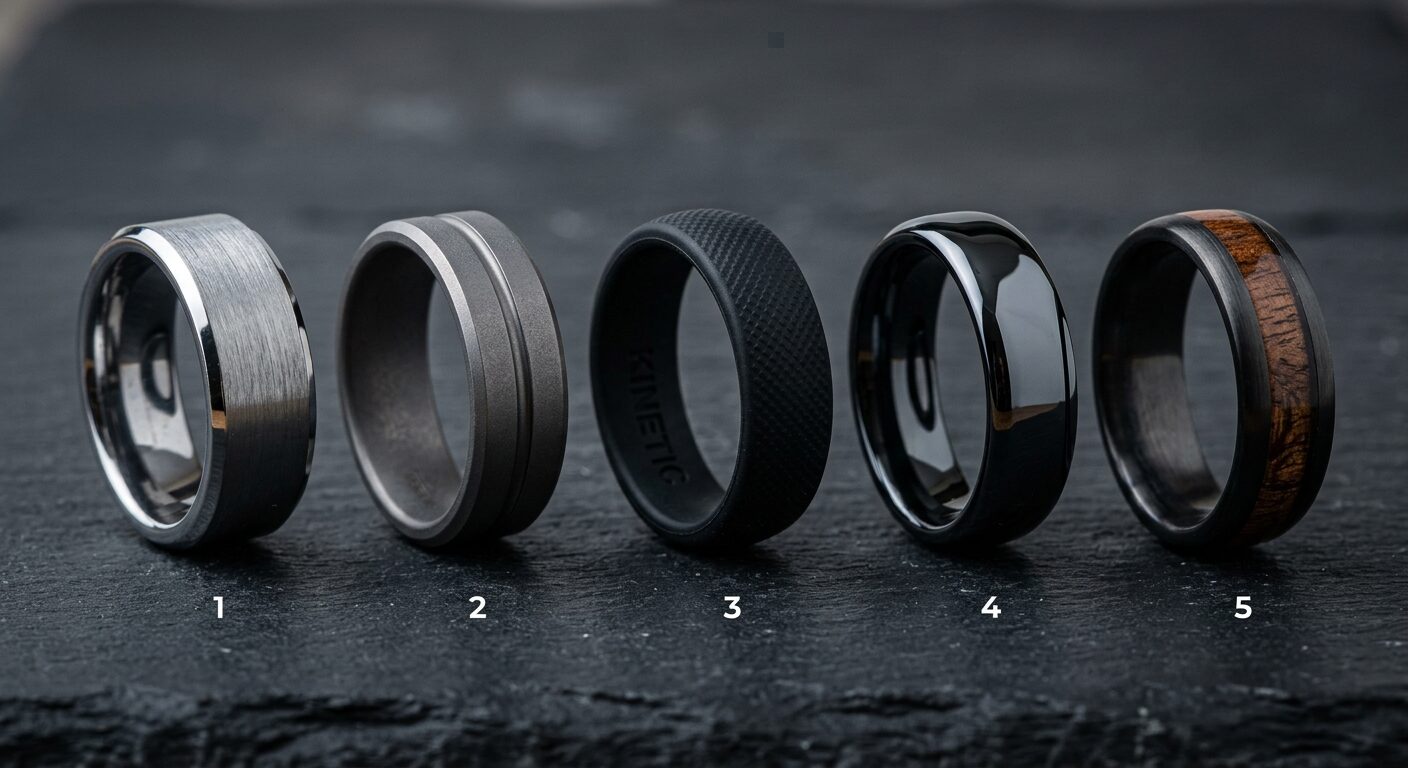
Silicone Rings — The Safe Choice for Active Blokes
Silicone rings exist for one primary reason: safety. Ring avulsion — where a ring catches on a surface and strips skin, tissue, or bone from a finger — is a genuine workplace hazard. Medical-grade silicone rings are designed to stretch and break under extreme force, preventing this injury. For tradies, gym-goers, or anyone working with machinery, a silicone ring isn’t a fashion choice — it’s a practical one.
According to data from Safe Work Australia, hand and finger injuries are among the most common workplace injuries in trades, manufacturing, and construction — industries that employ hundreds of thousands of Australians. A silicone ring that breaks away under force is a simple way to reduce that risk without going ring-free at work.
Key facts about silicone rings:
- Weight: Practically weightless — you’ll forget you’re wearing it within days.
- Hardness: Not applicable — silicone is flexible and non-rigid by design.
- Resizability: Not resizable, but sizes are inexpensive enough to buy a replacement if your finger size changes.
- Hypoallergenic: Medical-grade silicone is fully hypoallergenic and sweat-resistant — ideal for hot Australian conditions.
- Price: Very affordable — typically AU$20–$60. Some men buy several in different colours.
- Durability: Silicone degrades over time with UV exposure and chemical contact. Typically lasts 1–3 years with regular wear before showing wear. Replacement cost is minimal.
Best for: Tradies, construction workers, gym-goers, surfers, swimmers, and anyone who can’t safely wear a metal ring at work. Many Australian men wear a metal ring for going out and a silicone ring for work — a practical two-ring system.
Other Materials Worth Knowing — Ceramic, Zirconium, Wood Inlay, Damascus Steel
Beyond the big three, several other materials are worth understanding before you commit. Each has a unique combination of properties that suits a specific kind of buyer.
Zirconium Rings
Zirconium is a metal that can be heat-treated to produce a durable black oxide surface layer — this gives it the deep, true black finish that many men want without the PVD coating used on tungsten. It’s lightweight, hypoallergenic, and scratch-resistant. For men specifically looking for a black ring, zirconium is one of the best options — the black isn’t a coating, it’s the material itself.
Ceramic Rings
High-tech ceramic is harder than titanium and extremely scratch-resistant. Ceramic rings are lightweight, available in true matte black or white finishes, and fully hypoallergenic. The downside: like tungsten, ceramic is brittle — it can shatter under sharp impact. It’s a great option if you love the lightweight feel but want more scratch resistance than titanium offers.
Wood Inlay Rings
Wood inlay rings — typically titanium or tungsten bands with a real timber inlay — are gaining popularity among men who want something unique and natural-looking. The timber (often Australian species like jarrah or blackwood, or exotic options like koa) is stabilised and sealed, making it surprisingly durable. Browse wood inlay rings if you want a ring that genuinely stands out.
Damascus Steel Rings
Damascus steel rings are made from pattern-welded steel — layers of different steels forge-welded and etched to reveal organic, flowing patterns. Every ring is unique. Damascus steel rings are for the man who wants genuine craftsmanship and a ring that tells a story. They require slightly more maintenance than tungsten or titanium (keep dry, occasional oil), but nothing burdensome.
Carbon Fibre Rings
Carbon fibre rings are the choice for engineering-minded blokes and motorsport fans. They’re extremely lightweight, high-tech in appearance, and don’t conduct electricity — a practical bonus for electricians. Carbon fibre rings often feature distinctive weave patterns and pair well with titanium or tungsten bands.
Full Material Comparison Table
| Material | Weight | Hardness (Mohs) | Resizable | Hypoallergenic | AU Price Range | Best For |
|---|---|---|---|---|---|---|
| Tungsten | Heavy | 9 | ❌ No | Mostly (check binder) | $80–$250 | Durability, looks |
| Titanium | Light | 6 | ✅ Usually | ✅ Yes | $70–$300 | Comfort, all-round |
| Silicone | Negligible | Flexible | ❌ No (replace) | ✅ Yes | $20–$60 | Tradies, active use |
| Ceramic | Light | 8.5 | ❌ No | ✅ Yes | $80–$220 | Scratch resistance, light weight |
| Zirconium | Medium | 7 | Limited | ✅ Yes | $120–$280 | True black finish |
| Wood Inlay | Medium | Varies (base metal) | Limited | Mostly | $100–$300 | Unique, natural look |
| Damascus Steel | Medium-Heavy | 7–8 | Limited | Mostly | $150–$400 | Craftsmanship, pattern |
| Carbon Fibre | Very Light | 7 | ❌ No | ✅ Yes | $80–$250 | Tech aesthetic, electricians |
How to Choose the Right Material for Your Life
The best ring material is the one that fits your daily reality — not the most expensive option or the one your mate chose. Think about where your hands spend most of their time, whether you’ve had skin reactions to metals before, and whether you can commit to a fixed ring size for life.
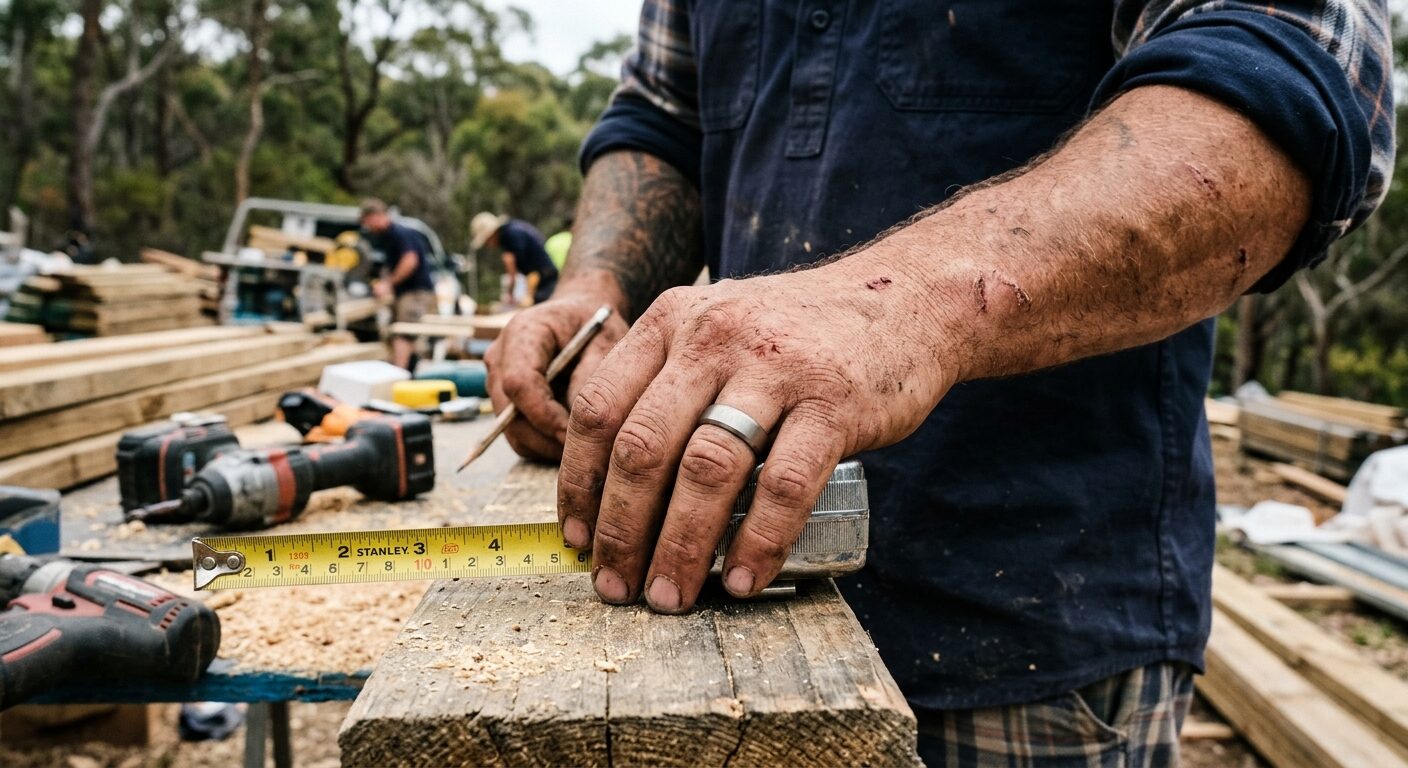
If you work with your hands (tradie, construction, farming)
Consider a two-ring approach: a silicone ring for work (safety first — ring avulsion is a real risk around machinery and tools), and a titanium or tungsten ring for going out. This is increasingly common among Australian tradies. The silicone ring costs $20–$40 and could prevent a serious injury.
If you train at the gym or play sport
Silicone is again the practical choice for training. Tungsten and titanium are fine for casual sport, but silicone is safer around barbells and equipment, and won’t chafe when gripping.
If you want a ring that looks sharp forever
Tungsten is your material. It will outlast every other ring material in terms of maintaining its finish. The only maintenance required is an occasional clean with warm water and soap.
If you have sensitive skin
Titanium is the safest choice — it’s biocompatible and used in surgical implants. Medical-grade silicone is also fully safe. If you want tungsten, look specifically for cobalt-free, nickel-free versions.
If you’re not sure of your ring size
Choose titanium — it’s the most commonly resizable alternative metal. Tungsten, ceramic, and carbon fibre cannot be resized, so getting the size right matters significantly. According to ACCC guidance on consumer product sizing, understanding sizing before purchasing avoids costly exchanges.
If you want something truly unique
Wood inlay, Damascus steel, and carbon fibre are the conversation-starter categories. These aren’t mass-produced rings — they have distinctive patterns, textures, and stories behind them. The trade-off is slightly higher cost and less flexibility around resizing.
Frequently Asked Questions
Is tungsten or titanium better for a wedding ring?
Neither is objectively better — they suit different priorities. Tungsten is harder (Mohs 9 vs 6), heavier, and virtually scratch-proof, making it ideal for men who want a low-maintenance ring that holds its finish. Titanium is lighter, hypoallergenic, and can usually be resized. If you want maximum durability and don’t need resizing, choose tungsten. If weight, comfort, or hypoallergenic properties matter, choose titanium.
Can you wear a silicone ring all the time?
Yes — medical-grade silicone rings are designed for continuous wear. They’re sweat-resistant, water-safe (pool, ocean, shower), and UV-stable for the short-to-medium term. Silicone does degrade over time with UV and chemical exposure, typically lasting 1–3 years of daily wear. Replacement cost is low (usually $20–$40), so most men simply replace them when they show wear.
Why can’t tungsten rings be resized?
Tungsten carbide is too hard to cut or reshape with standard jeweller’s tools. The material would crack or shatter before it could be resized. Always order the correct size — and factor in that fingers can swell in hot weather, which is a real consideration in Australian summers. Most retailers offer size exchanges on unworn rings, so check the exchange policy before buying.
Are silicone rings safe for tradies in Australia?
Yes — in fact, many Australian safety guidelines recommend or encourage silicone rings for workers in trades and construction. Medical-grade silicone rings are designed to stretch and break under force (typically around 20–40 pounds of pull), which prevents the ring from trapping a finger in a ring avulsion injury. Safe Work Australia notes that ring-related hand injuries are a documented hazard in many trade environments. A silicone ring that breaks is protecting your finger.
What’s the best men’s ring material for Australian conditions?
Australian conditions — salt air near the coast, intense UV, heat, and sweaty hands — affect different materials differently. Tungsten and titanium handle Australian conditions well. Silicone is UV-resistant short-term but may degrade over years. Wood inlay rings need occasional re-sealing in very humid conditions. Damascus steel requires slightly more maintenance (keep dry, occasional oil) near saltwater. For the least maintenance in all conditions, tungsten or titanium are the safest picks.
How much should I expect to pay for a quality men’s ring in Australia?
Quality alternative metal rings start from around AU$70 for titanium and tungsten, with most men spending $100–$200 for a well-made band. Silicone rings range from $20–$60. Specialty materials like Damascus steel and wood inlay typically range $150–$400. You don’t need to spend more than $250 for a ring that will last decades — alternative metals offer genuine durability at a fraction of the cost of traditional precious metals.
References
- Jewellers Association of Australia — Industry body representing Australian jewellers and retailers.
- Safe Work Australia — Hand and Finger Injury Data — Workplace injury statistics for Australian trades and construction industries.
- Australian Competition and Consumer Commission (ACCC) — Consumer rights and product sizing guidance for Australian shoppers.
Shopping by material? Compare the full men’s tungsten rings and men’s silicone rings collections when you are ready to see available styles.