

Wood Inlay Wedding Rings: Everything You Need to Know (Durability, Care, Aussie Options)

TL;DR
Wood inlay wedding rings bring warmth and natural character to men’s jewellery that no metal alone can replicate. This complete guide covers what wood inlay wedding ring australia buyers need to know — timber species, durability, care, sizing, and how to choose the right style for the Australian climate and lifestyle.
In This Guide
What Is a Wood Inlay Wedding Ring?
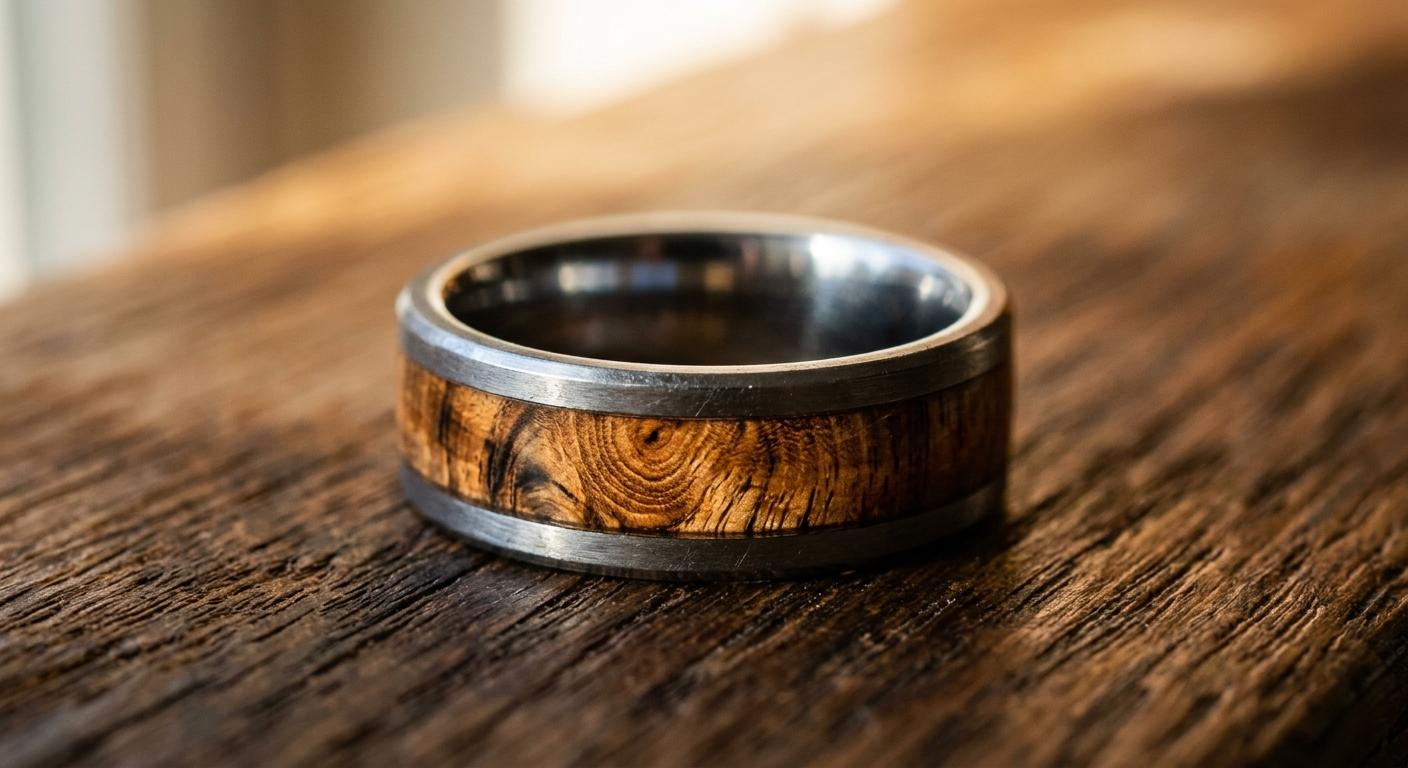
A wood inlay wedding ring is a men’s band featuring a strip of real timber set into a metal base — typically tungsten, titanium, or stainless steel. The wood inlay wedding ring australia category has become one of the fastest-growing styles in men’s wedding jewellery, appealing to grooms who want something warm, organic, and genuinely individual. Because no two pieces of timber have identical grain, every wood inlay ring is uniquely its own — a quality that resonates with buyers who want their ring to carry personal meaning.
The construction involves stabilising the timber (treating it with resin to prevent cracking and moisture damage), cutting it into a precise strip, and setting it into a channel in the metal band. The result is a ring that combines the strength and durability of the metal frame with the warmth and natural beauty of real wood. According to Jewellers Association of Australia data, alternative and natural material inlay rings have grown from under 5% of the men’s wedding ring market to over 20% in the past decade — a dramatic shift driven by changing preferences among Australian grooms aged 25–40.
Timber Species: Which Wood to Choose
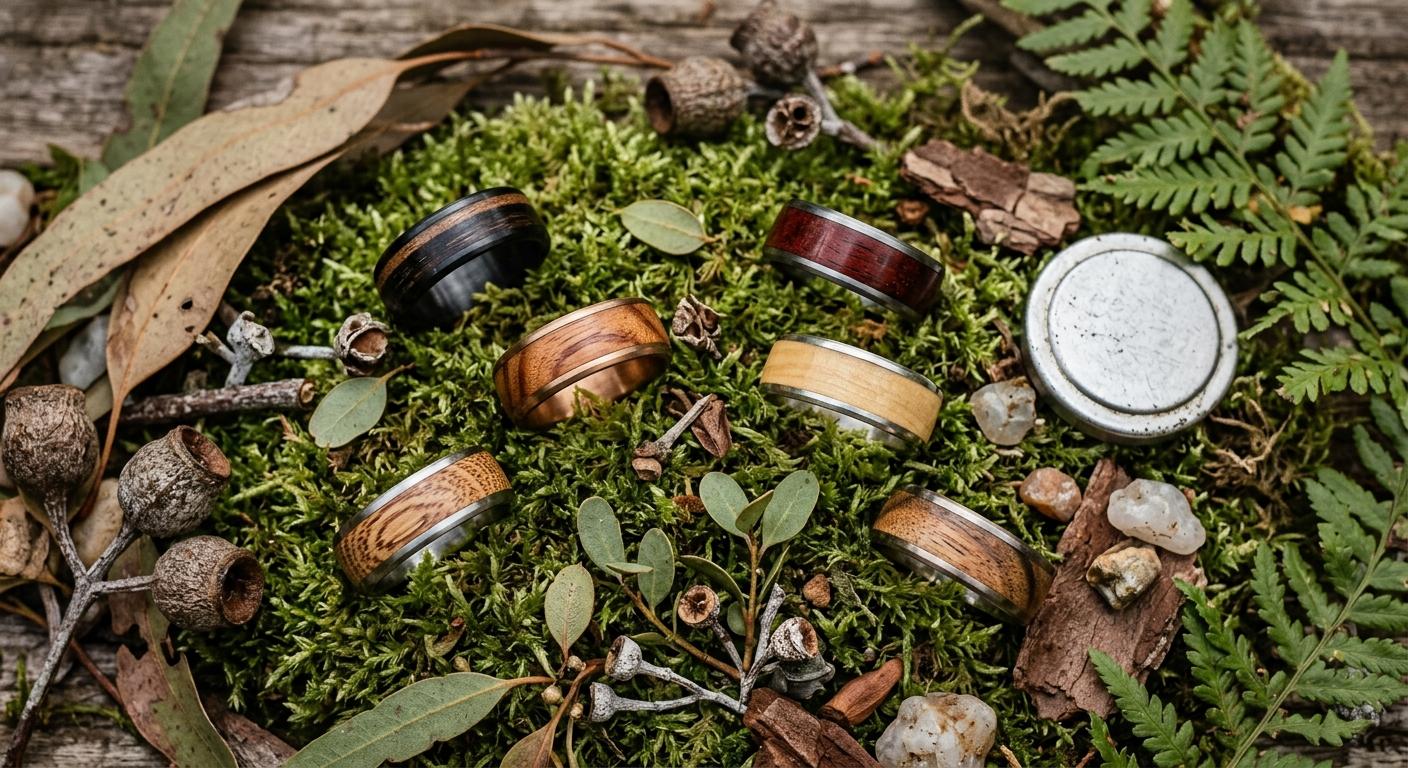
The timber species used in a wood inlay ring significantly affects both its appearance and its long-term performance. Common options available to Australian buyers include:
Koa Wood
Hawaiian koa is one of the most popular choices globally. It features rich golden-brown tones with distinctive layered grain that creates a visual effect called “chatoyancy” — the way the grain seems to shift and shimmer under light. Koa is hard, stable, and takes on a beautiful patina with wear. It is sustainably harvested and carries significant cultural meaning in Hawaiian tradition. For Australians who value uniqueness and craftsmanship, koa is an excellent choice.
Australian Native Timbers
Several native Australian species are increasingly used in premium ring making, including jarrah, blackwood, and Queensland maple. These species connect the ring to the Australian landscape — genuinely meaningful for men who have a strong connection to the land, the bush, or outdoor life. Jarrah in particular has a rich, deep red-brown tone that pairs beautifully with black tungsten frames.
Ebony
African ebony offers near-black colouring with tight, consistent grain. It creates a sophisticated, understated effect — natural in material but dark and bold in appearance. Ebony is extremely hard and pairs particularly well with silver or grey tungsten frames.
Rosewood and Padauk
Rosewood species offer warm red-brown tones with prominent grain character. Padauk is similarly warm with vivid orange-red tones that age beautifully to a deeper brown. Both species are striking choices for men who want warmth and colour in their ring.
How Durable Are Wood Inlay Rings?
Durability is the most common question about wood inlay rings — and the honest answer is that they require more mindful care than pure metal rings, but they are far more durable than most people expect when properly constructed and cared for.
The key to durability is stabilisation. Quality wood inlay rings use timber that has been vacuum-impregnated with resin, a process that hardens the wood from the inside out and dramatically increases its resistance to moisture, cracking, and wear. Stabilised timber in a ring context is much harder than raw wood and will handle the demands of everyday wear across years of use.
The metal frame (typically tungsten or titanium) protects the inlay from direct impact and provides the structural strength of the ring overall. The wood inlay is protected on both sides by the metal frame and is only exposed on the outer surface, which limits its exposure to mechanical wear.
Realistically, a quality wood inlay ring in a tungsten or titanium frame will last for many years of daily wear with proper care. It is not the right choice for heavy industrial work or environments with extended water or chemical exposure.
Wood Inlay Ring Care — The Complete Guide
Wood inlay rings require specific care to maintain their appearance over years of wear:
Water Exposure
While stabilised wood inlay rings can handle brief water exposure (handwashing, light rain), they should be removed before swimming, showering for extended periods, or any activity involving prolonged water submersion. The resin stabilisation provides significant protection, but repeated extended water exposure can eventually cause the wood to swell or the grain to raise slightly.
Cleaning
Clean with a soft cloth and a small amount of mild soap. Rinse thoroughly with clean water and dry immediately. Do not soak the ring or use ultrasonic cleaners, as these force water into microscopic gaps in the wood surface.
Conditioning
Occasional application of a small amount of wood-safe oil (such as Danish oil or mineral oil) will keep the timber looking rich and prevent drying. Apply a tiny amount with a soft cloth, allow to absorb for a few minutes, and buff off the excess. Do this 2–3 times per year or whenever the wood looks slightly dry.
Storage
Store separately from other jewellery to prevent scratching the wood surface. A padded ring box or soft pouch is ideal.
What to Avoid
- Bleach, harsh chemicals, cleaning solvents
- Extended pool or spa exposure (chlorine degrades wood grain)
- High-heat environments (sauna, prolonged sun exposure on the ring)
- Heavy impact against hard surfaces
Wood Inlay Rings in the Australian Context
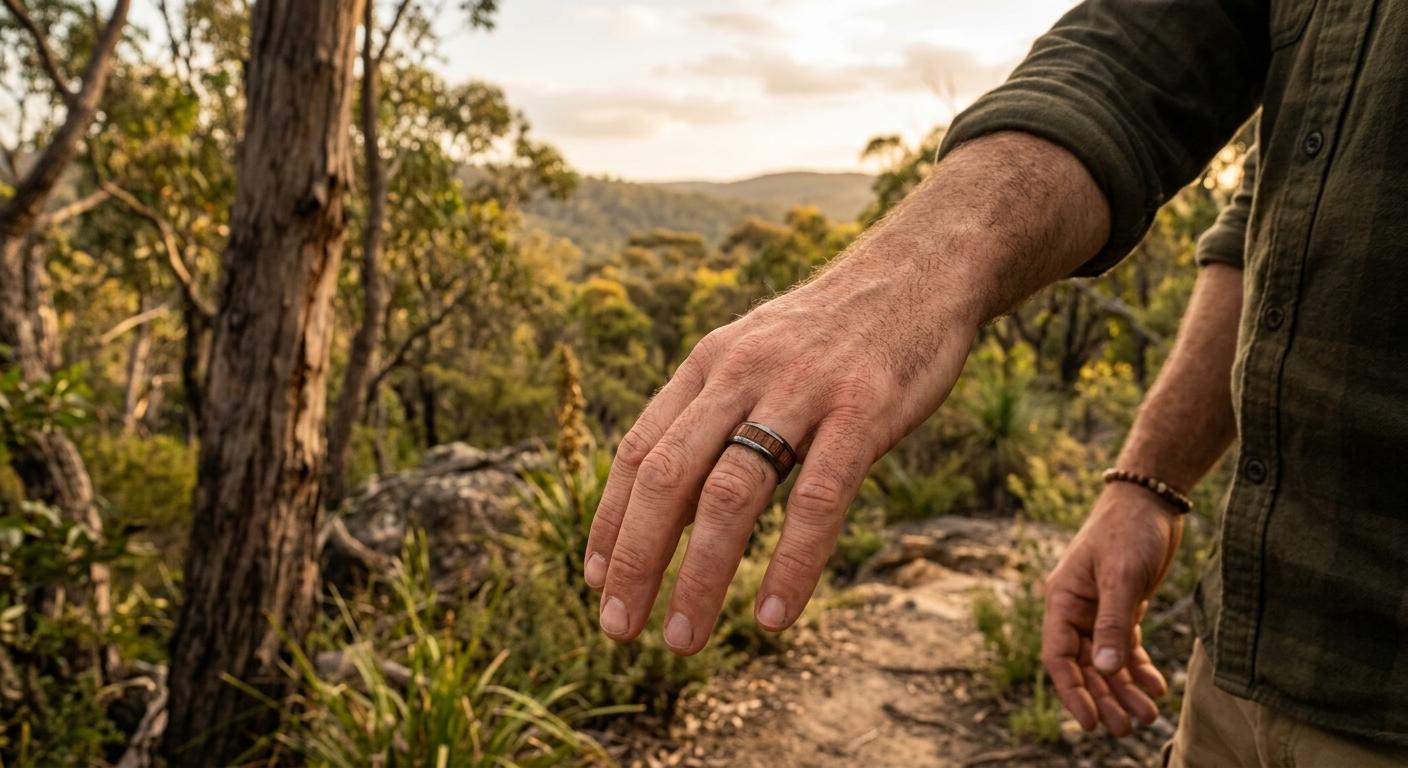
There is something particularly fitting about wood inlay wedding rings for Australian men. A country built on connection to the land, the bush, and natural materials — Australian culture has always valued craftsmanship from natural materials. Men who work outdoors, farm, surf, or simply love the Australian environment often gravitate toward rings that carry that natural connection.
Native timber options like jarrah (Western Australia), blackwood (Tasmania and southern Victoria), and Queensland maple bring genuine Australian provenance to a ring that will be worn for decades. For many Australian grooms, the choice of a native timber inlay carries the same meaning that the ring itself does — connection to place, to story, to something that matters.
Browse the full range of wood inlay rings available for Australian delivery, and explore complementary options including Damascus steel and other natural material inlays. View the complete men’s ring collection for the full range of styles.
Styles and Design Options
Wood inlay rings offer considerable variety in design:
- Full band inlay: The timber runs the full width of the ring’s outer surface — maximum visual impact
- Partial inlay: A narrower timber strip flanked by metal sections — a more subtle, balanced look
- Double inlay: Two timber strips with a metal divider — for grooms who want layered texture
- Combination inlay: Wood paired with carbon fibre, turquoise, or opal — for genuinely distinctive rings
Metal frame options include black tungsten (bold, modern), silver tungsten (classic, neutral), grey titanium (understated, lightweight), and black titanium (sleek, contemporary). The combination of timber colour and frame metal creates a wide matrix of aesthetic options.
Buying Guide: What to Look For
When buying a wood inlay wedding ring in Australia, consider:
- Stabilisation quality: Ask the retailer whether the timber has been resin-stabilised. Unstabilised wood inlay rings are significantly less durable.
- Frame material: Tungsten for maximum scratch resistance and weight; titanium for lightweight and hypoallergenic properties.
- Timber species: Choose based on colour preference and intended wearing conditions. Darker, harder species like ebony are more durable in physical environments.
- Width: 6–8mm is standard for wood inlay rings. Wider bands showcase the grain more prominently.
- Exchange policy: Wood inlay rings in tungsten cannot be resized — ensure the retailer offers free size exchange.
Also consider a silicone ring as a companion for activities where the wood inlay ring shouldn’t be worn. And explore the full shop range for current availability and pricing on all styles.
Frequently Asked Questions
What is a wood inlay wedding ring?
A wood inlay wedding ring features a strip of real stabilised timber set into a tungsten or titanium band. The timber is resin-treated for durability and set into a channel in the metal frame — combining the strength of metal with the warmth and natural grain of real wood.
How long do wood inlay wedding rings last?
A quality wood inlay ring with stabilised timber in a tungsten or titanium frame will last for many years of daily wear with proper care. Avoid extended water submersion, harsh chemicals, and heavy impact.
Can you shower with a wood inlay ring?
Brief water exposure is fine for stabilised wood inlay rings. Remove before showering for extended periods or swimming, as repeated prolonged water exposure can eventually raise the wood grain or dull the finish.
What timbers are available for wood inlay rings in Australia?
Common options include Hawaiian koa, Australian jarrah, blackwood, Queensland maple, African ebony, rosewood, and padauk. Native Australian timbers are increasingly popular for buyers who want a genuine connection to the local landscape.
How do I care for a wood inlay ring?
Clean with a soft cloth and mild soap, dry immediately. Apply wood-safe oil (Danish oil or mineral oil) 2–3 times per year. Avoid bleach, harsh chemicals, extended pool exposure, and heavy impact. Store separately from other jewellery.
Are wood inlay rings a good choice for active lifestyles?
Wood inlay rings suit moderately active lifestyles. For heavy physical work or extended water activities, pair with a silicone ring and wear the wood inlay for everyday and social occasions.
References
- Jewellers Association of Australia — JAA Consumer Buying Guide — Alternative Materials
- CSIRO — Australian Forest and Timber Research
- Australian Government Department of Agriculture — Australian Timber Industry Overview