

How to Choose a Wedding Ring When You Have Eczema or Sensitive Skin

TL;DR
For men in Australia with eczema or reactive skin, the best wedding ring is usually a smooth comfort-fit band in a low-reactivity material, sized correctly for everyday swelling and heat. Start with titanium, ceramic or high-quality tungsten, avoid rough finishes, and prioritise fit and skin comfort over trend styling.
In This Guide
If you searched wedding ring sensitive skin eczema men australia, you’re already asking the right question: not “what ring looks best,” but “what ring can I actually wear every day without flare-ups?” The honest answer is practical: choose skin-safe material, smooth finishing, and a fit that stays comfortable from morning commute to end of shift.
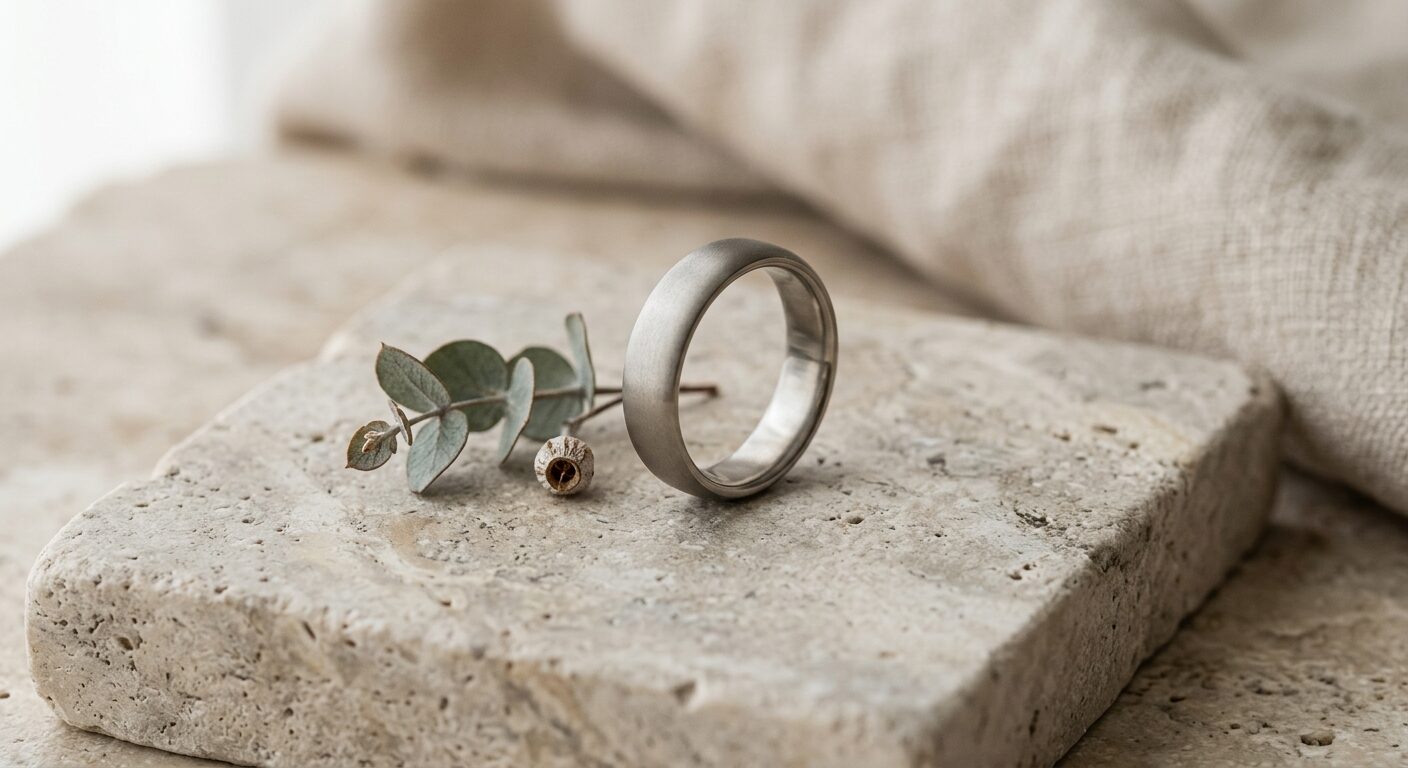
Start here: what matters most
If your skin is reactive, comfort and skin stability should come before style details. The most reliable approach is to shortlist rings by metal type, inner profile, and width first, then pick your look from that smaller list. That single change prevents most regret purchases for eczema-prone hands.
Many men start with colour, then realise later that the ring edge is too sharp or the interior traps moisture. With eczema, tiny design flaws feel huge after a full day. A ring can look premium on screen but still irritate if the inside edge is abrupt or the band is overly wide for your finger shape.
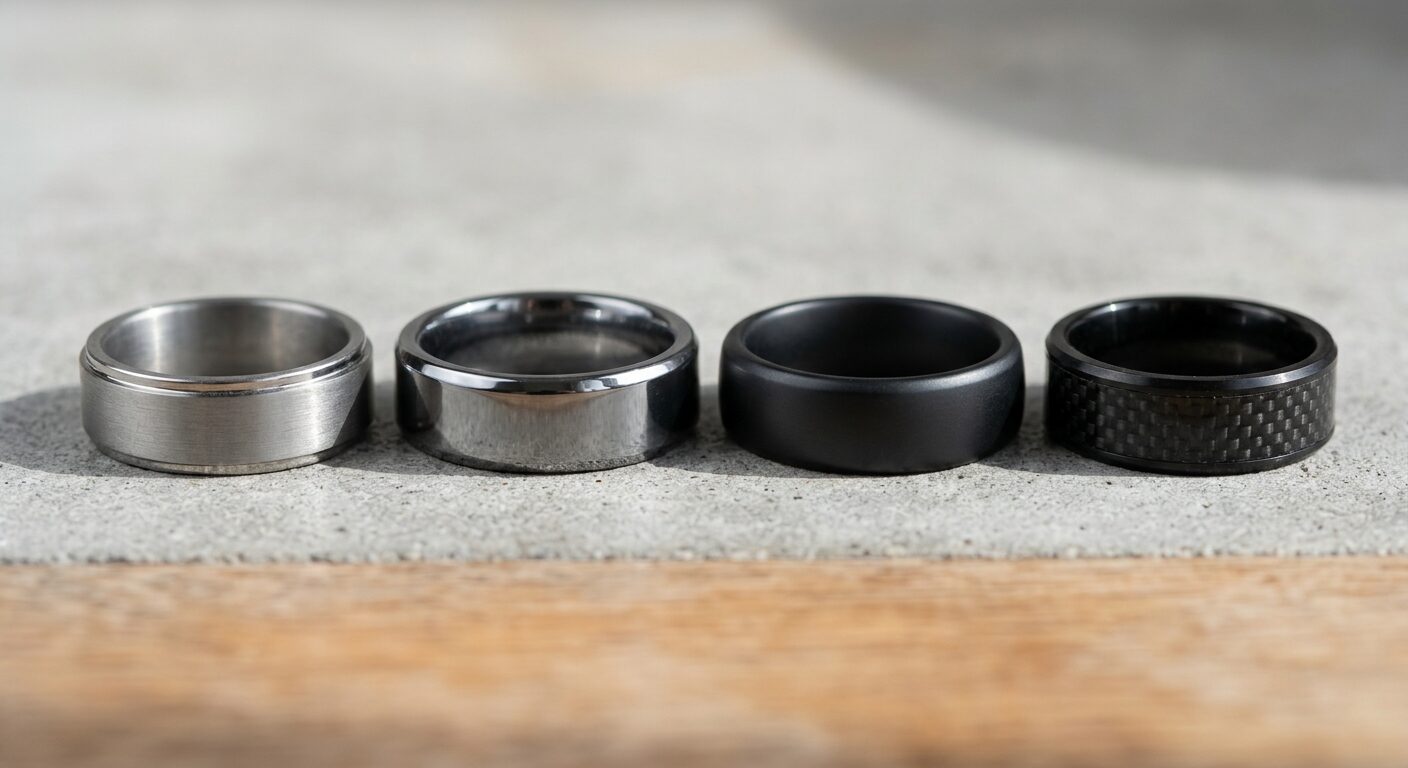
When comparing options, focus on plain, well-finished designs in dependable categories such as titanium rings and tungsten rings. These categories usually include practical everyday profiles with fewer decorative elements that can rub. If you want a darker aesthetic, you can still browse black rings, but inspect finish quality and comfort fit closely.
Think about your weekly routine, not just your wedding photos. If your hands are in water, soap, dust, or gloves all day, the ring needs to tolerate friction and frequent cleaning. That’s why a conservative, smooth design often beats a complex style for long-term comfort.
Best ring materials for sensitive skin
For most men with eczema, titanium, ceramic, and well-made tungsten are practical first choices because they’re durable, generally low-reactivity, and available in smooth comfort-fit designs. Precious metals can also work, but whichever material you pick, finishing quality and fit still decide whether your skin stays calm.
Titanium is popular because it is lightweight and easy to wear through long days. Men who dislike a heavy ring often settle into titanium quickly because it feels present but not intrusive. Ceramic offers another skin-friendly path with a clean, modern look and very hard surface. Tungsten is heavier, but many men prefer that planted feel if the inside profile is well-rounded.
If you are drawn to texture-heavy looks like damascus steel rings or mixed constructions such as wood inlay rings, inspect the edges and seams carefully. Multi-material builds can still be comfortable, but there are more variables to manage, especially if your skin flares unpredictably.
If in doubt, start simple and add style only after comfort is proven. You can always move to a bolder design later. It is much easier to upgrade style than to “tough out” a ring that irritates your skin every afternoon.
Band shape and finish choices that reduce irritation
A rounded comfort-fit interior and smooth, stable outer finish are usually the biggest comfort upgrades for sensitive skin. These features reduce pressure points, minimise micro-rubbing, and make moisture less likely to sit under sharp transitions. In practice, this matters as much as the material itself.
Look for an interior curve that lets the ring glide rather than bite into the skin. A flat interior can work for some men, but comfort-fit profiles are typically better when fingers swell in heat, after training, or during long workdays. For outer finishes, very rough textures can trap grime and increase friction, so choose them carefully.
If you want visual texture, a fine brushed finish is often easier on skin than deep grooves or aggressive patterns. Likewise, avoid cheap surface coatings that can wear unevenly and create rough spots. A stable polished or brushed finish that cleans easily is usually the safe long-term play.
When browsing the full shop, zoom into edge transitions and inside-band photos wherever possible. If those details are missing, ask before buying. With eczema, missing technical details are not a minor issue—they are often the difference between daily wear and drawer storage.
Sizing strategy for Australian weather and workdays
Correct size is essential for eczema-prone skin because a too-tight ring traps heat and moisture, while a too-loose ring rotates and rubs. The target fit is snug with gentle resistance over the knuckle and comfortable movement once seated—secure, but never compressive throughout the day.
In Australian conditions, finger size can shift across temperature, hydration, and physical activity. Measure when your hands are warm, ideally later in the day, then compare with a cooler-time check. If you are between sizes, your daily routine should guide the decision: physical jobs and hot conditions usually benefit from a little breathing room.
Band width also changes perceived tightness. A wider ring feels tighter than a narrow ring at the same nominal size, so adjust accordingly. This is where many first-time buyers get caught: they size based on a thin try-on ring, then order a wider wedding band and find it uncomfortable by lunch.
If your hands regularly swell from gym work, manual labour or long driving days, build that into sizing from the start. A ring that feels “perfect” only when you are cool and stationary is rarely perfect in real life.
Daily wear habits that protect your skin
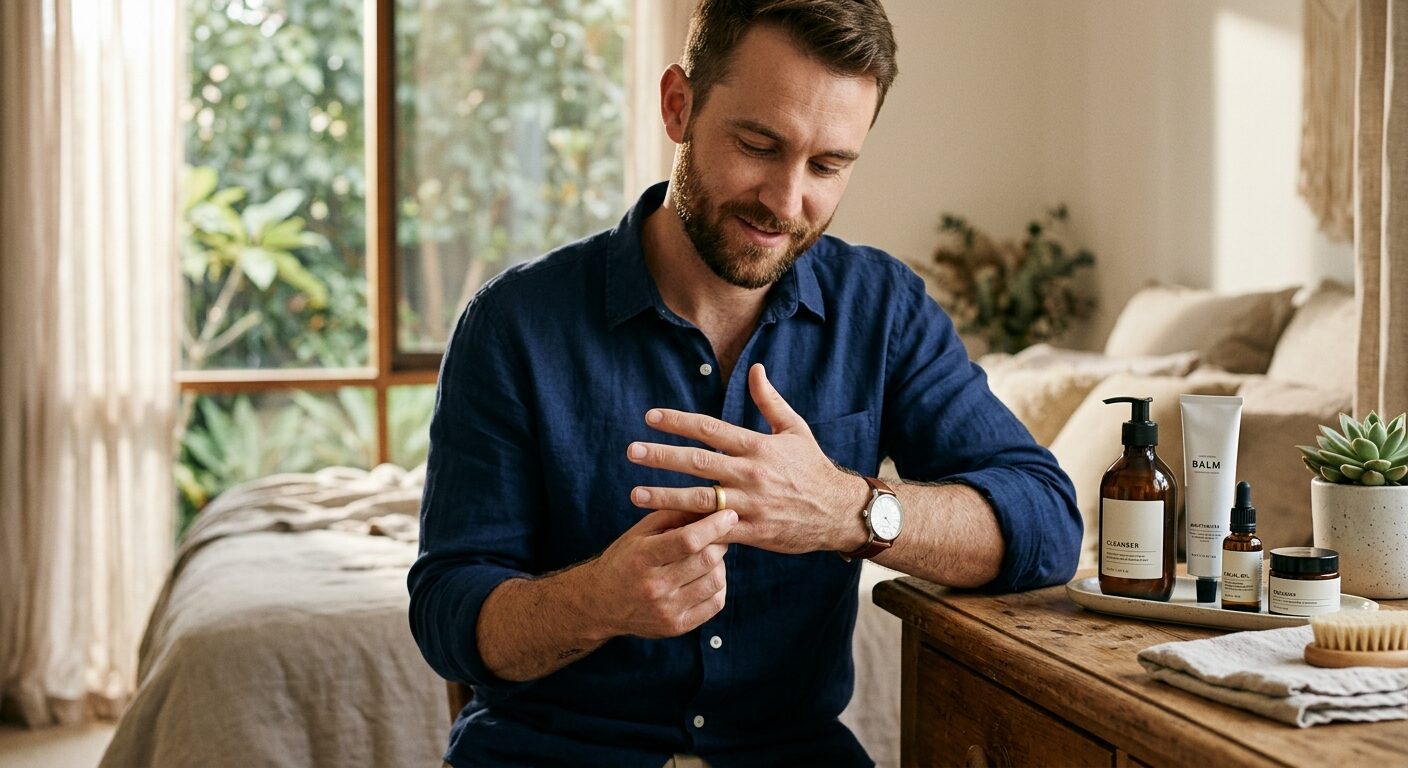
Daily hygiene habits can make a good ring great for sensitive skin. The key is simple: keep the area under the ring clean and thoroughly dry, especially after handwashing, sunscreen, or exercise. Product residue and trapped moisture are common eczema triggers and easy to underestimate.
Wash ring and finger with mild soap, rinse well, and dry completely before re-wearing. If your skin is currently inflamed, reduce wear time and increase gradually once calm. A staged break-in period is practical and often prevents full flare cycles during the first weeks of ownership.
In high-friction environments, temporary removal is sensible, not precious. For example, prolonged glove use, repeated detergent exposure, or dusty mechanical work can irritate even normally tolerant skin. Protect the skin first, then resume wear when conditions settle.
You can still keep style options open—like sleek carbon fibre rings or minimalist ceramic rings—as long as your routine supports comfort. The best wedding ring is the one you can wear consistently without skin stress.
What to avoid if you have eczema
Avoid rings with rough internal edges, unstable plating, poorly finished seams, and vague material descriptions. Sensitive skin punishes uncertainty. If a product page cannot clearly explain material, finish, and care guidance, it is safer to skip it and choose a ring with transparent specifications.
Be cautious with heavily ornate interiors, deep carvings inside the band, and aggressive textures that contact skin all day. These designs may look impressive but often introduce friction points and moisture pockets. Also watch for very cheap “fashion alloy” options where long-term finish integrity is unclear.
Another common mistake is buying only by photo tone—matte black, brushed gunmetal, bright polished silver—without checking structure. Colour is secondary; contact geometry is primary. If eczema has taught you anything, it is that comfort failures are cumulative, not dramatic. Small irritation repeated daily becomes a real problem.
Finally, avoid forcing adaptation. If your skin keeps reacting after a fair trial, treat that as data, not weakness. Swap approach: different width, different material, smoother profile.
Buying checklist before you place the order
Before checkout, confirm seven points: material disclosure, comfort-fit interior, edge smoothness, realistic sizing guidance, care instructions, return policy, and trustworthy support. This checklist turns a stressful guess into a controlled purchase process and dramatically lowers the chance of irritation-related disappointment.
Ask yourself: can I wear this in my real week—work, training, errands, summer heat, handwashing—and forget it is there? If yes, you are close. If not, keep refining. Practicality is not boring here; it is what makes the ring meaningful for years, not months.
For many men, the smartest path is a clean everyday ring first, statement ring later. Build reliability now, then experiment with stylistic pieces once your baseline is proven. That approach preserves comfort and gives you confidence your wedding band will stay on your hand, not in a drawer.
FAQ
What is the safest wedding ring material for eczema-prone skin?
There is no one-size-fits-all answer, but titanium and ceramic are common low-reactivity starting points, with high-quality tungsten also working well for many men when fit and finishing are right.
Can sweat under a ring trigger irritation?
Yes. Trapped moisture and residue can aggravate sensitive skin. Regular cleaning and fully drying the finger and band can reduce flare risk significantly.
Should I remove my ring during manual work?
If the task involves chemicals, prolonged glove friction, or heavy grime, temporary removal is often smart and can protect both your skin and ring finish.
How tight should a sensitive-skin wedding ring feel?
It should be secure with light resistance over the knuckle, but never compressive at rest. If you notice constant pressure marks or itchiness, reassess size and profile.
References
- American Academy of Dermatology — Atopic dermatitis
- NHS — Atopic eczema
- NCBI/StatPearls — Allergic Contact Dermatitis
Final comfort test before wedding week
A week before the wedding, wear your ring through two full normal days: one workday and one weekend day. This final test tells you whether your sizing and finish choices still feel right when your routine changes. If irritation appears, adjust early rather than forcing it through wedding week.
Pay attention to heat, handwashing frequency, and physical tasks. If your finger feels pinched in the afternoon, that is useful information. If the ring stays comfortable and disappears from your awareness, you nailed the choice. This final check is simple, low-stress, and gives real confidence before the big day.