

Men’s Rings and Broader Hands: Choosing a Ring That Works for Your Build

TL;DR
If you’ve got broader hands, the right ring is usually about proportion, comfort, and stability more than chasing a tiny number on the size chart. For men’s ring larger hands australia, wider bands, comfort-fit interiors, and tougher materials can make a ring look balanced and feel better all day.
In This Guide
If you’re shopping for a ring and your hands are broader than average, the usual advice can feel a bit off. A slim band that looks refined on one person can look pinched or disappear on a bigger hand, which is why men’s ring larger hands australia is really about balance: fit the finger properly, then choose a width and profile that matches the hand.
In practice, that means paying attention to band width, comfort-fit shaping, finish, and metal choice rather than just the size number. The good news is there are plenty of strong options in the tungsten ring, titanium ring, black ring, carbon fibre ring, and ceramic ring ranges that suit larger builds without feeling overdone.
Why size and proportion matter
For broader hands, the ring has to hold its own visually as well as physically. A ring that is technically the correct size can still look too narrow if the band is extremely slim, while a slightly wider profile often looks more deliberate and sits better next to a larger palm and thicker knuckle structure.
Proportion matters because people read a ring as part of the whole hand. If your fingers are long, broad, or heavily built, a narrow band can create a mismatch that feels accidental. A 6–8 mm band is often a more natural starting point for men who want something that looks present without turning into a statement piece. That’s especially true when paired with a finish that has a bit of presence, like brushed tungsten or matte black.
There’s also a practical side to proportion. Broader hands often mean larger knuckles, more movement, and more day-to-day wear from work, lifting, tools, or sport. A ring that is proportionally right is usually less fiddly to put on, less likely to feel “spiky” on the edges, and more likely to stay comfortable once your hands warm up during the day.
Comfort-fit beats fighting the finger
Comfort-fit bands are usually the smartest choice for bigger hands because the inside curve makes the ring easier to slide on and off and gives the finger a bit of breathing room. On wider knuckles, that rounded interior matters a lot more than people expect, especially if you’re between sizes or wear rings for long stretches.
Traditional flat interiors can work, but they tend to feel harsher when a ring needs to clear a knuckle and then settle lower on the finger. A comfort-fit profile spreads the pressure more evenly, which is a simple but useful win if your fingers swell in hot weather, during exercise, or after a long shift. If you’re buying online, this is one of the most important details to check.
For a practical comparison, have a look at different materials in the tungsten rings and titanium rings collections. You’ll notice the same material can feel very different depending on whether the maker has used a comfort-fit interior, a squared edge, or a softer rounded profile. Those small details change the experience more than a lot of people realise.

Best ring styles for broader hands
The best styles for broader hands usually have enough width to look balanced, but not so much bulk that they dominate the finger. Flat or slightly domed bands, brushed finishes, and subtle textures are usually safer than overly delicate or overly ornate designs. The sweet spot is a ring that looks intentional from every angle.
Minimalist designs tend to work well because they don’t fight the shape of the hand. A Damascus steel ring can bring visual interest without relying on extra width, while a wood inlay ring can soften a strong build if you want something warmer and more natural. If you prefer a sharper, more modern feel, a matte black finish often gives the right amount of contrast on larger hands.
If you want a ring that reads as sturdy and masculine without looking heavy, structure is everything. Carbon fibre and ceramic designs can be great because they often look clean and technical, which works well on bigger hands that already have a lot of visual presence. For many Australian buyers, that’s the ideal middle ground: strong, simple, and easy to wear with workwear or casual clothes.
How to measure without getting it wrong
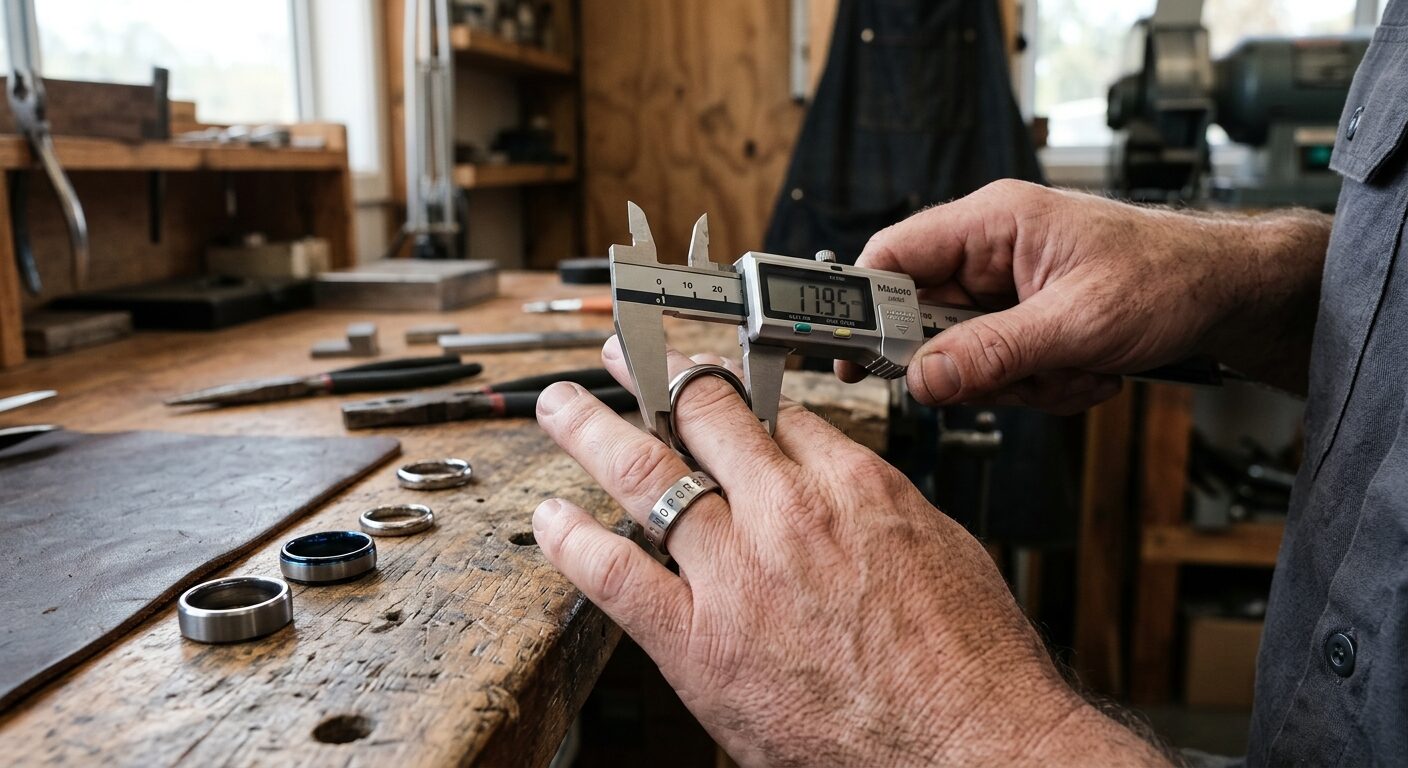
Measuring a ring for broader hands is less about guessing the diameter and more about getting a repeatable result at the right time of day. Fingers can swell, cool down, and change shape across a single day, so the best measurement is one taken when your hands are relaxed and at a normal temperature. That keeps you away from the classic too-tight mistake.
If your knuckles are noticeably larger than the base of the finger, you need a measurement approach that accounts for both. A ring has to pass the knuckle, then sit securely without spinning too much. That’s why a comfort-fit design and the right width matter almost as much as the size number itself. For some men, going up a half size while choosing a broader band is the most comfortable outcome.
The safest approach is to compare your measurement with a proper sizing guide and then factor in the ring style. For example, a broad tungsten band will feel different from a thinner titanium one, even if they’re nominally the same size. If you’re buying online, slow down here. The extra two minutes you spend checking width and fit can save a return later.
Material choices that make sense in Australia
For Australian conditions, material choice matters because heat, humidity, manual work, and an active lifestyle all affect how a ring feels. Durable options are usually the best fit for broader hands because bigger rings are more likely to be worn hard. You want something that stands up to daily life without feeling flimsy or precious.
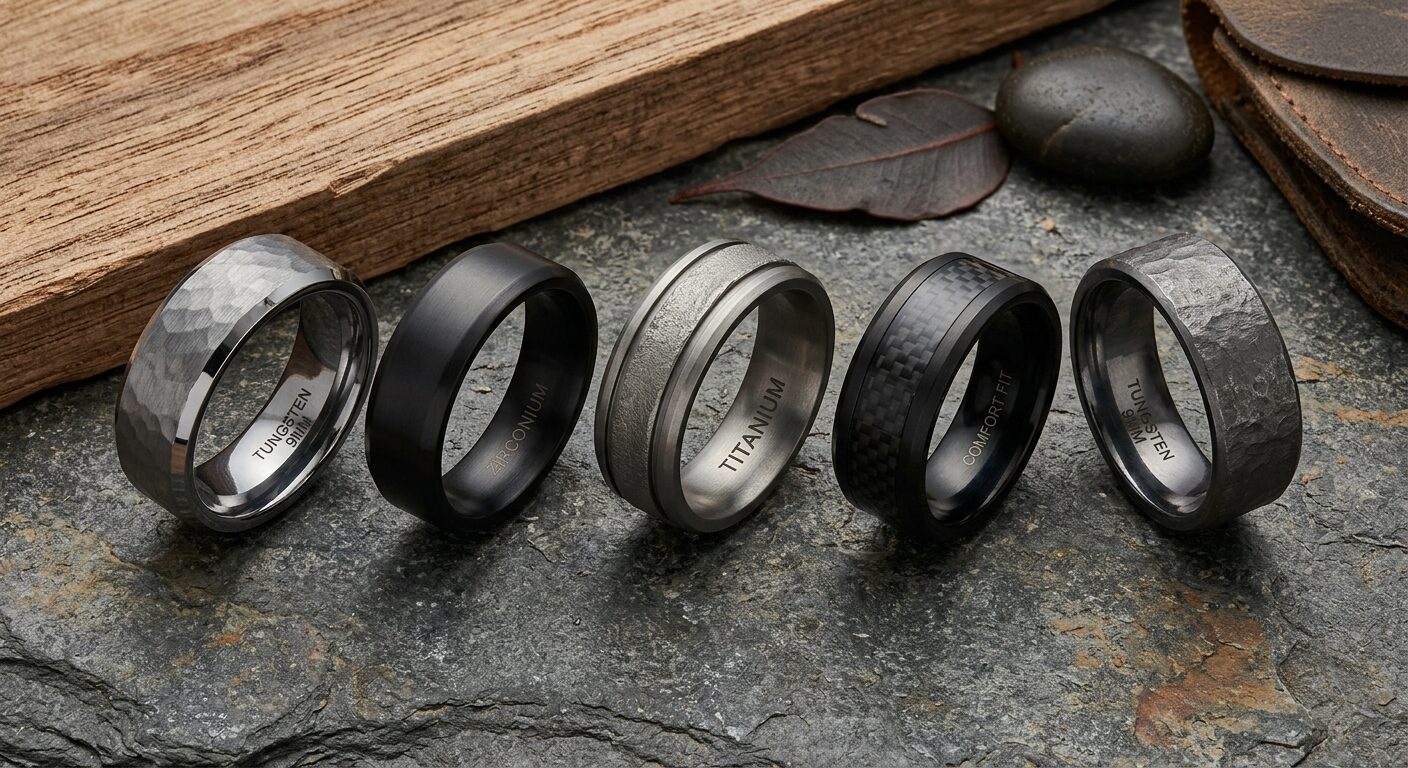
Tungsten rings are popular for good reason: they have serious presence and a solid feel that suits larger hands well. Titanium rings are lighter and can be more forgiving if you don’t want extra weight. Ceramic rings are sleek and modern, while black rings and carbon fibre rings offer a tougher visual edge that often suits broad hands very well.
If your hands are used to tools, gym work, or outdoor jobs, durability is not optional. The ring should handle knocks, sweat, and daily friction without needing constant attention. That’s why practical materials tend to win for men with bigger builds: they look right, feel secure, and hold up better across real-world wear.
Styling tips so the ring looks right
The ring should look like it belongs to the hand, not like it was borrowed from someone with a very different build. For broader hands, that usually means avoiding ultra-thin bands and overly tiny design details. Clean lines, medium-to-wide widths, and finishes with some texture or contrast tend to read better.
Think about the rest of your accessories too. If you wear a watch, belt buckle, or cuff detail, the ring should sit comfortably inside that overall look. A brushed tungsten or dark ceramic ring can complement workwear and streetwear without shouting. A shop browse is useful here because you can compare shapes side by side and see which profiles feel strongest.
It’s also worth considering whether you want the ring to disappear into your everyday style or stand out a little. Broader hands can carry a bolder design better than slimmer hands, so if you’ve been avoiding stronger rings for fear they’ll look too much, you may actually have more room to play than you think.
When to get help and shop with confidence
If you’ve got wider fingers, large knuckles, or you’re simply between styles, it pays to ask for help before you buy. Ring shopping should be practical, not a guessing game. The best result usually comes from matching the hand shape, the wear pattern, and the material rather than forcing a one-size-fits-all rule.
That’s especially true for people buying a wedding band or a ring they’ll wear every day. If the ring feels wrong at the start, it usually won’t magically improve. Start with comfort-fit, choose a sensible width, and pick a material that fits your lifestyle. For a lot of men, that means one of the sturdier collections like tungsten, titanium, or Damascus steel.
Confidence comes from narrowing the field quickly. Once you know your width range, preferred finish, and whether you want something light or substantial, the options get much easier. That’s the real trick with men’s ring larger hands australia: don’t chase the fanciest option first. Choose the ring that makes the hand look and feel naturally balanced.
Frequently Asked Questions
Are wider rings always better for broader hands?
Not always, but they’re often more balanced. A medium-to-wide band usually looks more proportionate on broader hands than a narrow one, especially if the finger itself is large or the knuckle is pronounced.
Should I size up if my knuckles are bigger?
Sometimes, yes. The ring needs to pass the knuckle comfortably, but it still has to sit securely at the base. That’s why comfort-fit interiors and a sensible width matter so much.
Is tungsten too heavy for big hands?
Usually not. In fact, the weight can suit bigger hands because it gives the ring a strong, grounded feel. If you prefer something lighter, titanium is the easier alternative.
What’s the safest style if I’m unsure?
A comfort-fit band in a medium width with a clean finish is the safest starting point. From there, you can decide whether you want something darker, more textured, or more traditional.