

NRL and AFL Players’ Wedding Ring Styles: What Footy Stars Actually Wear

TL;DR
NRL and AFL players’ wedding ring style choices reflect the demands of elite sport — durable materials, minimal profiles, and options that work with taped fingers and heavy contact. This guide breaks down the footy player wedding ring style australia trends, the materials pro athletes favour, and what regular blokes can take from their choices.
In This Guide
- Footy Ring Culture: Why Players Care
- The Unique Challenge of Contact Sport and Rings
- Materials Athletes Actually Choose
- The Rise of Silicone Rings in Australian Sport
- Style Trends: What Footy Stars Are Wearing
- NRL and AFL Ring Rules: What’s Actually Permitted
- Taking Inspiration for Your Own Ring
- Frequently Asked Questions
Footy Ring Culture: Why Players Care
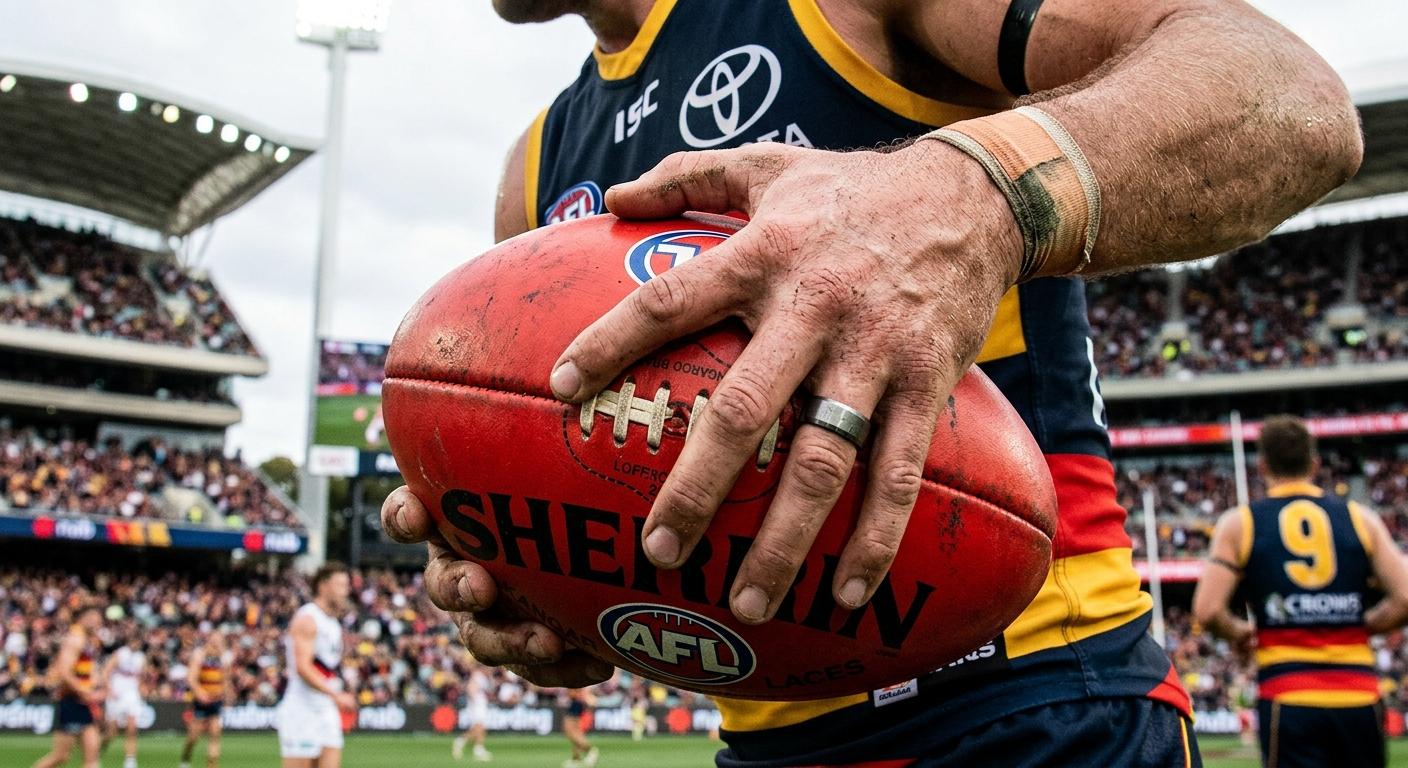
When it comes to footy player wedding ring style australia, the choices made by NRL and AFL stars have a surprising influence on what everyday Australian men choose for their own wedding bands. Elite athletes are highly visible, their personal style gets noticed, and when a player steps out with a bold black tungsten band or a discreet silicone ring, it signals something about what works — and what looks good — in an active, physical lifestyle.
According to the Australian Football League, the AFL regularly attracts over 7 million attendances per season, with NRL also drawing millions of fans and extensive media coverage. These men are in the public eye at every game, every press conference, and every post-match appearance — their rings are always on camera. The choices they make reflect genuine practical thinking about durability, safety, and personal brand.
Beyond celebrity influence, footy players face a genuinely difficult ring decision. Games involve heavy body contact, finger injuries, tape and strapping, and shared changing room environments. The ring has to survive all of that — or come off every single game day and be somewhere safe while the player is on the field.
The Unique Challenge of Contact Sport and Rings
Rugby league and Australian rules football both involve significant physical contact that creates real risks for ring wearers. The key concerns are:
Finger Tape and Ring Fit
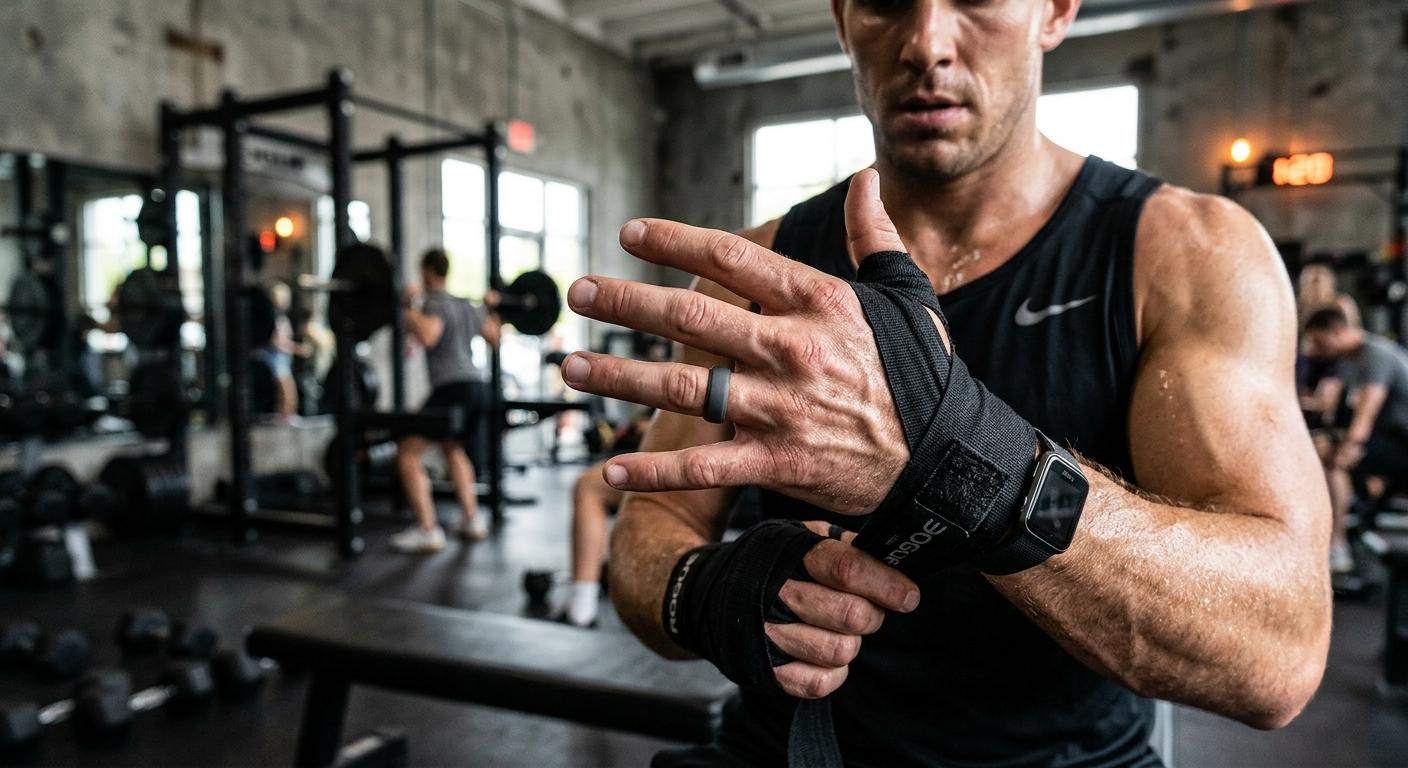
Both NRL and AFL players routinely tape fingers and hands to protect against hyperextension and fractures. Wearing a metal ring under tape is uncomfortable and can create pressure points. Wearing a ring over tape is not possible. Most players remove their rings for game day — but keeping track of a valuable piece of jewellery in a busy change room environment is a real concern.
Ring Avulsion Risk in Contact Sport
Like FIFO workers, contact sport athletes face ring avulsion risk — though the mechanism is different. Rather than machinery, the risk comes from grabbing opponents, catching footy laces, or falling on outstretched hands. A metal ring that catches on a jersey or opponent can create the same degloving injury seen in industrial settings. This is why many professional athletes opt for silicone bands during training and match play.
Swelling and Fit Changes
Intense physical exertion causes significant hand swelling in many athletes. A ring that fits perfectly at rest can become extremely tight during or after a hard training session or match. This is less of an issue with silicone (which has some give) but a genuine problem with rigid metal bands.
Materials Athletes Actually Choose
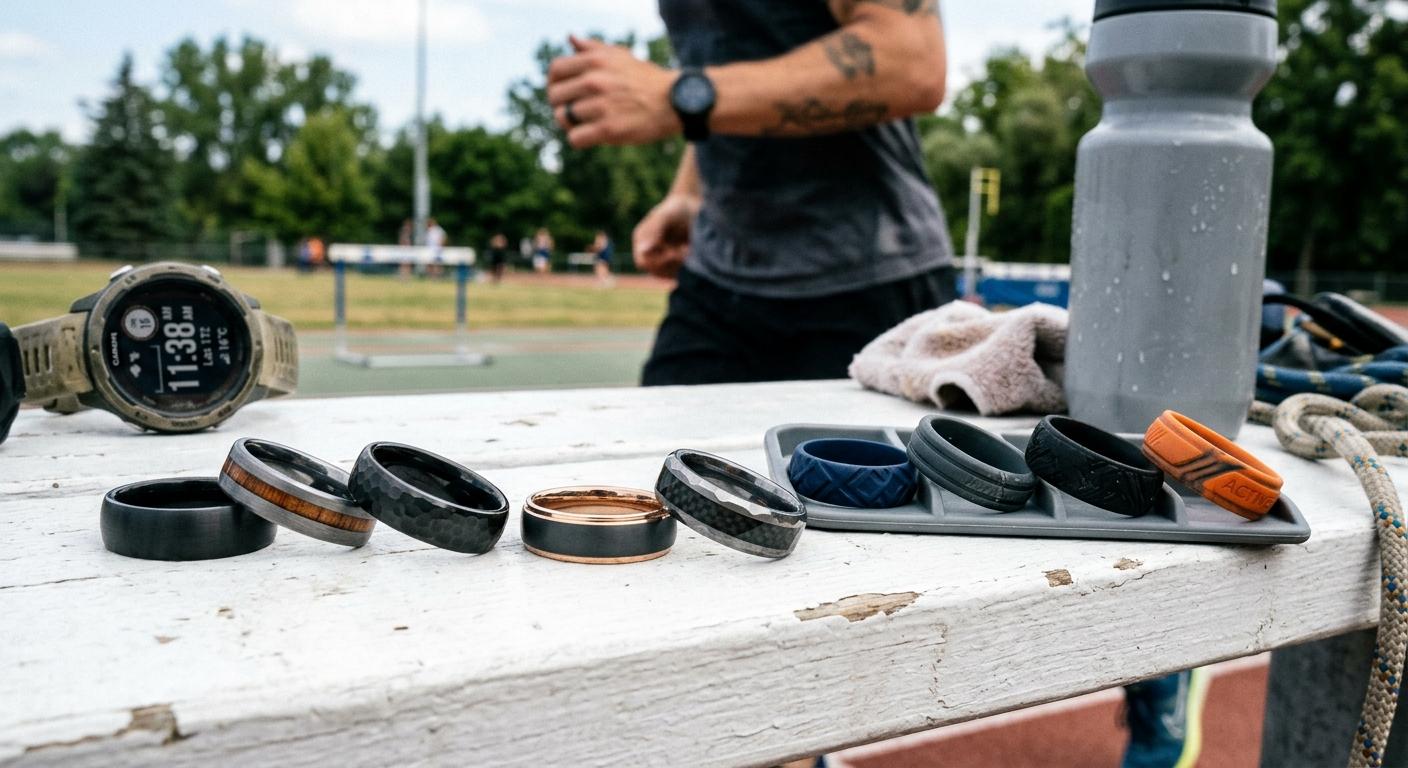
When athletes do wear their wedding rings publicly — at events, in media appearances, or during lighter training — certain materials are strongly preferred:
Black Tungsten: The Athlete’s Metal
Black tungsten has become strongly associated with the athletic and active male demographic in Australia. Its bold, matte-black appearance reads as modern and confident rather than traditional — appealing to players who want something that doesn’t look like their dad’s gold band. Tungsten rings are virtually scratch-proof, maintain their appearance after years of wear, and carry a weight that feels substantial without being impractical. The matte black finish in particular is extremely popular — it doesn’t show smudges, doesn’t clash with sportswear, and photographs well in the high-contrast lighting of media environments.
Titanium: Light, Strong, Understated
For athletes who prefer a more understated look, titanium rings offer excellent durability at a fraction of the weight of tungsten. Titanium is biocompatible and hypoallergenic — important for athletes who may have skin reactions to heavier metals. The light weight means many athletes can forget they’re wearing it, which is a genuine advantage during training. Titanium in grey or black anodised finishes is a popular choice among AFL players who prefer to keep accessories minimal and low-profile.
Silicone: For Training and Match Day
An increasing number of professional athletes — including NRL and AFL players — are seen wearing silicone bands during games, training, and casual appearances. Silicone rings are safe for contact sport (they tear rather than deform under force), comfortable under tape, and available in a range of colours that can be chosen to match team colours or personal preference. Many athletes who wear silicone during games keep a tungsten or titanium formal band for public appearances.
The Rise of Silicone Rings in Australian Sport
The silicone ring category has grown significantly in Australia over the past five years, driven largely by the sporting and active lifestyle market. Globally, silicone ring brands report that professional and amateur athletes are among their fastest-growing customer segments. The appeal is practical: a silicone ring that costs under $50 is something you can wear without anxiety during contact sport, knowing that if it gets damaged it can be replaced for minimal cost.
In Australian rules football and rugby league specifically, silicone rings have moved from a niche workaround to a genuine style choice. Modern silicone rings come in matte black, navy, forest green, and even two-tone designs — far removed from the plain medical-grade bands of the early 2010s. They look intentional rather than like a compromise, which is a significant part of why they’ve caught on.
Style Trends: What Footy Stars Are Wearing
Based on public appearances, media events, and post-match coverage, a clear set of style preferences has emerged among NRL and AFL married players:
- Bold black or dark grey bands — consistent across both codes; the anti-gold statement
- Minimal profile — 6–8mm width, no raised settings or stones
- Matte or brushed finishes over polished
- Carbon fibre inlays — appearing in the AFL cohort particularly; the technical aesthetic appeals to players who want something unique
- Silicone match-day bands — increasingly visible during games
The gold wedding band is largely absent from the visible preferences of younger NRL and AFL players. When gold does appear, it tends to be among more senior players whose wedding ring choices predate the current alternative metal trend. The shift toward black and dark grey bands among men aged 25–35 is visible in the general Australian men’s ring market, and football culture is both a reflection and a driver of that trend.
If you’re drawn to the athletic style, the full men’s ring range includes many of the styles popular with sporting types — from brushed black tungsten to carbon fibre and wood inlay. You can also explore Damascus steel rings for something with real character and visual complexity.
NRL and AFL Ring Rules: What’s Actually Permitted
Both the NRL and AFL have safety provisions in their playing regulations that relate to jewellery. The general principle across both codes is that any jewellery that creates a safety risk for the wearer or other players must be removed or covered before the game. In practice:
- Metal rings are generally required to be removed before match play
- Silicone rings are typically permitted at the referee or medical officer’s discretion
- Rings that are covered by tape are handled on a case-by-case basis
- Pre-season medical checks at most clubs include a discussion of jewellery and ring policies
The practical reality is that most NRL and AFL players simply remove their metal bands before games and keep them secure in their kit bag. Silicone bands are worn by some players throughout games without issue at most levels of competition.
Taking Inspiration for Your Own Ring
You don’t need to be a professional athlete to appreciate what makes a great ring for an active lifestyle. The principles that guide footy players’ ring choices apply to any man who trains regularly, works physically, or simply wants a ring that keeps up with an active life:
- Prioritise durability: Tungsten and titanium survive what gold cannot
- Keep the profile clean: No settings, no stones, no elements that can snag or create pressure points
- Consider two rings: A formal tungsten or titanium band for everyday and formal occasions, a silicone band for training and physical activities
- Bold doesn’t mean loud: A matte black 7mm tungsten band is bold in effect but subtle in presence
Browse the Men’s Rings Online shop for the full range of athlete-friendly styles, or explore the gold ring collection if you prefer a more traditional look for off-field occasions.
Frequently Asked Questions
What wedding ring styles do NRL and AFL players typically wear?
NRL and AFL players typically favour bold black or dark grey tungsten and titanium bands with minimal profiles and matte finishes. Silicone bands are increasingly common for training and match wear. The shift away from gold toward alternative metals reflects the broader trend among younger Australian men.
Can NRL and AFL players wear rings during games?
Both codes generally require removal of metal rings before match play. Silicone rings are typically permitted at the referee or medical officer’s discretion because they tear safely under load. Most professional players remove their formal bands before games and secure them in their kit bags.
What is the best ring material for contact sport athletes in Australia?
Silicone rings are the safest option for contact sport. For off-field wear, black tungsten and titanium are the most popular among Australian athletes for their durability, scratch resistance, and modern aesthetic.
Why do athletes prefer black tungsten or titanium rings?
Black tungsten and titanium are virtually scratch-proof, maintain their finish in physical environments, and have a modern aesthetic. The matte black finish is particularly popular for its clean appearance in media and event contexts.
How do I choose a wedding ring if I play sport regularly?
Use the two-ring strategy: a durable tungsten or titanium band for everyday and formal occasions, and a silicone band for training and match play. Look for minimal profiles and no raised settings.
Are carbon fibre rings popular with AFL players?
Carbon fibre inlay rings have become popular among AFL players in public appearances. The technical aesthetic appeals to athletes who want something visually distinctive without being ostentatious, combined with the durability of the base metal.
References
- Australian Football League — AFL Laws of the Game — Equipment and Uniform Regulations
- NRL — NRL Playing Rules and Regulations
- Sports Medicine Australia — SMA Injury Prevention Guidelines for Contact Sports