

Are Titanium Rings Hypoallergenic? What Sensitive Skin Sufferers Need to Know

What Titanium Hypoallergenic Means
Here’s the question we get asked more than almost any other at the counter: “will this actually irritate my skin?” It’s a fair question, especially if you’ve ever had a cheap earring or a costume-jewellery ring turn your finger green and itchy after a weekend. The short answer is that commercially pure titanium, and the common surgical-grade titanium alloys used in rings, are about as close to allergy-proof as jewellery metal gets.
The reason comes down to chemistry, not marketing. Nickel is the metal behind almost every metal allergy case doctors see, and it’s baked into a lot of cheaper alloys, including some white golds and stainless steels that haven’t been properly refined. Titanium doesn’t need nickel to be strong or shiny, so reputable manufacturers simply leave it out. On top of that, titanium forms an oxide layer on its surface within microseconds of contact with air. That layer is chemically inert, meaning your sweat, skin oils and the humidity of a Queensland summer can’t really get through it to react with the metal underneath.
Medical-grade titanium (the same stuff used in hip replacements and dental implants) has been tested for biocompatibility for decades, which is a big part of why it’s now the go-to for anyone who’s reacted to a ring before. If you want to browse a range built specifically around this, our custom titanium rings collection is a good starting point, and it’s where most of our repeat customers with sensitive skin end up.
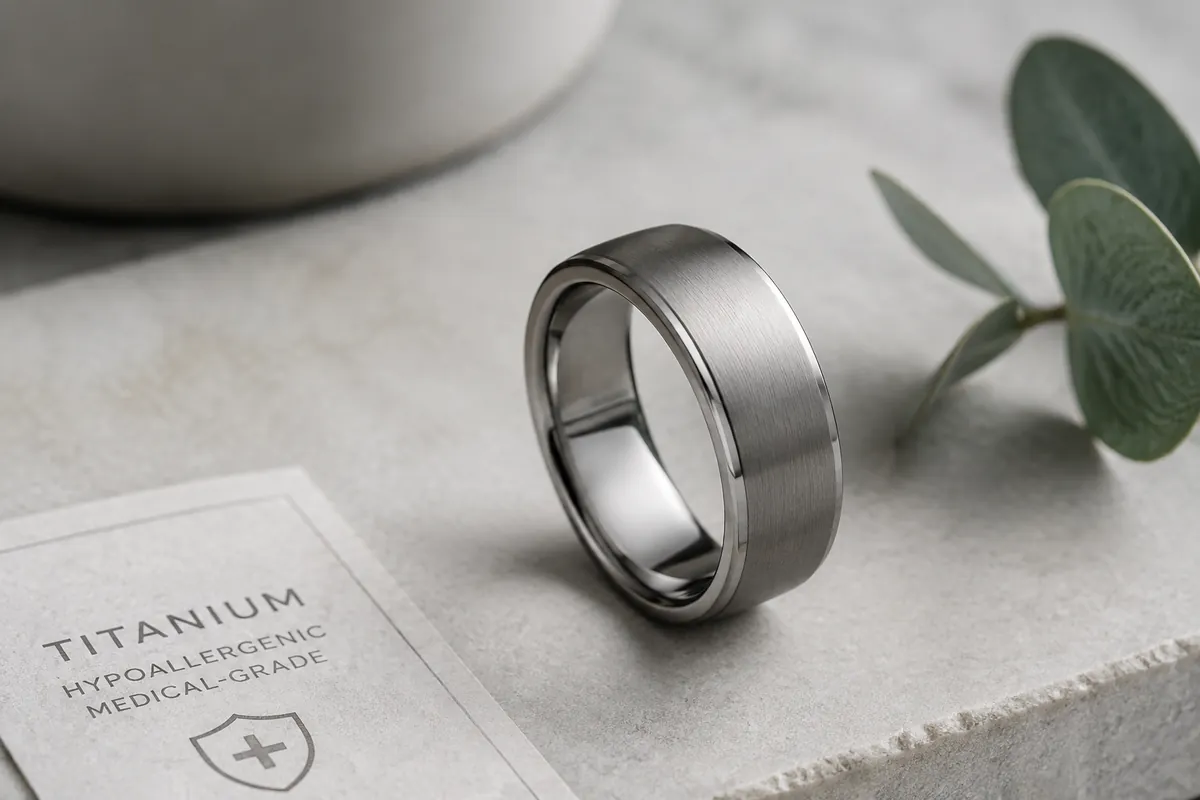
That said, “titanium” on a label isn’t a guarantee by itself. There’s a difference between a solid titanium band and a titanium-plated or titanium-coated ring, where a thin layer of titanium sits over a base metal that might contain nickel. Plating wears thin with everyday knocks, and once it does, the base metal is back in direct contact with your skin. This is the single biggest cause of “but it said hypoallergenic” complaints we hear, so it’s worth understanding before you go shopping.
Choosing the Right Titanium Ring
Not all titanium is created equal, and the grade matters more than most buyers realise. Grade 1 and Grade 2 are commercially pure titanium, soft enough to be comfortable but slightly more prone to scratching. Grade 4 is a bit harder again. Grade 5, also called Ti-6Al-4V, is an alloy with small amounts of aluminium and vanadium mixed in for extra strength, and it’s what most aerospace and medical parts are made from. All four are considered hypoallergenic for the vast majority of wearers, because none of them contain nickel.
Where it gets murkier is with “titanium alloy” rings that blend titanium with other metals purely to hit a price point rather than a performance spec. If a listing doesn’t specify the grade, ask. A jeweller who knows their stock will tell you straight away; one who dodges the question is a red flag. We list the grade on every titanium piece we sell, and it’s the first thing our team checks when we’re sourcing new stock for the best-selling rings range.
Fit matters just as much as material. Titanium doesn’t stretch or resize the way gold does, since it’s typically cut rather than cast, so getting the sizing right the first time saves a lot of hassle. Measure your finger at the end of the day when it’s slightly larger, and if you’re between sizes, size up rather than down. A ring that’s too tight traps sweat and skin cells against the band, and that trapped moisture is far more likely to cause irritation than the titanium itself.
Finish is another factor sensitive-skin buyers overlook. A brushed or matte finish tends to sit a little more comfortably against skin over long wear than a mirror-polish, simply because it’s got a marginally more forgiving surface texture. It’s a small thing, but if you’ve had skin trouble with rings before, small things add up.
Top Styles and Options
The good news is that going hypoallergenic doesn’t mean settling for a plain band. Titanium takes colour and texture better than most metals, because that oxide layer we mentioned can be tinted through anodising without adding any allergenic compounds. That’s how you get deep blacks, blues and greys without a single trace of dye sitting against your skin.
If you want something with genuine daily-wear toughness, look at our black rings range. The black finish on titanium is usually achieved through a physical vapour deposition process bonded to the oxide layer, not a coating that flakes, so it holds up to tradie hands and gym sessions in a way plated black steel simply doesn’t.
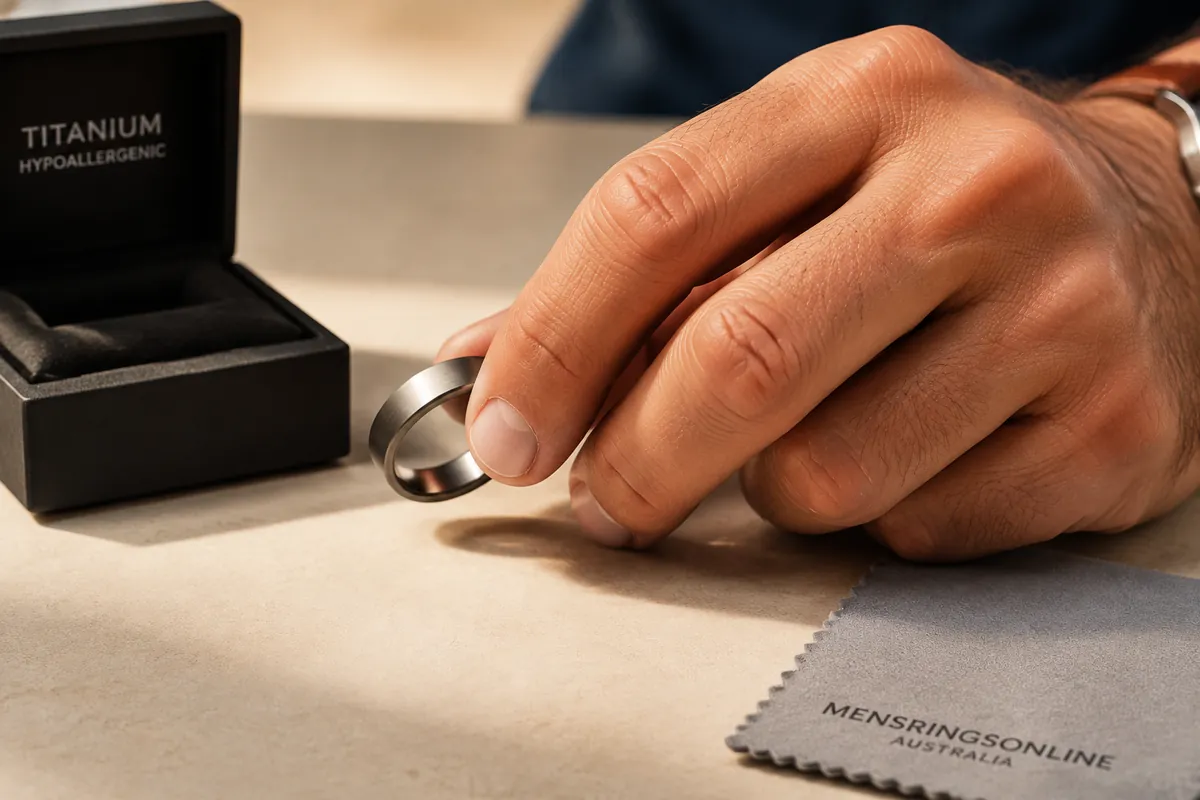
For guys who want a titanium band but still want it to read as a proper engagement or wedding piece, we build plenty of options in the men’s engagement rings collection with inlays of wood, carbon fibre or a thin channel of precious metal set into the titanium itself. You get the visual warmth of gold or the texture of timber without any of it sitting directly against your skin, since the titanium shell is what actually touches your finger.
If your priority is simply a ring you can forget you’re wearing while you work, train or travel, our everyday heroes range is built around exactly that brief: scratch resistance, no resizing headaches, and every piece hypoallergenic by design. A lot of tradespeople and shift workers land here first, then come back for a dressier piece once they realise how little they think about the ring on their hand.
Need something today rather than in three weeks? Check what’s sitting in the in-stock range before you commit to a custom order. Most of our hypoallergenic titanium styles are held in Brisbane and ship fast, which matters if you’ve got a wedding date bearing down on you.
What to Consider Before Buying
Even with titanium’s excellent track record, a handful of buyers do react to it, usually because of the small percentage of aluminium or vanadium in Grade 5 alloy, or occasionally because of an unrelated skin condition that flares under any tight-fitting jewellery. If you’ve had a genuinely severe reaction to metal before (not just mild redness, but blistering or swelling), it’s worth doing a patch test. Wear a small titanium item, like an earring or a spare band, against your skin for a few days before committing to a wedding ring you’ll wear for decades.
Budget is the next real consideration. Titanium sits in an interesting spot: it’s not a precious metal, so the raw material cost is low, but it’s genuinely difficult to machine because it’s so hard and heat-resistant. That’s why a well-made titanium band often costs more than you’d expect for a “non-precious” metal, and also why a suspiciously cheap titanium ring is worth a second look. If the price seems too good for a solid Grade 5 band, it’s probably plated or a lower grade than advertised.
Think about lifestyle too. If your job involves heavy machinery, gym equipment, or anything where a caught ring could cause injury, ask about a ring designed to break away or check local workplace safety guidance before wearing any metal band on the tools. Titanium’s strength is a selling point for durability, but that same strength means it won’t bend away from a snag the way a softer metal might. It’s a conversation worth having with your jeweller, not something to guess at.
Care is refreshingly low-effort. A titanium ring doesn’t tarnish and doesn’t need the periodic re-plating that white gold does. Warm water, a soft cloth and the occasional wipe-down after the gym is genuinely all it needs. If you’re weighing it up against other low-maintenance options, our full men’s rings range lets you compare titanium against tungsten and stainless steel side by side.
Tips From the Experts
Dermatologists who deal with contact allergies regularly point to nickel as the culprit in the overwhelming majority of jewellery reactions, and titanium’s nickel-free composition is exactly why it’s become the default recommendation for patients with known sensitivities. The Mayo Clinic’s overview of nickel allergy is worth a read if you want the clinical detail behind why some metals cause trouble and others don’t (see references below).
Jewellers we’ve spoken with over the years all say the same thing: ask for the grade in writing, not just the word “titanium” on a swing tag. A reputable seller will happily confirm whether it’s Grade 1, 2, 4 or 5, and whether it’s solid or plated. If you’re buying online, a quick email before you pay is worth it.
One tip that surprises people: give a new ring a week of full-time wear before deciding it’s “not for you.” A very small number of wearers notice mild dryness in the first few days simply from having something new sitting against skin that wasn’t there before, and it settles once your skin adjusts. If irritation is still present after a week, or it’s ever more than mild redness, that’s the point to see a GP or dermatologist rather than push through it.
Finally, don’t assume every ring in a hypoallergenic-labelled range is identical. Bands with resin inlays, wood accents or dual-metal construction should have the inlay material checked too, since the titanium shell doesn’t help if the inlay itself sits against skin and contains something you react to. For gift sets or a pack you’re buying for groomsmen, our ring packs range makes it easy to standardise on hypoallergenic titanium across the whole group without checking each piece individually.
Frequently Asked Questions
What is the best titanium ring hypoallergenic option?
Solid Grade 2 or Grade 5 titanium bands are your safest bet, since both are nickel-free and have decades of medical use behind them. Steer clear of titanium-plated rings, as the plating can wear through to a base metal that may contain nickel. If you’re after something with colour, look for anodised titanium rather than a painted or coated finish.
How do I know which titanium ring hypoallergenic option is right for me?
Start with your lifestyle: tradies and gym-goers usually do best with a brushed Grade 5 band for durability, while anyone after a dressier look can go with an inlay or two-tone style built on a solid titanium shell. If you’ve reacted to metal before, do a short patch test with a titanium item first and ask the jeweller to confirm the grade in writing.
What should I look for when buying a titanium ring hypoallergenic?
Check that the listing states a specific grade (1, 2, 4 or 5) rather than just the word “titanium,” and confirm whether it’s solid or plated. Also check any inlay material separately, since wood, resin or precious-metal accents aren’t automatically hypoallergenic just because the shell is titanium.
Are there budget-friendly titanium ring hypoallergenic options?
Yes, plain brushed or matte titanium bands without inlays or complex finishes are generally the most affordable while still being fully hypoallergenic. Our everyday heroes range is built around exactly this brief, and it’s worth checking the in-stock range too, since ready-to-ship pieces often skip the surcharge that comes with custom sizing or engraving.