

Rings for Rock Climbers: Durability, Snag Risk and What to Wear on the Wall

What Climbing Rings Actually Mean for You
Let’s get the uncomfortable bit out of the way first. “Rings for rock climbers” isn’t really a product category, it’s a risk management question. Climbers jam their hands into cracks, crimp on tiny edges, and catch holds at awkward angles with a fair bit of force behind the movement. A ring sitting on your finger during any of that is a potential anchor point for your skin, and in the worst cases that leads to what orthopaedic surgeons call a degloving or ring avulsion injury, where the soft tissue is torn away from the bone.
It sounds dramatic because it is. We’re not saying this to scare you off wearing a wedding band, we’re saying it because most guys genuinely don’t know this is a thing until someone tells them, usually after it’s already happened to a mate at the gym. If you climb a few times a year on an indoor wall with big, rounded holds, your risk is lower than someone sending finger-eating granite cracks every weekend. Context matters here.
The good news is you don’t have to choose between your marriage and your hobby. There are sensible ways to protect your hand while still wearing something meaningful, and plenty of blokes who climb seriously still wear a ring day to day, they just make smart calls about when it comes off. If you want to browse options built for an active lifestyle rather than a jewellery box, our everyday heroes range is a reasonable starting point.
How to Choose the Right Ring for Climbing
Start by being honest about how often and how hard you climb. If you’re bouldering at the local gym once a week on jugs and slopers, a slim titanium band is probably fine for most sessions, provided you’re sensible about crack climbing and anything involving jamming. If you’re trad climbing, crack climbing, or doing anything where your hand disappears into rock, take the ring off. No band, no matter how well made, is worth the skin on your finger.
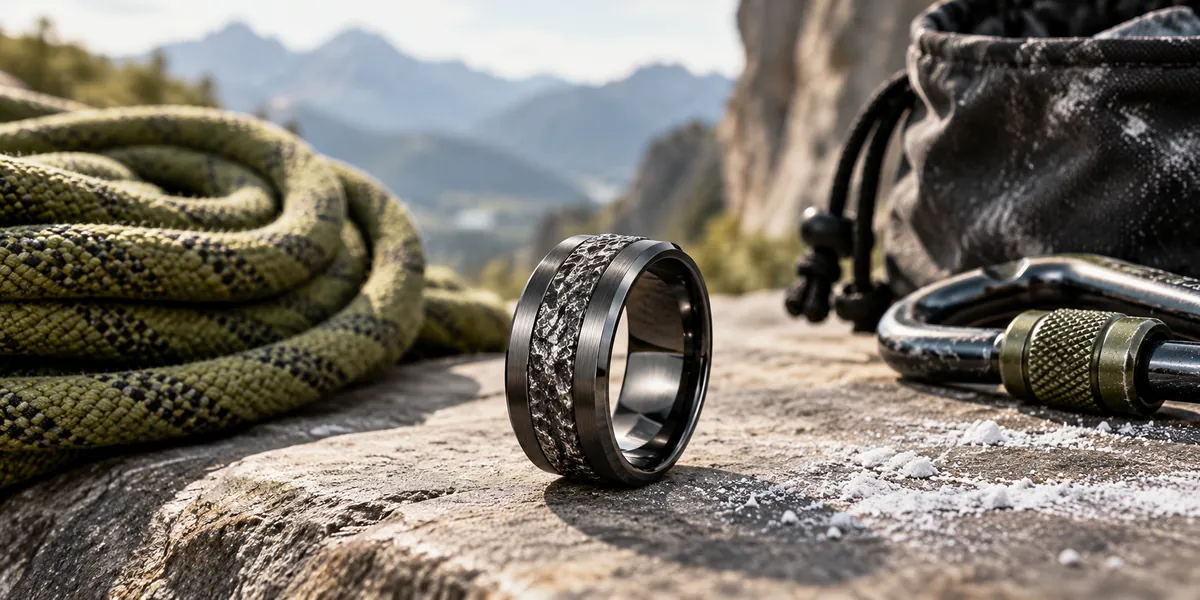
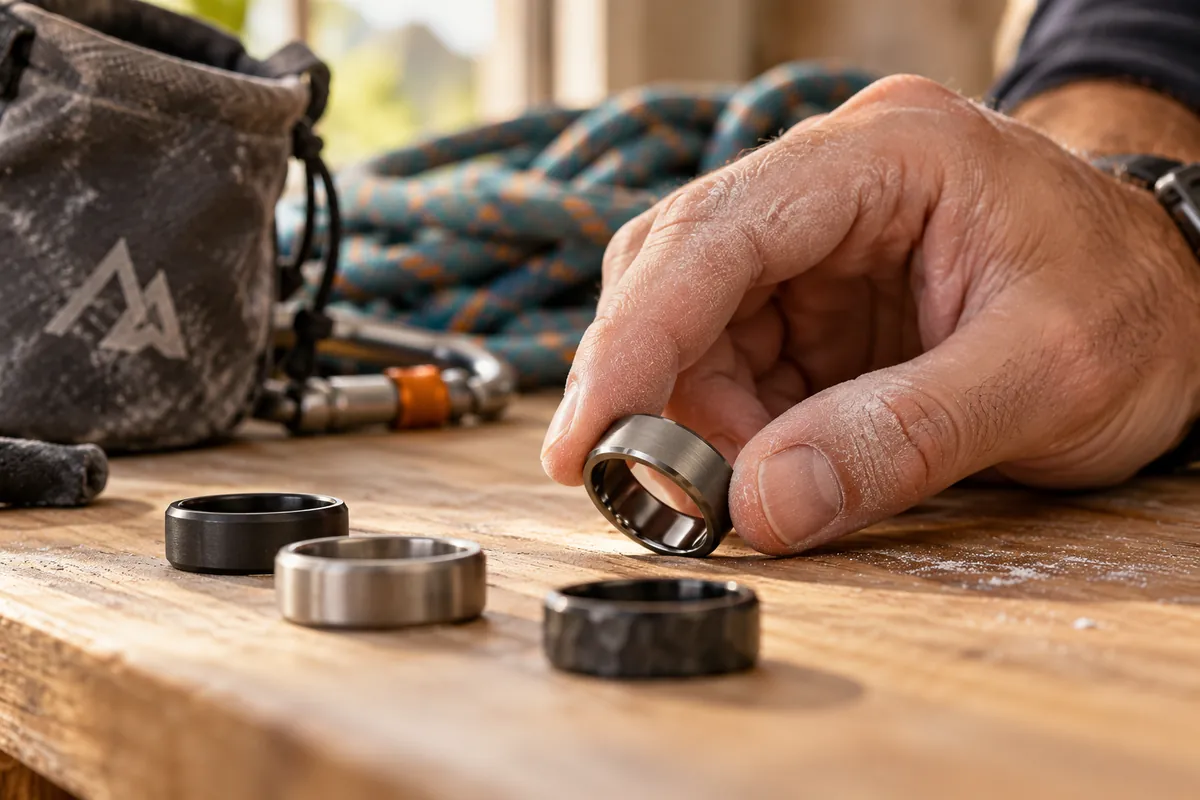
Material matters more than people expect. Tungsten carbide is brittle under lateral impact and can shatter into sharp fragments if it takes a hard knock against rock, which is the opposite of what you want mid-climb. Titanium is lighter, more forgiving, and tends to deform rather than shatter, which is part of why it’s become the go-to metal for active guys. Our custom titanium rings collection lets you dial in a thinner profile specifically for this kind of use.
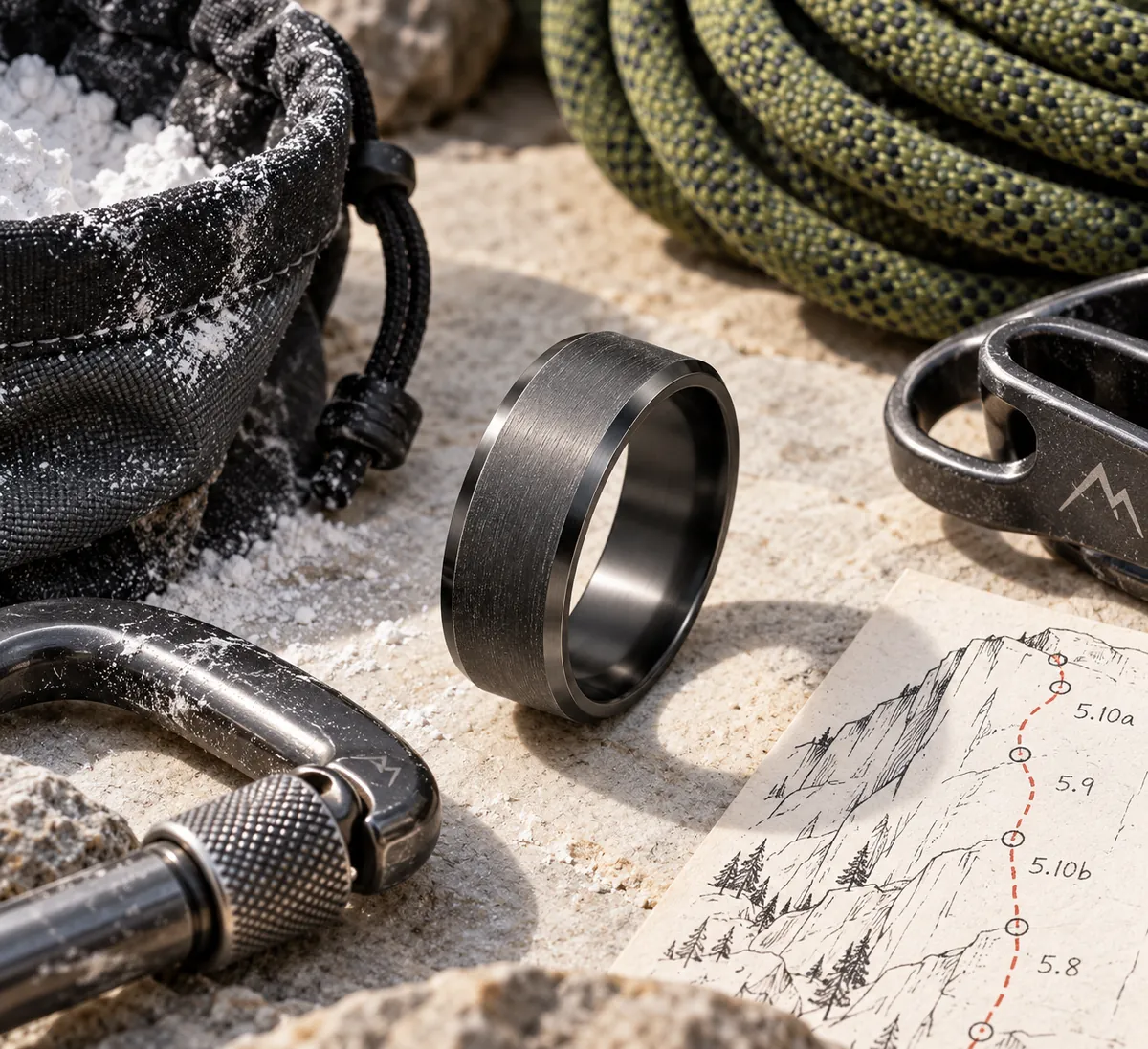
Profile and width are the other big levers. A thick, high-domed ring catches on everything, a slim, low-profile band with rounded edges sits closer to the finger and gives a crack or hold less to grab onto. It won’t make the ring safe to wear in a crack, nothing does that, but it reduces snag risk on slab and face climbing where contact is more incidental.
If none of that feels right for your climbing frequency, consider a silicone breakaway band for sessions and save your actual wedding band for rest days, dinners, and the drive home. It’s not romantic, but neither is a trip to the emergency department.
Top Styles and Options for Climbers
Titanium bands are the obvious pick for anyone who climbs semi-regularly and still wants a proper ring on hand days. They’re roughly 40% lighter than steel, resist bending, and won’t rust if you’re sweating buckets on a summer send. Browse the titanium rings range for widths down around 4-5mm, which sit noticeably flatter against the finger than a standard 8mm comfort-fit band.
Black rings, often tungsten or black zirconium, look sharp and wear well for everyday life, but we’d steer climbers away from tungsten specifically because of the shatter risk mentioned earlier. If you like the aesthetic, check whether the piece is listed as black titanium rather than tungsten before buying from our black rings collection.
For guys who want one ring that does everything, including the wall, a plain band from the everyday heroes line is built with exactly this kind of durability in mind, scratch resistant, low profile, and not precious enough that you’ll be gutted if it picks up a mark from a rock edge.
If you’re shopping on a budget or just want a backup ring to leave on while you climb instead of your main band, the ring packs are good value, you get a few simple bands for less than the price of one premium piece, so losing or scuffing one during a session doesn’t sting.
What to Consider Before You Buy
First question: are you climbing outdoors on real rock, or indoors on a gym wall? Gym holds are manufactured, generally smoother, and more predictable than granite or sandstone. That doesn’t make a ring safe on the gym wall, it just means the snag scenarios are slightly fewer. Outdoor crack climbing is a hard no for any ring, full stop, no exceptions.
Second, think about finger swelling. Climbing pumps blood into your hands and fingers swell during a session, sometimes enough that a ring that fit comfortably at home feels tight an hour into climbing. A ring you can’t easily remove mid-session if your finger starts to swell is a problem waiting to happen, so always size with a bit of room rather than a snug fit if it’s going anywhere near the wall.
Third, resale and sentimental value. If your wedding band has engraving, a family stone, or genuine sentimental weight, don’t risk it on the wall at all, keep a separate climbing-safe ring or nothing on that hand and save the real one for life outside the gym. For something with more presence for date nights or events, our diamond rings for men are a nicer option precisely because they’re not meant for abuse.
Finally, check stock and lead times if you need something quickly, say before a wedding or a climbing trip. Our in-stock range ships fast without the wait for custom sizing, which is handy if you’ve decided last minute that you want a dedicated climbing band separate from your main ring.
Tips from the Experts
Climbing coaches and hand therapists generally agree on one thing: the safest ring is no ring, but if you’re not going to take it off, make the choice that fails safely rather than catastrophically. A silicone band is designed to tear or stretch off under load rather than crush the finger, which is exactly the opposite of what a solid metal ring does in the same scenario.
Climbing gyms and outdoor clubs increasingly post reminders about this because ring avulsion injuries, while uncommon, are severe when they happen, often requiring microsurgery and sometimes ending in amputation of the finger. The British Mountaineering Council has flagged jewellery as a hand-safety hazard in its climbing wall guidance for exactly this reason.
A habit worth building: treat your ring the way you’d treat loose jewellery around machinery. Take it off before you chalk up, put it somewhere you won’t lose it (a chalk bag pocket works), and put it back on once you’re off belay. It takes ten seconds and it becomes automatic after a couple of sessions.
If you do want to keep something on your hand for sentimental reasons during a session, a slim, rounded titanium band is the lower-risk compromise most climbers land on, not risk-free, but noticeably better than a thick, square-edged piece that’s going to catch on every second hold.
Frequently Asked Questions
What is the best rings for rock climbers?
There’s no single “best” ring because the real answer is situational: a slim, low-profile titanium band is the safer choice for gym and slab climbing, while a silicone breakaway ring is better for anyone who won’t take their ring off at all. For crack climbing or anything involving your hand jammed into rock, the honest answer is no ring at all.
How do I know which rings for rock climbers is right for me?
Match the ring to how you actually climb. If you’re mostly gym bouldering, a slim titanium band with rounded edges works for most sessions. If you climb cracks, trad routes, or anything outdoors regularly, plan on taking any ring off before you start rather than looking for a “safe enough” option.
What should I look for when buying rings for rock climbers?
Look for titanium rather than tungsten, since tungsten can shatter on impact, and choose a lower profile band around 4-5mm wide rather than a thick, domed one. Size it with a touch of room since fingers swell during a session, and avoid anything with raised stones or settings that could catch on a hold.
Are there budget-friendly rings for rock climbers options?
Yes, simple titanium bands and ring packs are both affordable ways to get a dedicated climbing-day ring without spending what you’d spend on a main wedding band. Our ring packs and best-selling rings range both sit at friendlier price points if you just want a backup piece to leave on while you climb.
If any of this has you rethinking your everyday ring entirely, it’s worth browsing the full men’s rings range or checking out the homepage for current arrivals. We’ve also got a few relevant reads over on the blog about looking after metal bands day to day, and you can read more about how we approach materials and fit on our about page.