

Can You Wear a Titanium or Tungsten Ring in the Pool? Chlorine, Saltwater and Ring Safety

Why Pool Safety Matters for Rings
We get this question a lot, usually from a guy standing at the counter with a titanium band on one hand and a mate telling him “yeah nah, you can’t swim in that.” He’s half right, just about the wrong metal. Titanium itself doesn’t care about chlorine, bromine or saltwater. It’s the same metal used in surgical implants, boat fittings and aircraft parts precisely because it forms a stable oxide layer that shrugs off corrosion. Drop a titanium ring in a chlorinated pool every day for a decade and it’ll look the same as the day you bought it.
Tungsten carbide rings are a different story chemically, but not for the reason people assume. Chlorine won’t corrode tungsten either. The issue is that tungsten carbide is a ceramic-metal composite, meaning it’s extremely hard but also brittle. Whack it hard enough against the edge of a pool, a diving board or a tiled step and it can chip or shatter rather than dent. That’s a mechanical risk, not a chemical one, and it has nothing to do with the water itself.
Where the real chemistry problem shows up is with gold and silver. Chlorine reacts with the alloy metals mixed into gold jewellery (usually nickel, copper or zinc) and over months of regular pool exposure it can weaken the metal structure, leading to pitting, discolouration and in rare cases the ring literally cracking at a weak point. Sterling silver tarnishes faster in chlorinated water too. If you’re shopping for something that lives on your hand at the beach house or by the pool all summer, that’s a big part of why gold rings for men get saved for date nights rather than laps.
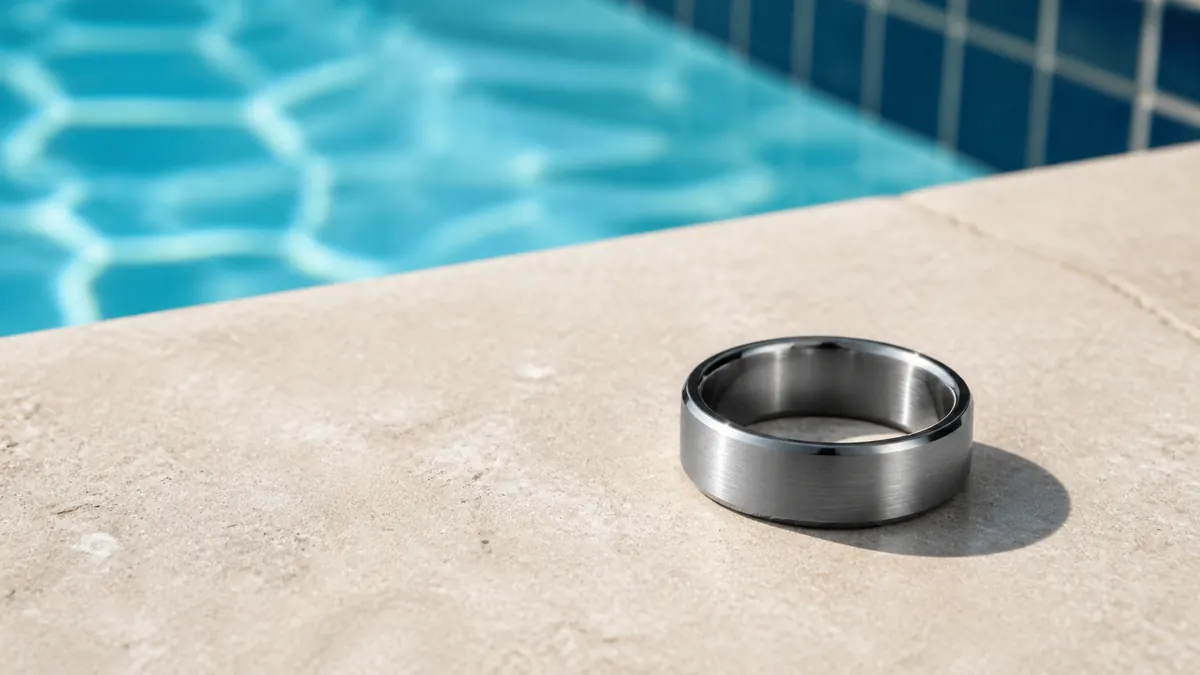
There’s also a safety angle that has nothing to do with the ring’s material and everything to do with rings in general. Pool ladders, drain grates and rough concrete edges are common places for a ring to catch, and hand surgeons see a steady trickle of what’s called ring avulsion injuries, where a caught ring degloves the finger during a fall or sudden grab. This can happen with any hard ring, titanium and tungsten included, so if you’re diving, doing laps competitively, or working around pool machinery, it’s worth thinking about whether a ring should be on at all in that moment.
Choosing a Pool Safe Titanium Ring
Not every titanium ring is built the same way, and that matters more once water gets involved. Grade 5 titanium (also called Ti-6Al-4V) is the standard for quality men’s rings because it’s harder and more scratch resistant than commercially pure titanium, while still being fully corrosion resistant in fresh, salt or chlorinated water. Cheaper rings sometimes use lower grades or titanium-coated base metals, and the coating is the weak point. Chlorine won’t necessarily strip a coating overnight, but repeated exposure combined with normal wear will get through a plated finish a lot faster than it will bother solid titanium.
Fit matters just as much as material. A ring that’s slightly loose is far more likely to slip off in the water than one that’s sized correctly, and pool water makes skin slippery in a way regular hand washing doesn’t. If your ring already spins on your finger or you can pull it off without resistance over the knuckle, that’s the one you leave on the bathroom sink before you swim, regardless of what it’s made from.
Comfort-fit inner bands help here too. Most of our everyday heroes range is designed with a rounded interior edge specifically so the ring sits securely without digging in when your fingers swell slightly in warm water, which is a real thing that happens after twenty minutes in a heated pool or spa.
Top Styles and Options
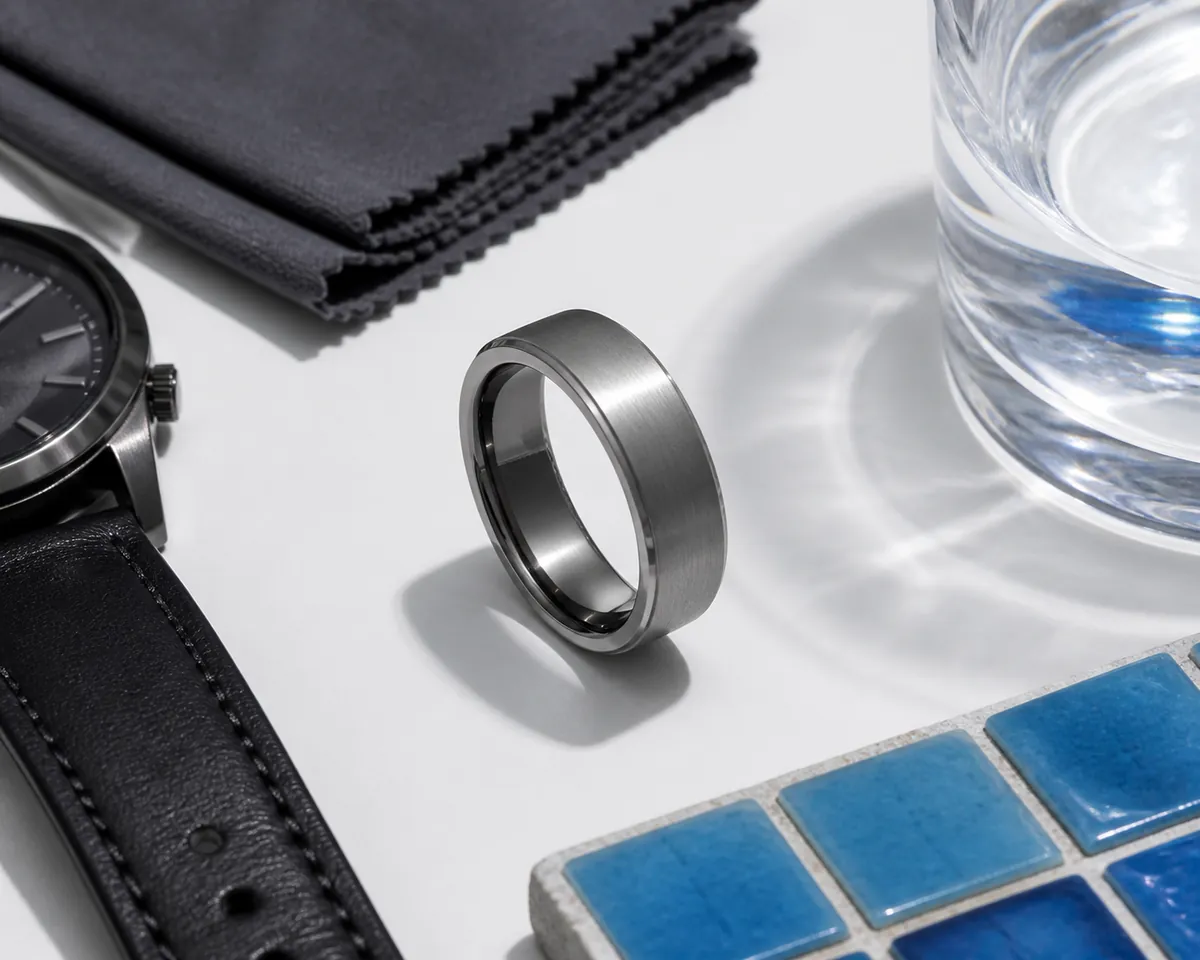
If you want one ring that handles pool days, gym sessions and the office without a second thought, solid titanium in a brushed or matte finish is the easiest recommendation we make. It hides water spots better than a high polish and doesn’t show the fine scratches that build up from pool tiles and ladder rungs over a summer. Black titanium and black zirconium styles are also genuinely pool friendly since the colour is created through a physical vapour deposition process bonded to the metal itself, not a surface dye that chlorine could fade. Browse the black rings collection if that’s the look you’re after.
For guys who want a tougher option and aren’t worried about impact risk around concrete, tungsten rings are still an excellent daily wear choice, just treat pool decks and rock pools with a bit more care than you would with titanium. If you’re the type who’s in and out of the water constantly, whether that’s a lap swimmer, a surf lifesaver, or someone who works around pools and marinas, a flexible silicone ring is worth having as a backup. They cost a fraction of a metal band, they stretch off instantly if they catch on something, and plenty of our customers keep one specifically for the pool bag.
Stacking Options for Variety
Some guys like variety without buying five separate rings. A ring pack that mixes a solid titanium band with one or two silicone options gives you a pool-day ring and a going-out ring without doubling up on cost. It’s a practical way to cover both situations with one purchase.
Check what’s currently ready to ship in our in-stock range if you need something before your next holiday, and if you’d rather see what everyone else is buying first, the best-selling rings page is a good shortcut to the styles that hold up best in real conditions, pool included.
What to Consider Before You Buy
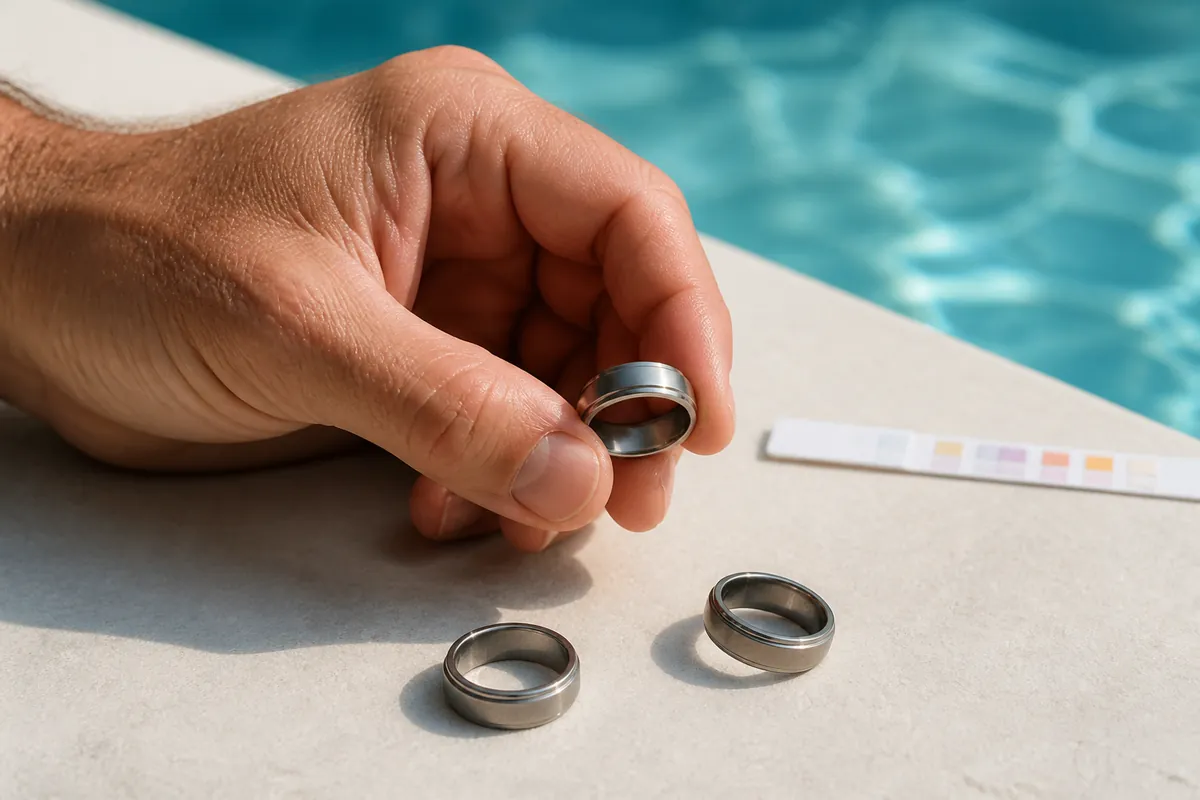
Think about what you’re actually doing in the water. Casual dips, spa sessions and floating around with a drink in hand put almost no strain on a well-fitted titanium or tungsten ring. Serious swimming, diving off boards, water polo, or manual pool maintenance work are a different situation, since these involve grabbing, gripping and sudden impact that has nothing to do with the ring’s resistance to chlorine and everything to do with it being a hard object on your hand during a physical activity.
Saltwater deserves its own mention because people sometimes assume it’s gentler than a chlorinated pool. It isn’t. Saltwater is more chemically aggressive toward most metals than a properly balanced pool, which is exactly why titanium is the standard choice for marine hardware, boat fittings and diving gear. If you’re someone who’s constantly at the beach or on a boat, that’s actually a stronger argument for titanium over anything with a plated or alloyed surface, gold and silver included.
Size and comfort fit should also factor into the buying decision, not just the metal. A ring that was sized correctly a few years ago might not account for weight changes since, and pool water makes any looseness far more obvious. If you’re between sizes, it’s worth erring toward the size that sits snug but comfortable rather than one that spins freely, particularly if swimming is part of your regular routine.
Budget is the last piece. Solid titanium bands sit in a genuinely accessible price range compared with precious metals, which makes it easier to justify owning a dedicated “pool and gym” ring alongside a nicer piece you save for other occasions, rather than putting your only ring through daily chlorine exposure.
Tips From the Experts
Jewellers and metallurgists who work with titanium regularly all land on the same handful of practical habits, and none of them are complicated.
Rinse After Every Swim
Chlorine and salt residue left to dry on any ring, titanium included, can build up around the band over time and irritate skin, even if it’s not damaging the metal itself. A quick rinse under the tap after you get out takes ten seconds and avoids that build-up entirely.
Dry Before Storing
Pat the ring dry rather than letting it air dry in a damp towel or gym bag. This matters more for rings with any inlay, like wood, carbon fibre or resin accents, since trapped moisture is what causes those materials to warp or discolour over time, even though the titanium base itself is unaffected.
Check the Fit Seasonally
Hands change size slightly with temperature and time of year. A ring that felt snug in winter can feel looser in a heated pool in summer. A once-a-season check, just pushing the ring gently against the knuckle to feel resistance, catches this before it becomes a lost-ring problem.
Match the Ring to the Activity
Plenty of tradies, surf lifesavers and pool maintenance staff we talk to keep a silicone band specifically for work and swap back to their titanium or tungsten ring for everything else. It’s not an admission that the metal ring is unsafe, it’s just common sense about matching the ring to what your hands are actually doing that day.
Frequently Asked Questions
What is the best pool safe titanium ring?
Solid grade 5 titanium in a brushed or matte finish is the safest bet for regular pool wear, since it resists chlorine, saltwater and everyday scratches without needing a plated coating. Black titanium and black zirconium styles are also pool friendly because the colour is bonded to the metal rather than surface dyed.
How do I know which pool safe ring is right?
Think about how you actually use the pool. Casual swimming and spa time suit a well-fitted solid titanium band, while serious swimmers, divers or anyone doing manual work around water are usually better off with a flexible silicone ring as a dedicated backup.
What should I check before buying a pool ring?
Confirm it’s solid titanium or tungsten rather than a plated finish, and get the fit right, since a snug comfort-fit band is far less likely to slip off in wet conditions than a loose one. Also factor in what activities you’ll actually be doing in the water.
Are there budget-friendly pool safe rings?
Yes, solid titanium bands are already one of the more affordable options compared with precious metals, and silicone rings cost even less while being ideal for the pool bag. A mixed ring pack is a good way to get both a metal option and a silicone backup in one purchase.